Meta AI Director Launches Startup
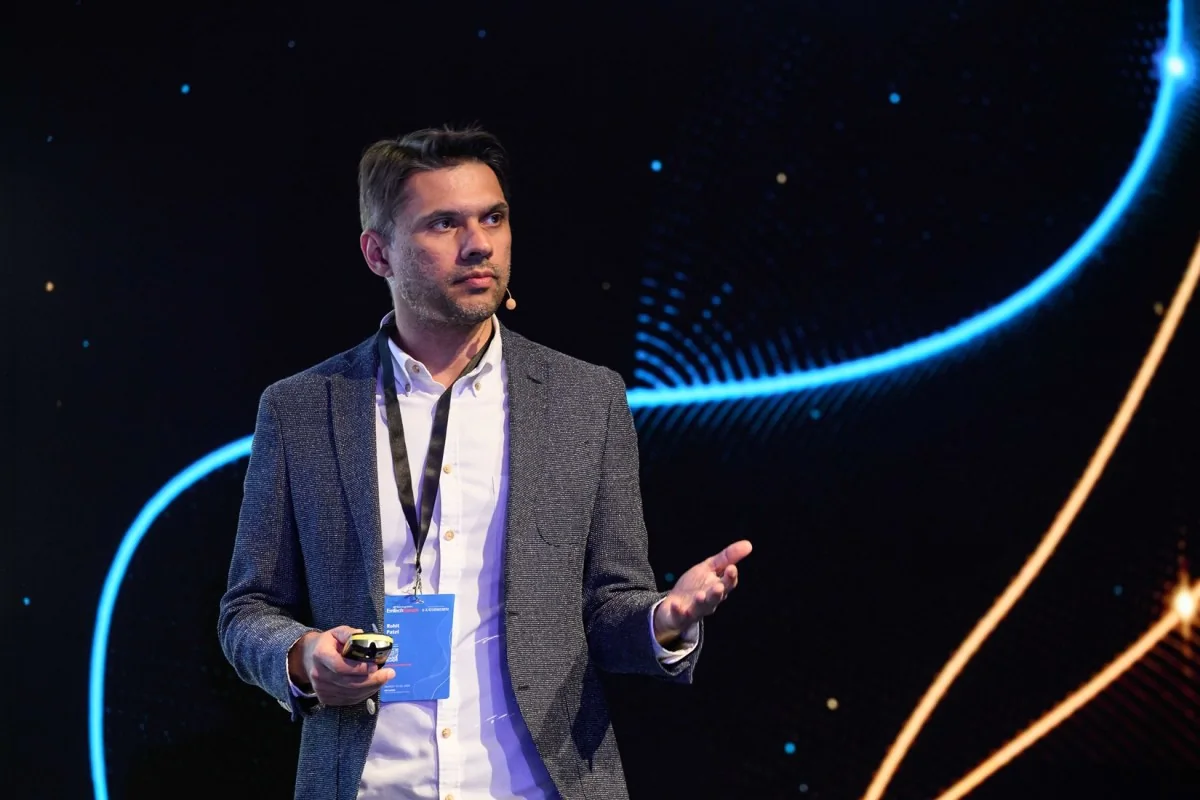
After eight years developing AI for Meta, Rohit Patel is departing the company. The former director at Meta Superintelligence Labs has launched Ndoc, a startup he’s pitching as an AI-native replacement for Microsoft Office suite or Google Workspace.
Patel is the latest in a handful of high-profile departures from Meta following the exits of Chief Global Affairs Officer Joel Kaplan, AI researcher Andrew Tulloch, and Head of Product for AI-for-Work Emily Dalton Smith.
Unified Workspace Design
Patel designed Ndoc to be more than just another AI tool layered onto an existing workflow. The goal is to replace the fragmented way people work across tools like Excel, Word, PowerPoint, Tableau, Replit, and copy-paste workflows with one unified workspace that all colleagues can access.
Ndoc brings three components together in one layout. The Stage tab is where presentations of key findings live, like slide decks, dashboards, simulations, or mini apps. The Narrative tab features analyses, numbered citations, generated figures, and the underlying reasoning. The Model tab is where underlying datasets and Python scripts are housed.
Transparency and Verification
The design reflects Patel’s background in reinforcement learning at Meta, where he focused on evaluating whether AI output is trustworthy. Patel believes that if AI is going to build spreadsheets and slide decks for decision-making, users should be able to verify its work through accessible underlying Python scripts.
“Even if you don’t know any Python, you can ask the AI chat to explain what the script does and which line has the formula so you can verify it,” Patel said. “There’s nothing hidden behind the curtain here.”
Users can upload datasets to perform analyses and generate narratives, while adding context including audience, tone, and memory across the user, team, and company.
Open-Source Models and File Formats
Patel stated that Ndoc is built and fine-tuned using a mixture of open source models. Because the platform was developed from scratch, it reportedly costs considerably less to run than alternatives built on frontier AI models.
“I thought that’s what people would be excited about, but people don’t care about that,” he said regarding early trial users. “What people are excited about is that they love seeing all their end-to-end in one place.”
Patel aims to reinvent the file format by allowing documents to be exported as a single file that opens in any browser. He plans to open-source this format so other developers can build compatible applications.
His desire to open-source the project influenced his decision to leave Meta, where broad consensus on formatting standards would require extensive corporate alignment.
Patel emphasized a desire to move quickly, stating that execution speed can match the capabilities of artificial intelligence.
Competitive Enterprise Landscape
Entering the enterprise workspace market is a significant undertaking for a small team with no external funding, particularly as major AI labs target the same domain.
Companies including OpenAI, Anthropic, Meta, and Google have introduced enterprise AI tools connecting directly to established office suites. OpenAI recently launched Space as a shared collaborative workspace inside ChatGPT.
While acknowledging competing tools as potential threats, Patel argues that major labs approach enterprise integration incorrectly.
“Companies are basically attaching AI to spreadsheets and it fills your cells for you,” Patel said, criticizing incremental automation over structural redesign.
Recognizing the difficulty of shifting established workplace habits, Ndoc includes connectors allowing customers to import existing data from legacy tools.
“My bar was that I’m not going to release anything I don’t love using,” Patel said, noting his internal threshold for testing personal workflows.
Patel applied a similar standard to customer traction before seeking funding, preferring to establish product validation first.
Ndoc has initiated an enterprise pilot and opened an alpha version to a limited number of users on a waitlist. The platform is free to join, with usage charged by tokens, ahead of a planned beta release and full commercial launch.
For Patel, rapid execution remains a priority over premature perfection.
“Execution is extremely cheap, so go execute on a suboptimal plan and worry about it later,” he said.