AI in Healthcare
For years, AI leaders have touted healthcare as one of the clearest examples of where their technology will improve lives. Microsoft claims to have developed an AI-powered tool it says can diagnose conditions up to four times more accurately than human doctors.
Microsoft says its AI tool is better than doctors at diagnosing conditions
Microsoft aims to build systems that match human performance in the coming years.
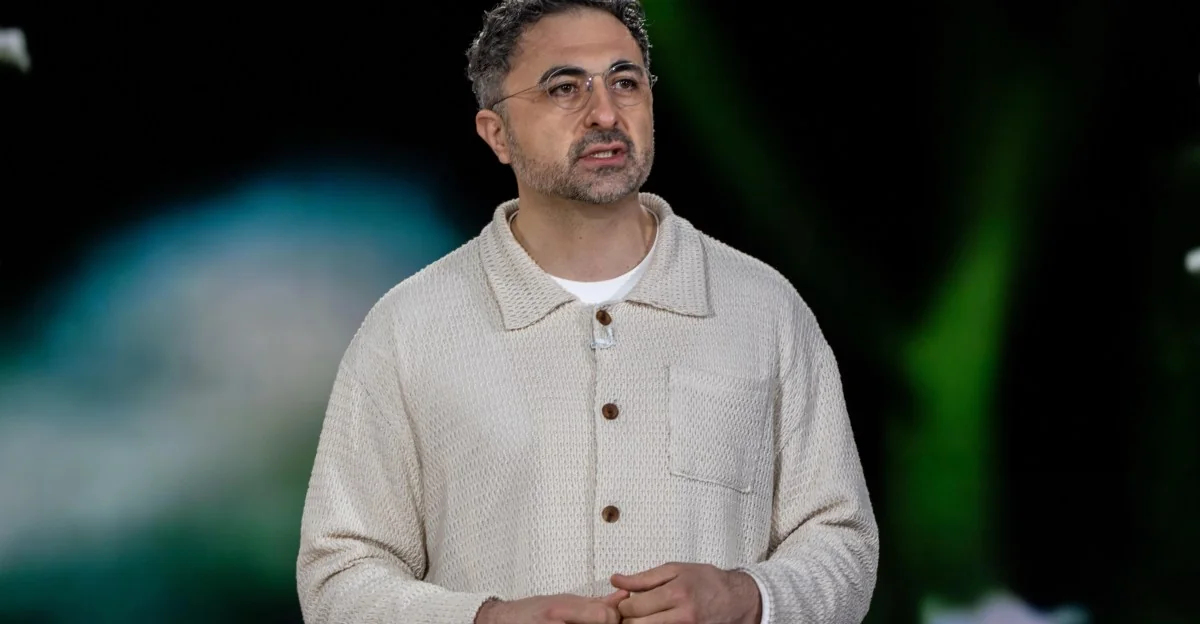
Microsoft AI chief Mustafa Suleyman.
Benchmark Results
The findings, published in the journal Science, are based on tests pitting Microsoft’s AI system against human physicians on scenarios drawn from medical case reports and emergency department data. Microsoft compiled the cases into its own benchmark, SDBench, which it plans to open-source. The Diagnostic Orchestrator uses multiple AI agents to reason through symptoms and medical histories, decide what tests to order, and arrive at a diagnosis.
On cases from The New England Journal of Medicine, Microsoft’s system achieved a diagnostic accuracy of around 83 percent, compared with roughly 36 percent for generalist physicians using references and 22 percent for those working without them. The tool also outperformed doctors on emergency department cases from the Beth Israel Deaconess Medical Center, scoring 80 percent accuracy compared to an average of 47 percent for human physicians.
The system is powered by OpenAI’s GPT-5 and outperformed frontier AI models operating on their own during testing.
Clinical Validation Needed
Microsoft acknowledges there is a long road ahead before the technology can be widely deployed. The system has only been tested on past medical cases, and it remains unclear how well it would perform in real clinical settings requiring further validation.
The research is part of a broader ambition at Microsoft to develop medical superintelligence that can outperform the best human-led healthcare systems.
Diagnosis is just part of Microsoft’s health vision, according to Dr. Dominic King, coauthor of the study. The company outlines other areas AI will need to master, including coordinating clinical care and making treatment decisions.
Microsoft plans to begin testing the system in hospital settings with the Beth Israel Deaconess Medical Center to evaluate performance in real-world clinical environments.
Commercialization Horizon
Commercialization could be on the horizon, though Microsoft has yet to announce a timeline for when the technology might become available.
Executives expect intelligent systems to see impressive deployments in production soon.
Human clinicians should and will always have a central role in patient care, according to company leadership.
The technology is intended to take administrative drudgery out of medicine, freeing up clinicians to spend more time with patients.
Leadership expressed optimism regarding upcoming developments in the sector.