Justin Mast’s interest in plant communication began after reading research about a houseplant wired to a motorized stand that moved toward light sources using electrical signals generated in its living tissues.
A few years ago, Mast stumbled upon research about a houseplant wired to a motorized stand. When the plant wanted more light, electrical signals flowed through the living tissues, and a control board sensed the current to wheel the plant closer to the light source.
Mast partnered with neuroscientist Lee von Kraus, who has previously worked with DARPA, to establish Electric Plant. The company spent three years collecting data to develop a large language model named Bombadil, which interprets electrical signals coursing through plant stems to communicate their needs to growers.
Electric Plant has spent the past three years collecting data to build a large language model, Bombadil, capable of interpreting the subtle electrical signals coursing through a plant’s stem and relaying details about the plant’s needs to growers.
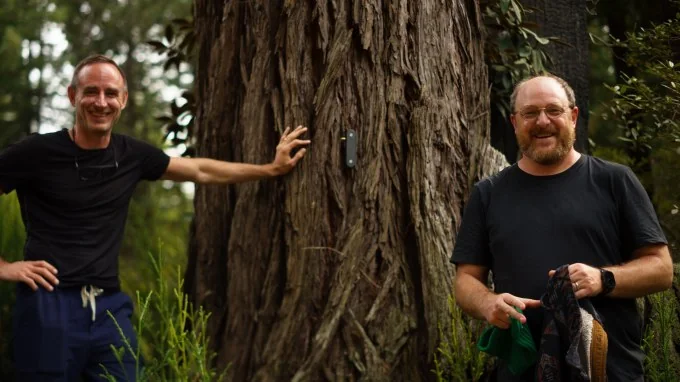
Image Credits:Electric Plant
Listening to Plant Signals
The founders believe their model could eventually lead to tools that enable direct communication with plants. According to Mast, the team is focused on listening as the critical first step.
Electric Plant secured an $11.2 million seed funding round led by Onto Ventures and Climactic. Additional participants included Ponderosa, Endeavor Catalyst, Ludlow, Michigan Rise, The Fund, Schox VC, and Dug Song.
Limitations of Traditional Monitoring
Traditional agricultural tools like soil probes, handheld spectroscopes, and satellite imagery offer broad visibility but often fail to capture the real-time internal needs of crops.
Mast noted that while existing technology is sophisticated, its ability to assess the interior state of a plant remains limited and frequently lags behind real-time requirements.
Training the Bombadil Model
To train the Bombadil model, the startup utilized traditional monitoring devices across approximately 125 different plant species. The team expects the AI model to eventually surpass conventional equipment in accuracy.
Hardware and Deployment
Electric Plant developed sensors costing tens of dollars, significantly undercutting existing monitoring tools that typically require investments of thousands of dollars.
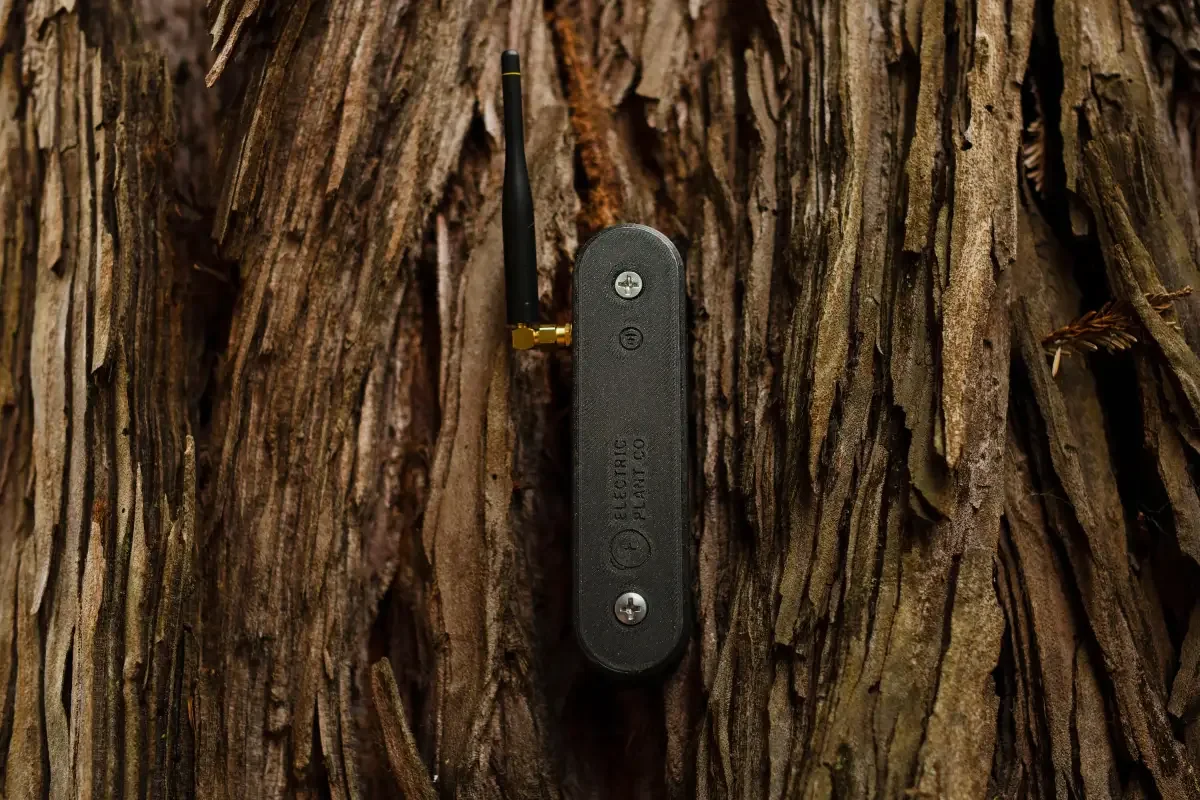
The sensors are roughly the size of an iPhone folded lengthwise and attach to plants using stainless steel screws that penetrate the cambium layer beneath the bark to measure microvolt fluctuations. Collected data transmits to a base station over a low-power wireless network.
Deploying a couple of sensors per acre is sufficient for accurate results, according to Mast. The cloud-based Bombadil model processes the incoming data to provide actionable scheduling insights for watering and fertilizers, which the company claims can boost yields and reduce water consumption by 20% or more.
While initial customers remain undisclosed, the technology targets potential applications throughout commercial agriculture and forestry.
Bombadil currently supports over a hundred species spanning diverse biological forms, including ferns, redwoods, tomatoes, and dahlias.
Mast described the project as the most diverse model ever created for biological electrical signals, noting no equivalent counterpart currently exists in the animal research sector.