TechCrunch Disrupt 2026 is scheduled for October 13-15 at Moscone West in San Francisco, gathering thousands of founders, investors, operators, and technology leaders for three days of discussions on emerging industry trends.
Beyond the main industry stages, Disrupt's breakout sessions provide an interactive environment for attendees to engage directly with speakers. Each 50-minute session combines expert presentations with audience Q&A, focusing on specific operational challenges. Room capacities are limited and operate on a first-come, first-served basis.
AI Agents and Infrastructure Focus
This year's lineup addresses key technical and operational questions currently facing founders and operators, including building applications with AI agents, understanding where economic value accumulates as AI transitions from training to inference, and defining physical AI.
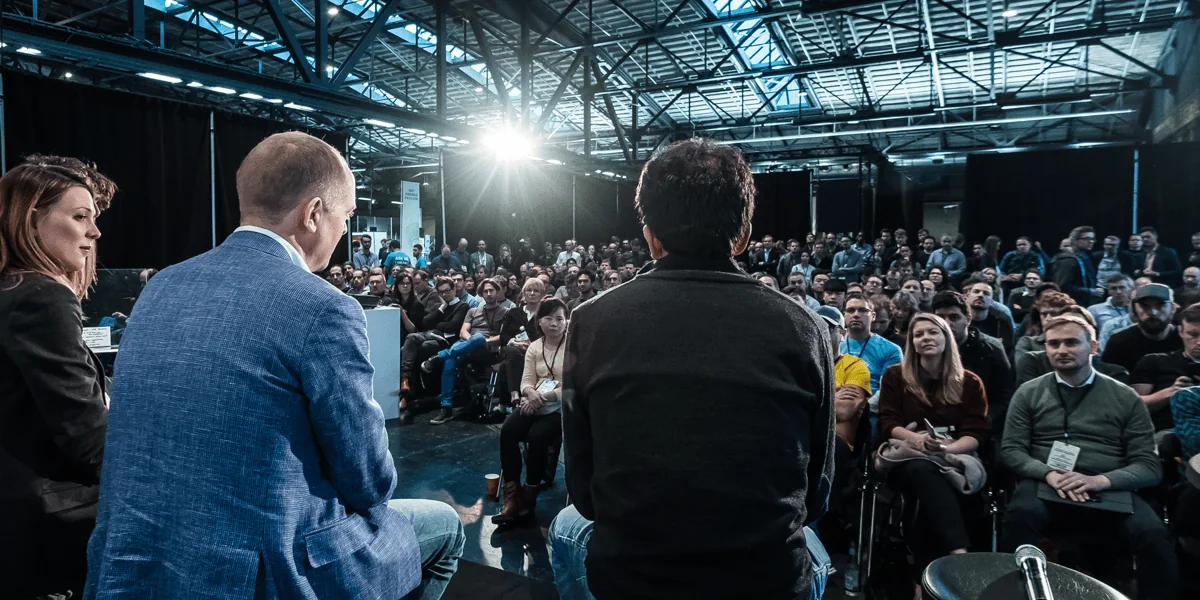
Image Credits:Slava Blazer Photography
Get into the room, get your questions answered, and make the connections that’ll spark your next move in the ecosystem. Save up to $100 on your pass and 50% on a second.Bring a group of four-plus to save more and get more insights. If you’ve recently been laid off, get a $75 Expo+ Pass before they run out.
The Complete Disrupt 2026 Breakout Session Agenda
An overview of the scheduled sessions and technology leaders featured on the Disrupt agenda highlights key technical focal points.
What Is Physical AI, Anyway?
Susan Schofer, Partner and Chief Science Officer at SOSV HAX, alongside Duncan Turner, General Partner and Managing Director at SOSV HAX, examine the definition of physical AI as machines expand beyond software to perceive, reason, and act in physical environments.
Sponsored by SOSV
The speakers outline why building physical systems requires a distinct development approach and discuss what investors look for in companies operating within the category.
Outnumbered Either Way: How an Engineer and an Architect Run Their Jobs on Agents
Steve Androulakis and Sachin Malhotra, Members of Technical Staff at Anthropic, present practical AI-agent workflows utilized by software engineers.
The session demonstrates how developers run multiple Claude agents in parallel, delegate tasks, review outputs, and recover from execution errors in everyday professional settings.
How to Build AI We Can Trust
Robbie Goldfarb, Co-founder of Forum AI, discusses trust and safety considerations as artificial intelligence systems take on more critical responsibilities.
Drawing on experience across misinformation, online safety, and foundation model development, Goldfarb explores methods to scale human judgment into reliable system evaluations.
The Inference Economy: Why AI’s Next Trillion Dollars Won’t Look Like Its First
Hagay Lupesko, SVP of AI Cloud at Cerebras Systems, and Rudina Seseri, Founder and Managing Partner at Glasswing Ventures, analyze the economic shift from model training toward inference as frontier models commoditize.
The panel covers defensibility when models are not proprietary moats, the growing importance of latency in product design, and implications for infrastructure and startup economics.
Building Then vs Now
Dr. Rumman Chowdhury, CEO and Co-founder of Humane Intelligence; Payal Kadakia, Founder of ClassPass; Cassie Kozyrkov, Founder of Kozyr; and Holly Ransom, CEO of Emergent, discuss how artificial intelligence tools influence decision-making and operational velocity for company founders.
Sponsored by Signify Business Cash World Elite Mastercard by Wells Fargo
The panel highlights where human judgment, bias awareness, and strategic planning remain critical despite accelerated tooling.
Best Practices for Running a Successful Fundraise
Featuring speakers to be announced, this session addresses venture capital fundraising from both founder and investor perspectives.
Sponsored by Fidelity Private Shares
Topics include investor targeting, relationship management, outreach strategies, cap tables, data rooms, and due diligence preparation.
Image Credits:TechCrunch / Slava Blazer Photography
From Founder to Investor: The Next Act
Bruce K Lee, CEO and Founder of Keebeck Wealth Management, and Abhi Tiwari, Co-founder and General Partner at Blank Ventures, discuss the transition from building a company to allocating venture capital.
The speakers explore the mindset required for investing and examine how entrepreneurs can approach post-exit strategies well in advance.
Breaking Into Space: The AI Builder’s Opportunity
Dr. Brian Cameron and Shawn Sloan from The Aerospace Corporation, alongside Bosco Lai, CEO of Little Place Labs, map AI capabilities to aerospace applications.
Sponsored by The Aerospace Corporation
The session highlights commercial and government opportunities involving large data streams, autonomous decision-making, and real-time processing in space.
Fundraising Mistakes That Will Kill Your Round
Dr. Irena King of Surgicure Technologies, Dr. Richard Munassi of Tampa Bay Wave, Ashley Paston of General Catalyst, and Emily Zhen of HealthQuest Capital analyze common pitfalls in fundraising execution.
Sponsored by Tampa Bay Wave
The panel provides frameworks to avoid missteps related to company positioning, investor strategy, and the mechanics of closing a round.
Building a Growth Engine in the AI Era
Patrick Burke, Managing Director at Hostinger, examines how artificial intelligence compresses the timeline between market opportunity identification and product execution.
Sponsored by Hostinger
Using examples from Hostinger, Burke discusses identifying distribution channels, shortening feedback loops, and implementing agentic marketing workflows.
Physical AI Execution Challenges
Ethan Batraski, Partner at Venrock; Ivan Poupyrev, Founder and CEO of Archetype AI; and Ian Rountree, General Partner at Cantos, discuss the practical execution layer required for physical artificial intelligence.
The panel explores the operational gap between perception, decision-making, action, and verification in industrial AI deployments.
Talent as the Operating System
Nomi Khedawala, Senior Technical Program Manager at Reddit, examines team alignment and organizational scaling in technology companies.
The session addresses how leaders can maintain accountability, identify structural breakdowns early, and support high-performing teams as organizations expand.
Event Overview
TechCrunch Disrupt 2026 runs from October 13 to October 15 at Moscone West in San Francisco, offering attendees access to main industry stages and specialized breakout sessions.
With limited capacity and first-come, first-served access, these are sessions worth adding to your Disrupt schedule early.
TechCrunch Disrupt 2026 takes place October 13-15 at Moscone West in San Francisco. Register now to save up to $100 before doors open, plus get 50% off a second ticket for your co-founder, colleague, partner, or peer. Save even more with a group of four or more. Laid off? Grab your $75 Expo+ Pass before they run out.
Image Credits:Kimberly White / Getty Images