Leadership Turmoil at Nvidia
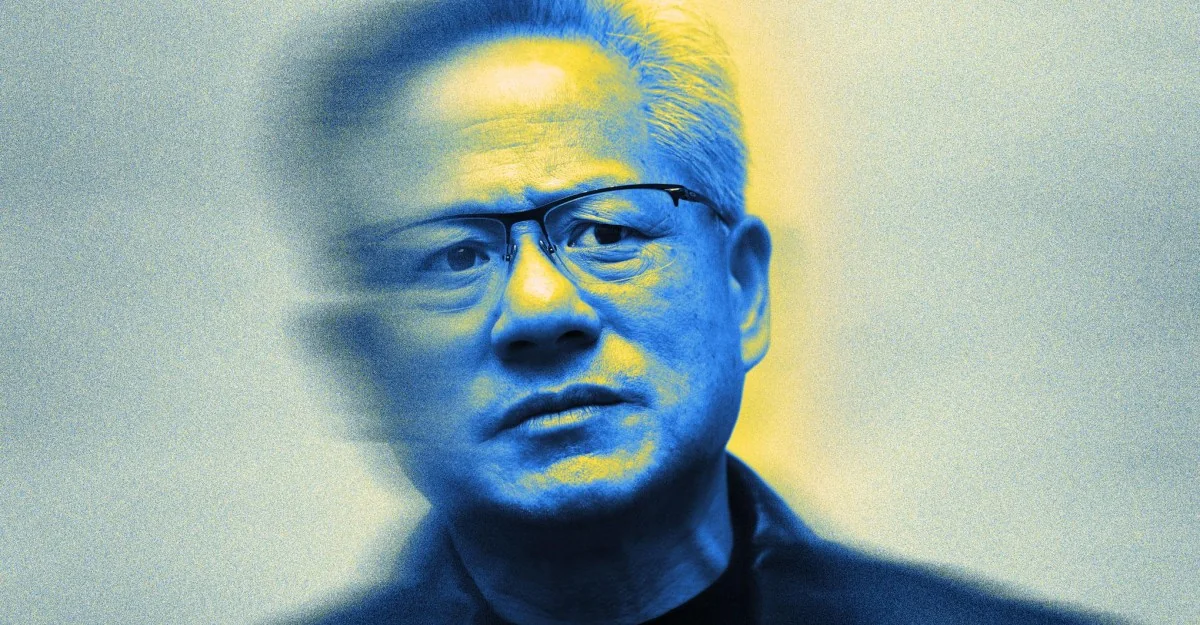
Nvidia’s board opened an investigation into CEO Jensen Huang, leading to rapid developments regarding his future at the company.
Discussions on the broader AI economy highlight how closely the industry's trajectory has been tied to Huang's leadership.
Industry analysts point out that so much of the current technology market relies heavily on Nvidia's hardware dominance.
Questions have emerged regarding how a leadership change will impact Nvidia's extensive investments across the broader artificial intelligence ecosystem.
Observers note that the unraveling of support occurred swiftly once multiple reports surfaced.
The departure of a tech billionaire under such circumstances remains a rare event in the corporate landscape.
Comparisons have been drawn to other prominent tech executives and how corporate governance handles high-profile leaders.
Given that the entire artificial intelligence economy has been built on top of Nvidia's infrastructure, the sudden vacancy at the top creates unprecedented uncertainty.
Interim Leadership and Corporate Structure
With no established succession plan in place and family members employed at the firm, Nvidia faced a unique leadership crisis.
Huang resigned following disclosures regarding personal relationships and questions involving entities with ties to foreign intelligence.
Nvidia CFO Collette Kress stepped in as interim CEO. Analysts suggest that a chief financial officer taking the helm typically signals a primary focus on cost management and operational stability.
The appointment is widely viewed as a caretaker role while the board determines a permanent long-term strategy.
National Security and Export Policy
Reports indicate that government and intelligence circles had previously scrutinized relationships and potential national security implications tied to chip distribution.
Public scrutiny intensified rapidly after board investigations were announced and subsequent media reports detailed regulatory inquiries.
The rapid shift in corporate standing caught the public off guard, even as government officials had been aware of underlying geopolitical and security questions for months.
Political reactions varied regarding the potential risks associated with executive connections and foreign intelligence concerns.
A central tension involves Huang's previous advocacy for loosening chip export restrictions to China, a stance closely linked to national security debates over advanced AI capabilities.
Critics argue that commercial expansion goals often superseded security considerations in the semiconductor industry.
Momentum against the executive accelerated following media coverage detailing inquiries by the Department of Commerce.
The realization of how deeply regulatory scrutiny had penetrated forced a swift reckoning within the corporate boardrooms.
Impact on the Broader AI Ecosystem
Beyond Nvidia's internal operations, questions remain regarding how leadership changes will affect the wider artificial intelligence sector.
Nvidia has acted as a central pillar in the AI circular economy, providing both critical GPU infrastructure and extensive funding to numerous artificial intelligence startups.
Any strategic pullback or conservative shift under new leadership could trigger significant repercussions across the tech industry.
Nvidia reportedly commands roughly 80% of the AI GPU market, backed by tens of billions in investments and cloud service commitments supporting major cloud providers, data center projects, and top AI labs such as OpenAI and Anthropic.