Overview and Portability
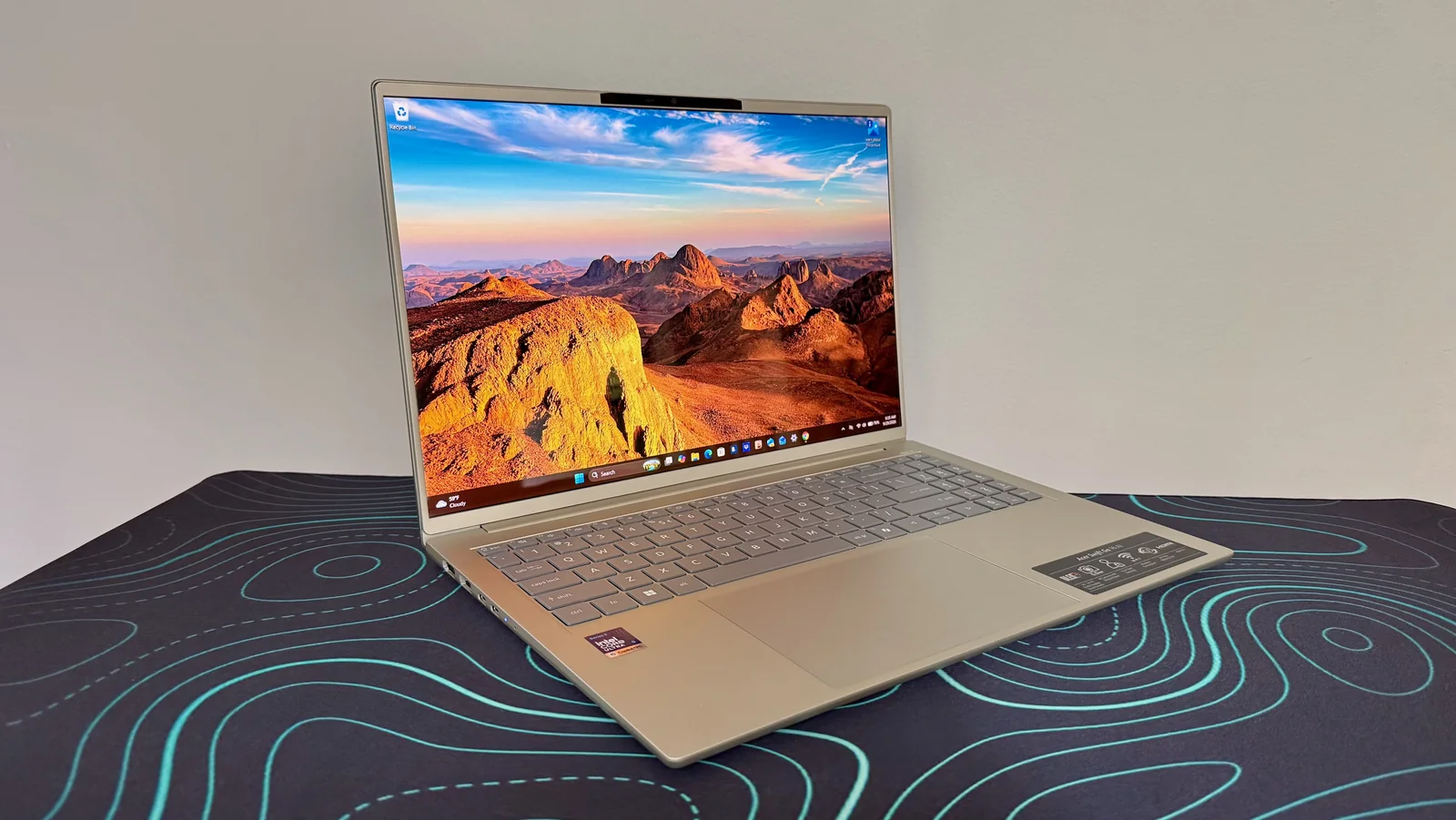
There are two primary reasons to consider the Acer Swift Go 16 AI laptop: its remarkably lightweight build and its large OLED display. Weighing just over 3 pounds, this 16-inch device stands out as one of the more portable options in its size class. Furthermore, it remains one of the few laptops equipped with an OLED panel available at or below the $1,000 price point.
Achieving this price point requires certain compromises, especially amid fluctuating hardware component costs. While the machine features an all-metal chassis—a welcome addition in a price tier where plastic is common—the aluminum shell feels somewhat flexible. Additionally, processing capabilities are restricted, particularly in multicore workloads, positioning the device poorly for creative professionals requiring heavy media editing tools.
Ultimately, the expansive 16-inch OLED panel serves best as a generous workspace for everyday productivity. Combined with robust battery life and a featherlight footprint, the Swift Go 16 presents a solid option for users needing a large portable screen for travel or office tasks.
Configurations and Pricing
Positioned below the standard Swift lineup and above the entry-level Aspire series, the Swift Go is offered in multiple Intel and AMD configurations. The evaluated base model features an Intel Core Ultra 5 322 processor, 16GB of RAM, integrated Intel Graphics, and a 512GB SSD. The 16-inch OLED touchscreen operates at a modest 1,920x1,200-pixel resolution with a 60Hz refresh rate, retailing at $1,000.
A higher-tier variant is available for those seeking upgraded specifications, featuring a Core Ultra 7 355 CPU, 32GB of RAM, and 1TB of storage while retaining the same OLED display panel.
Performance and Battery Life
The Core Ultra 5 322 is a lower-tier mobile processor featuring two performance cores and six efficiency cores without hyper-threading. Benchmark evaluations indicate stronger single-core capabilities than multicore outputs in suites like Geekbench 6 and Cinebench, confirming the system is better optimized for daily office tasks than intensive creative rendering.
On-device AI performance via the integrated NPU places the laptop on competitive footing with previous-generation Intel chips and early Qualcomm Snapdragon models, though newer rival architectures achieve substantially higher NPU scores.
Battery endurance proved strong, running for over 16.5 hours during continuous video playback testing. While falling short of certain rival ARM-based architectures, the longevity is more than sufficient to navigate a full workday away from a wall outlet.
Design, Keyboard, and Display Quality
At roughly 3 pounds, the aluminum chassis undercuts the weight of many competing 16-inch laptops on the market, making it remarkably easy to transport.
However, the lightweight aluminum construction leads to noticeable flex across the keyboard deck under pressure. On a positive note, the keyboard offers snappy, shallow-travel keys.
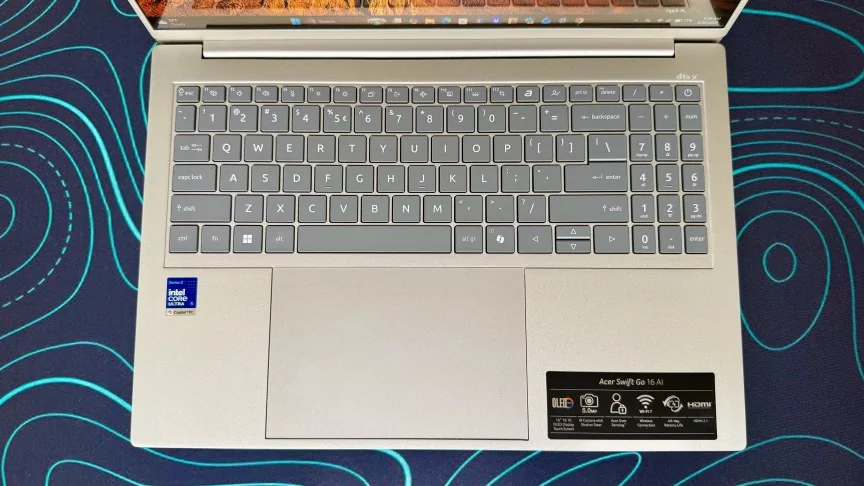
The inclusion of a dedicated number pad is a welcome addition for data entry tasks, fitting comfortably within the wide 16-inch chassis without cramping adjacent keys.
The spacious mechanical touchpad features a smooth Gorilla Glass surface that resists scratches and successfully avoids the uneven click resistance common in oversized pads.
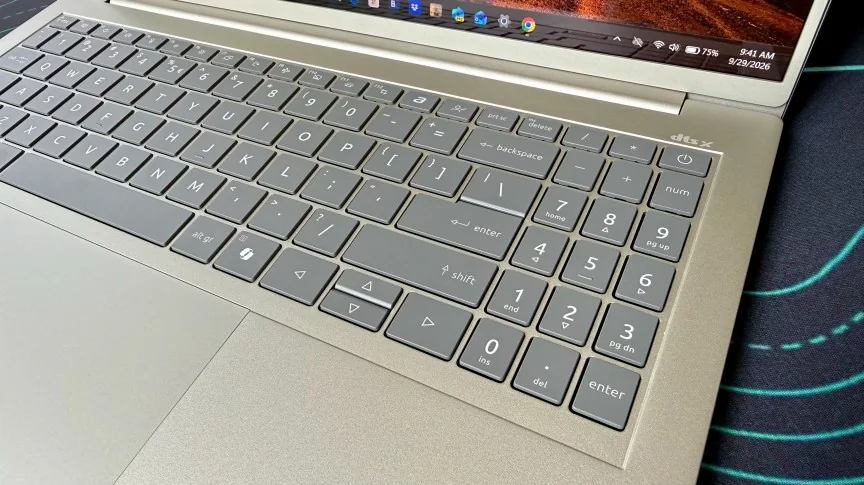
Equipping an OLED panel at this price point brings rich colors, deep blacks, and infinite contrast, though users must accept minor text fuzziness and pixelation due to the conservative 1,920x1,200 resolution.
Colorimeter evaluations show full coverage of the sRGB and P3 color spaces alongside 93% AdobeRGB, making it suitable for casual photo work. Peak brightness reaches only 290 nits, however, rendering outdoor usage difficult despite a gloss coating that helps manage reflections.
Integrated audio performance remains a weak point, with the built-in speakers producing tinny and underwhelming sound output that necessitates external speakers or headphones for media consumption.
The 1440p webcam produces sharp daylight images but struggles significantly in low-light environments with visible noise and color casting. While lacking a fingerprint reader, the camera supports Windows Hello facial recognition logins.
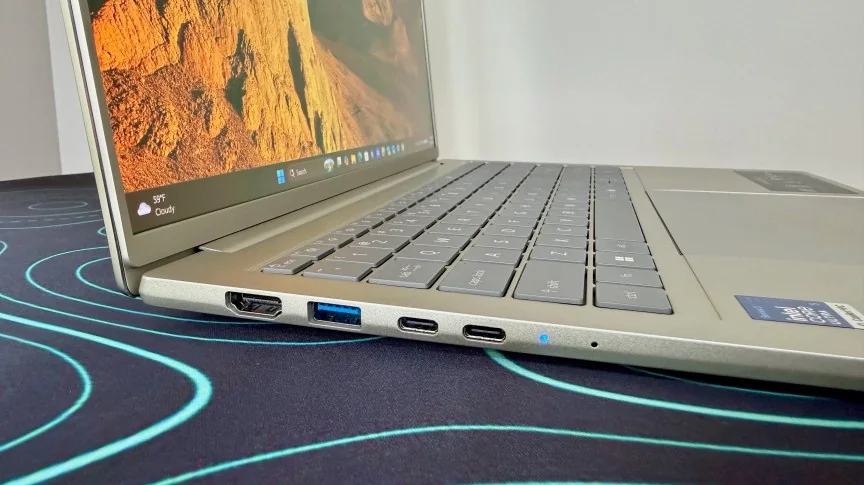
Physical connectivity is robust, featuring dual Thunderbolt 4 ports, two USB-A ports, an HDMI output, and a headphone jack. The placement of both Thunderbolt ports on the left side limits charging flexibility compared to a dual-sided implementation.
Verdict and Value
The Acer Swift Go 16 represents a compelling purchase for users prioritizing a large OLED screen, lightweight portability, and aggressive pricing. Promotional discounts enhance its appeal, though buyers seeking premium build materials and sharper resolutions at higher price points may prefer alternative flagship options.