Procedural Underwater World in 96 KB
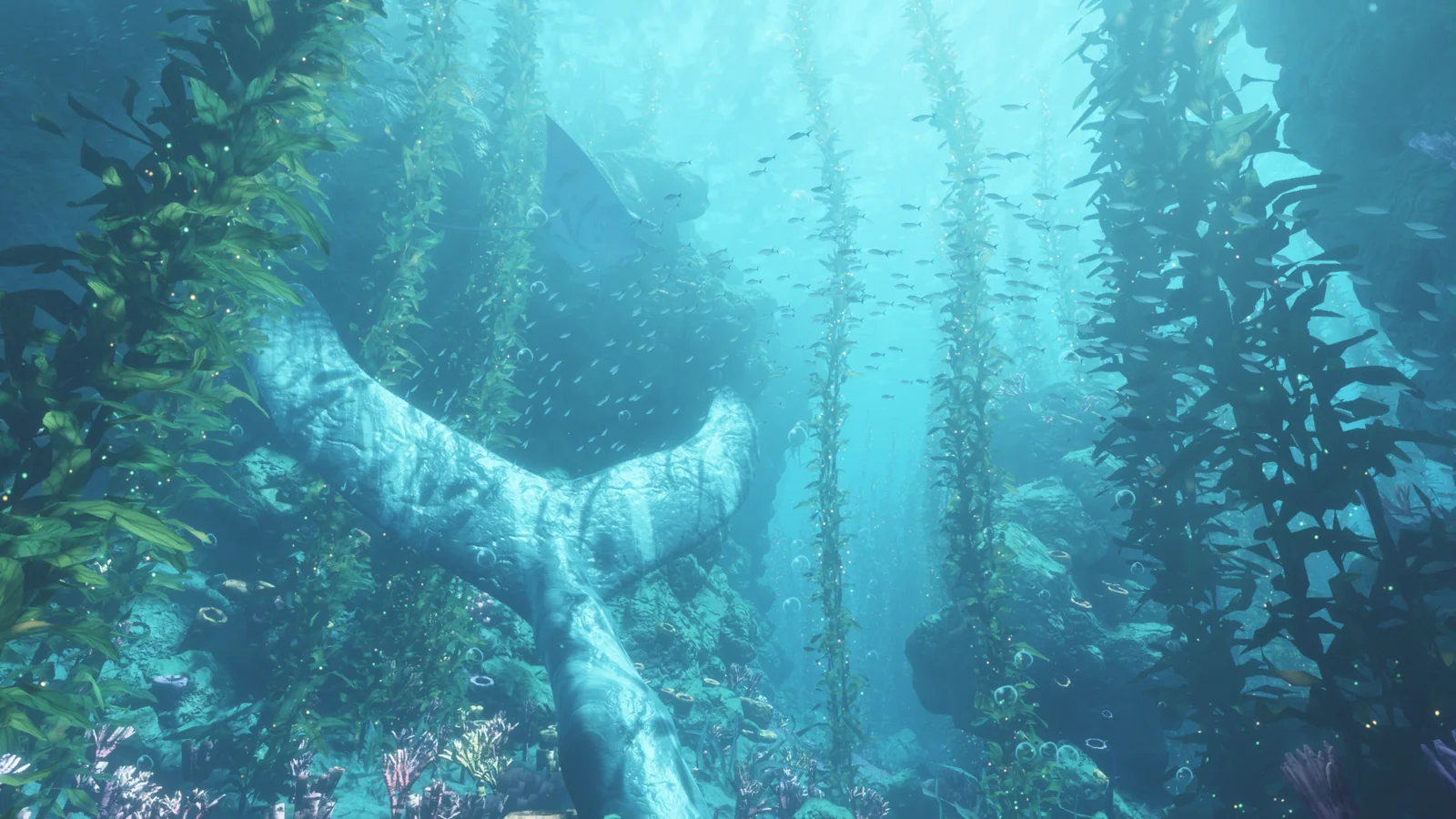
Claude Fable 5.2 was released recently to positive reviews, with both users and analysis outlets ranking it close to the pricier Opus 5.5. Front-end developer Maksymilian Dendura took inspiration from the demoscene and had Fable build a virtual underwater world named Abyssal Garden in only 96 KB of JavaScript and HTML.
The demo features 3D space and textures that are entirely procedurally generated. Rather than relying on prebuilt 3D meshes and heavy image files, the assets are the result of mathematical equations calculated on load to save significant space.
Building structures procedurally remains challenging with distinct limitations, but it proves exceedingly effective for repeated elements like vegetation when applied properly.
Visual effects and specific texturing are handled via shaders, which are compact programs that alter how a mesh or texture appears. These are utilized extensively in modern games to manage surface properties such as reflectivity.
WebGPU and AI Prompt Autonomy
The application relies entirely on browser-based WebGPU and WebGL technologies. These standards allow developers to render complex 2D and 3D graphics inside a web browser using JavaScript as the base language in a manner similar to OpenGL.
The project was generated using a prompt approximately 40 lines long. This highlights the autonomy of contemporary agentic AI when tackling an open-ended task, even if the creator incorporated minor tweaks and artistic direction during the process.
Performance and Historical Demoscene Context
Comparing the demo to a full commercial game highlights the vast differences in scale, as the browser demo contains limited interactive logic, physics, and overall content compared to a full production title.
Performance reaches 180 FPS at 1440p running on an RTX 5070 Ti. While a 96 KB footprint sounds remarkably compact, space-optimized programming for visual demonstrations has a long history, with some community members further optimizing the code down to 52 KB.
This practice of space-optimized programming for visual and aural demonstrations is part of the demoscene discipline, an art form that dates back to the 1980s and the arrival of early 16-bit computers.
Historical demoscene projects have achieved even tighter constraints, such as the 2009 demo Elevated, which included music in under 4 KB, and a browser port taking up just 4,777 bytes.
Other notable historical projects include Hartverdrahtet from 2012 featuring complex 3D spaces in 4 KB, and the 2004 first-person shooter prototype .kkrieger, which packed meshes, textures, music, and sound effects into a 96 KB executable.