Partnership Strain
A former EVGA product manager has published a personal account detailing the mounting business challenges the company faced near the end of its alliance with Nvidia. When he departed the firm in 2019, he anticipated that the business relationship would eventually collapse, a forecast that materialized when EVGA officially withdrew from the graphics card market in 2022.
According to the account, tensions initially flared with the debut of Nvidia's Founders Edition cards in 2016. Although EVGA had previously marketed Nvidia reference designs under its own branding, its sole GPU supplier began directly competing for retail customers, circumventing add-in board partners entirely.
Pricing Mandates and Losses
The most severe hurdle emerged when Nvidia instituted requirements forcing partners to distribute specific models matching announced MSRPs, frequently resulting in sales at a negative margin. Non-compliant vendors faced reduced silicon allotments, necessitating loss-leader production to secure enough supply to meet consumer demand.
Models that avoided financial losses featured proprietary circuit board designs and cooling solutions, though they commanded significantly higher price tags. To consumers evaluating base advertised costs, EVGA appeared to impose steep markups exclusively for custom enhancements.
As Founders Edition hardware improved across generations, premium partner alternatives struggled to justify their costs to buyers. This dynamic caused entry-tier models to constantly face stock shortages, while buyers of higher-end cards retained their hardware across multiple upgrade cycles, creating severe revenue pressures for a manufacturer dependent on steady volume.
Technological Bets and Exit
Regarding the 2018 introduction of real-time ray tracing on RTX 20-series boards, insiders questioned whether a lean enterprise like EVGA could safely absorb the financial risks of an unproven technology while game support remained scarce, whereas Nvidia possessed the capital to sustain long-term developmental bets.
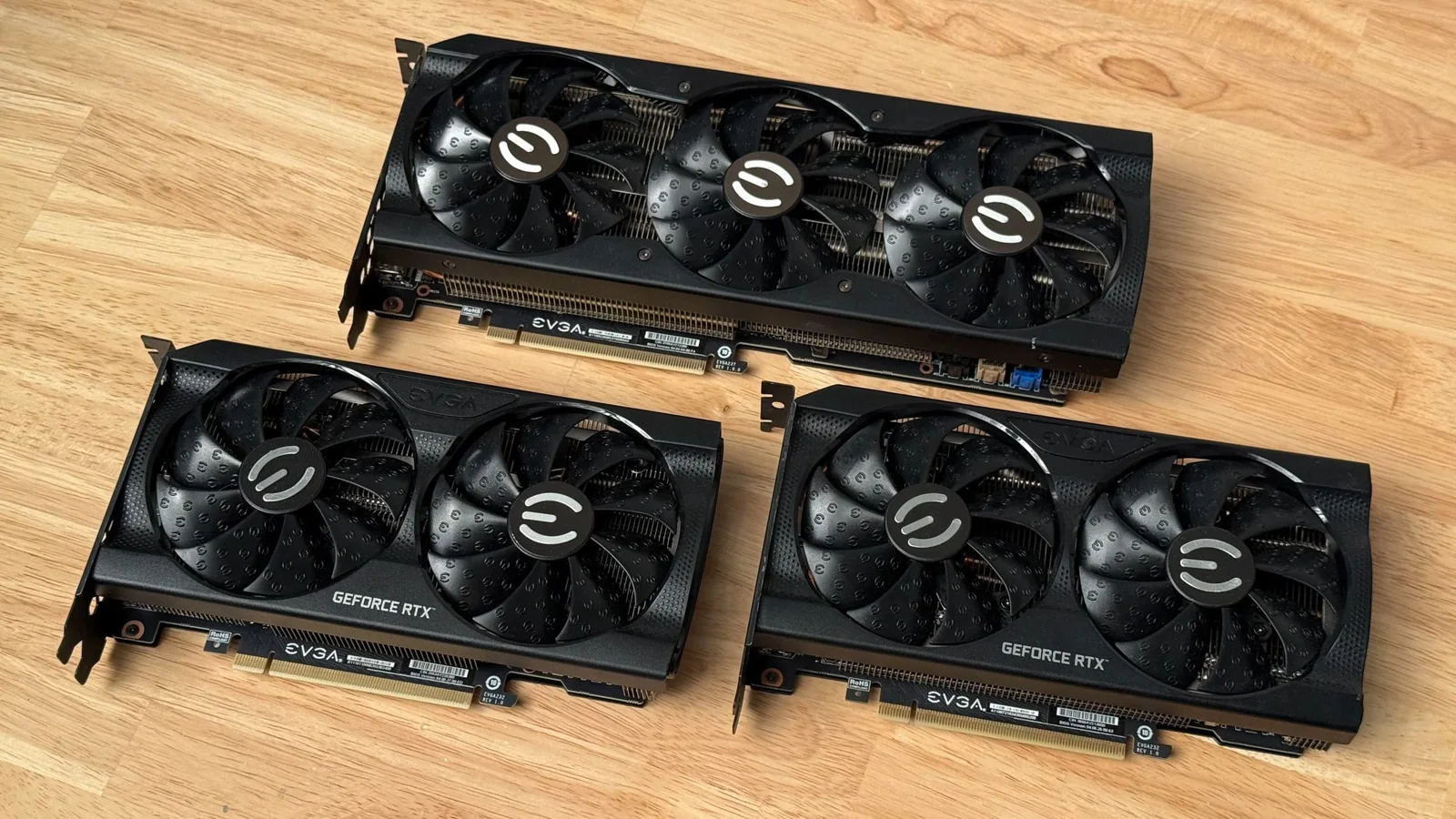
Upon leaving, the employee estimated the partnership had a remaining lifespan of four to five years, though the split occurred slightly earlier. In 2022, EVGA confirmed it would skip RTX 40-series partner cards and exit the GPU sector entirely once remaining RTX 30-series inventory depleted.
Financial Realities
Reports during the exit indicated that Nvidia products accounted for 78% of EVGA revenue while generating a minimal fraction of overall profits. While lower-end products like the RTX 3060 maintained profitability, the company reportedly lost substantial sums on high-end models such as the RTX 3080 and above.
Broader Vulnerabilities
While Nvidia's policies heavily influenced the departure, industry analyses noted that other operational practices also contributed. Heavy reliance on third-party manufacturing, generous warranty services, and a regional focus limited to North America and Europe resulted in lower unit shipments and squeezed already tight margins.