AI Agent Conquers WoW Starting Zone
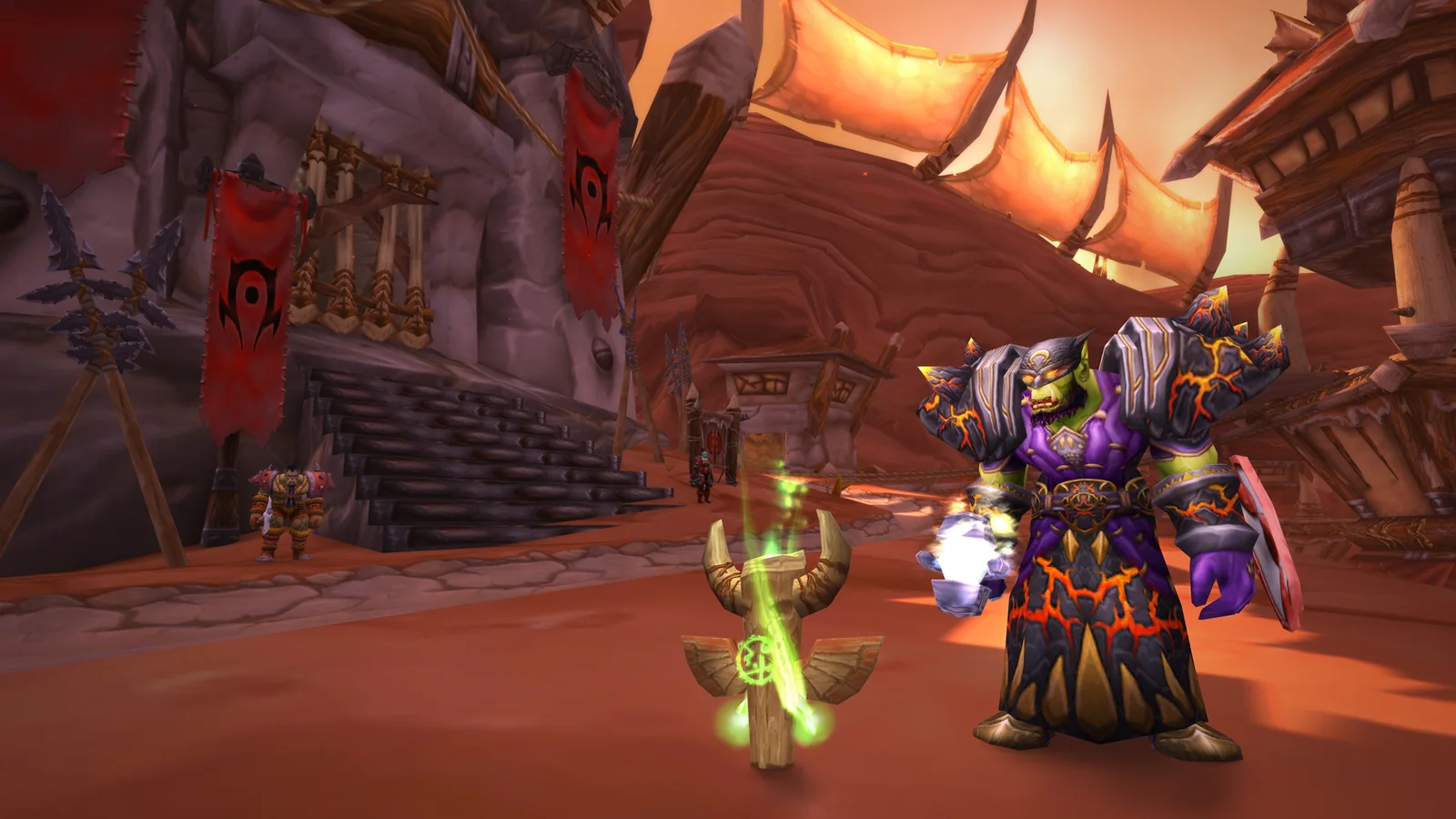
OpenAI's GPT-6 Astra AI model successfully cleared the Orc starting area in World of Warcraft (WoW) in 40 minutes with zero deaths, according to the developer of agent-wow. The model navigated the zone without any rendered frames, relying instead on network traffic and quest data extracted directly from the server's files. This achievement was accomplished using a single prompt in Codex with agent-wow, an open-source client, on a private server. The agent, starting as a level 1 Orc, completed every quest in the Valley of Trials and finished its run in Sen’jin Village.
Agent-wow is described as an “AzerothCore WoW client designed for autonomous AI agent players.” This client does not define gameplay mechanics like movement or combat, but rather provides a module system for agents to build their own functionalities. AzerothCore, an open-source server software for WoW 3.3.5a (Wrath of the Lich King), communicates with agent-wow via the game’s network protocol. The client operates on local private servers for experimentation, not live WoW servers.
The developer utilized OpenAI’s flagship model, released recently, with a high level of reasoning effort. World of Warcraft was selected for this project due to its blend of long-term strategy and short-term tactical demands. The ultimate goal is to populate an entire server with AI agents to observe if they can successfully clear Icecrown Citadel on heroic difficulty.
How the AI Agent Operates
The AI agent developed a single module capable of capturing 28 distinct types of server messages, which are stored in memory. A Python script then polls these messages to construct the agent’s understanding of the game world and subsequently sends commands to interact within it. While a higher-level implementation was initially anticipated, the developer noted that working at the protocol layer proved more than sufficient in practice.
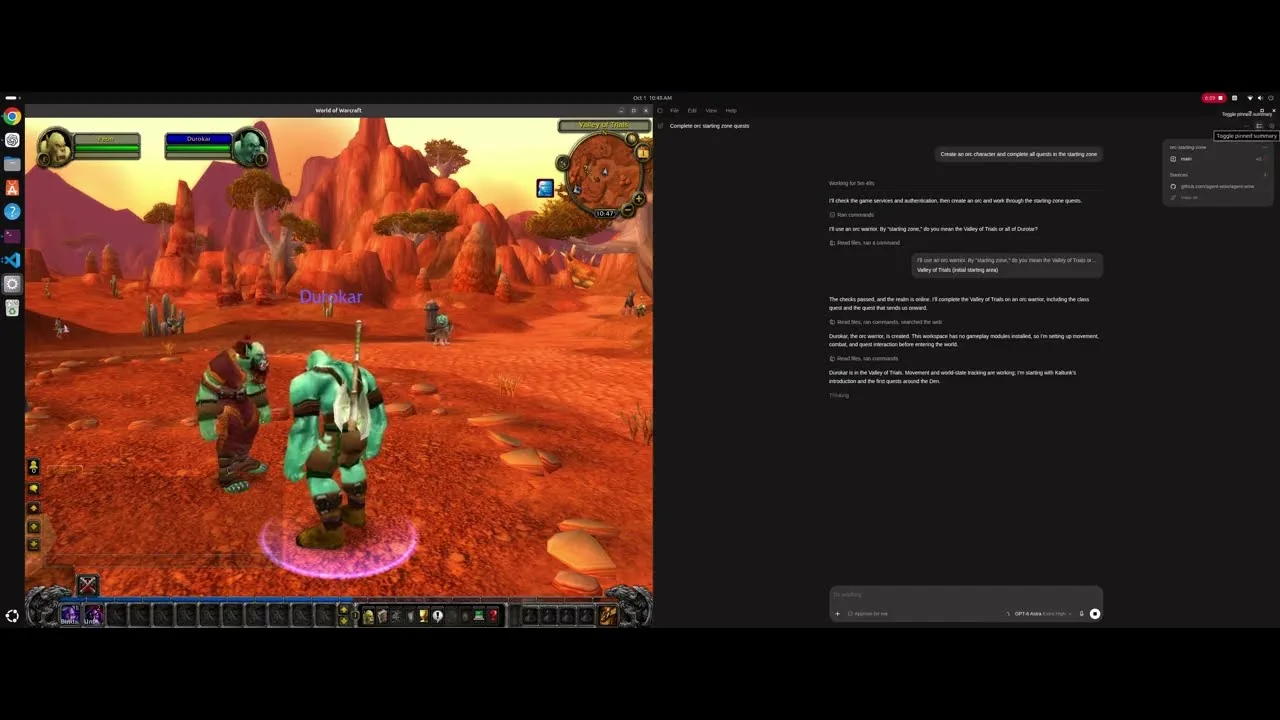
To acquire quest data, the agent employed data mining techniques, extracting information on quest givers, turn-ins, and spawn points directly from AzerothCore’s SQL files. The developer likened this approach to a human researching quests on a site like Wowhead, but noted that accessing the server's own files provides more accurate data than fan sites. AzerothCore’s source code is also listed as a resource for agents in the project's public workspace instructions, though its use in this specific run was not confirmed.
The agent demonstrated strategic planning in its approach. It systematically completed prerequisite quest chains, managed inventory by selling junk, equipped upgrades, and trained abilities before entering the zone’s final cave. Furthermore, it efficiently picked up both cave quests simultaneously to complete them together.
Advanced Pathfinding and Future Goals
For pathfinding, the agent utilized a C++ helper that plots routes using AzerothCore’s navigation mesh files (mmaps). The Detour pathfinding library identifies the route, and the helper provides waypoints as coordinates or an error if no complete path exists. The developer noted that pathfinding is a significant challenge for heuristics-based bots but described the agent’s abilities as “optimal,” even allowing it to exploit map bugs in areas with deficient collision properties.
This World of Warcraft endeavor is not the first game the model has engaged with. Shortly after its release, the model played Portal, using screenshots and player position data. In contrast, the WoW run did not use any visual input and focused solely on the first zone, whereas the Portal run covered the entire game over approximately 24 hours.
Other recent developments include various techniques used by developers to play Pokémon Red, such as employing a custom small model and a Jev decision model harness with Claude coaching. The developer's next objectives for the WoW agent involve determining if a single agent can reach level 80 autonomously and if multiple agents can collaborate to complete content using the game’s social features.