Automated External Cooling
A PC enthusiast has developed an external cooling system designed to dump waste heat outside, similar to how mini-split air conditioners operate. The setup is managed by an Arduino Mega that communicates with the PC to determine when additional thermal dissipation is required. The system utilizes a motorized three-way valve to route coolant outdoors while actively preventing condensation by ensuring coolant temperatures remain above the dew point.
The project was initiated to address excessive heat accumulation in a room with heated floors, which often became uncomfortable even during freezing winter conditions. Rather than manually opening windows to regulate the indoor climate, the modder engineered a split cooling loop that leverages sub-zero outdoor temperatures to chill the PC components.
High-Performance Hardware
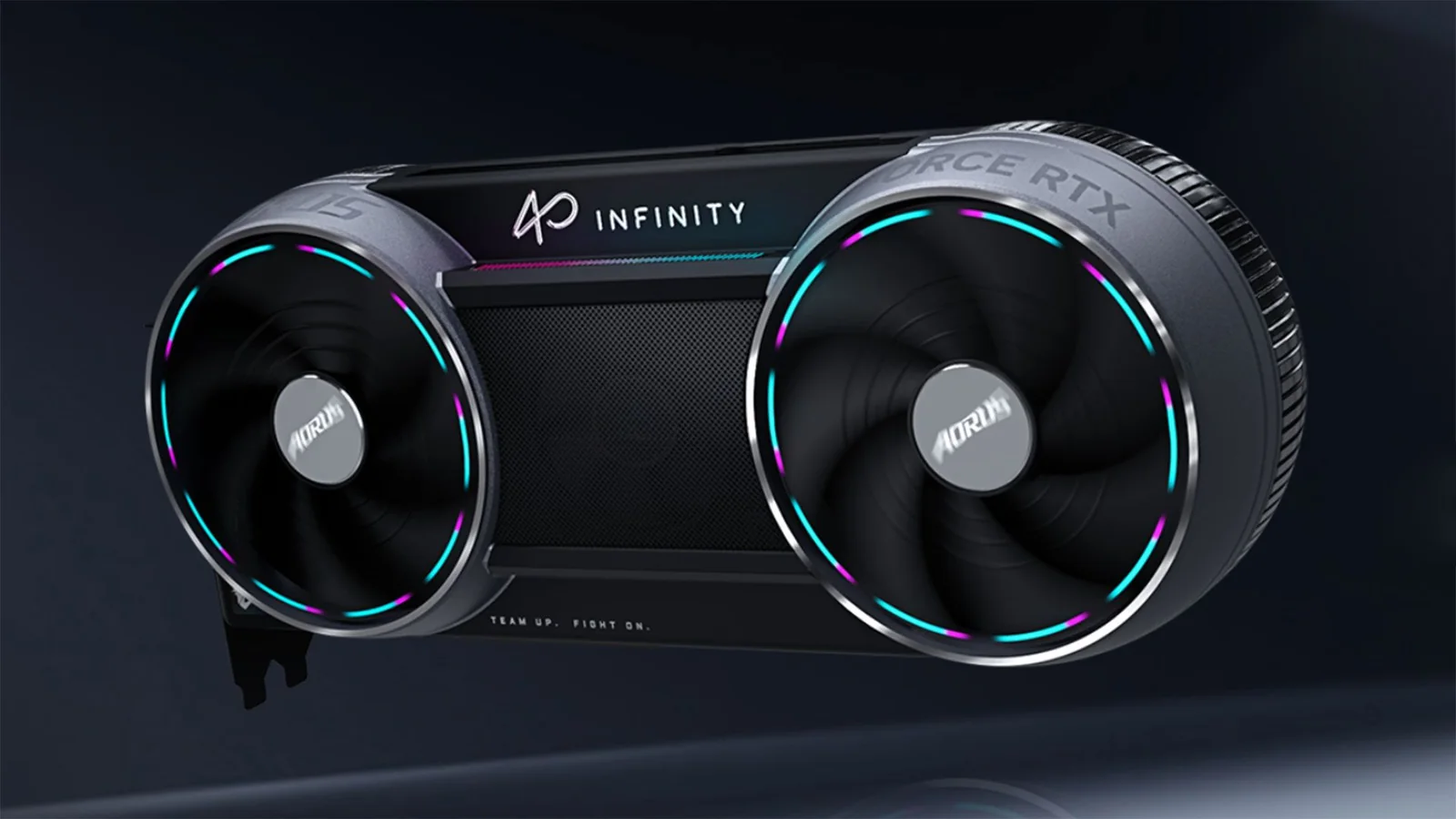
The internal build features a delidded Core Ultra 7 270K Plus processor cooled by a Thermal Grizzly 1851 Mycro Pro direct-die water block. The RTX 4070 Ti Super is also liquid-cooled using a Bykski block, and the 2x24GB DDR5-8400 G.Skill memory modules are cooled via Bykski heat spreaders and an IceManCooler two-channel block. The internal loop includes 120mm and 360mm radiators powered by an EK Kinetic D5 pump-reservoir.
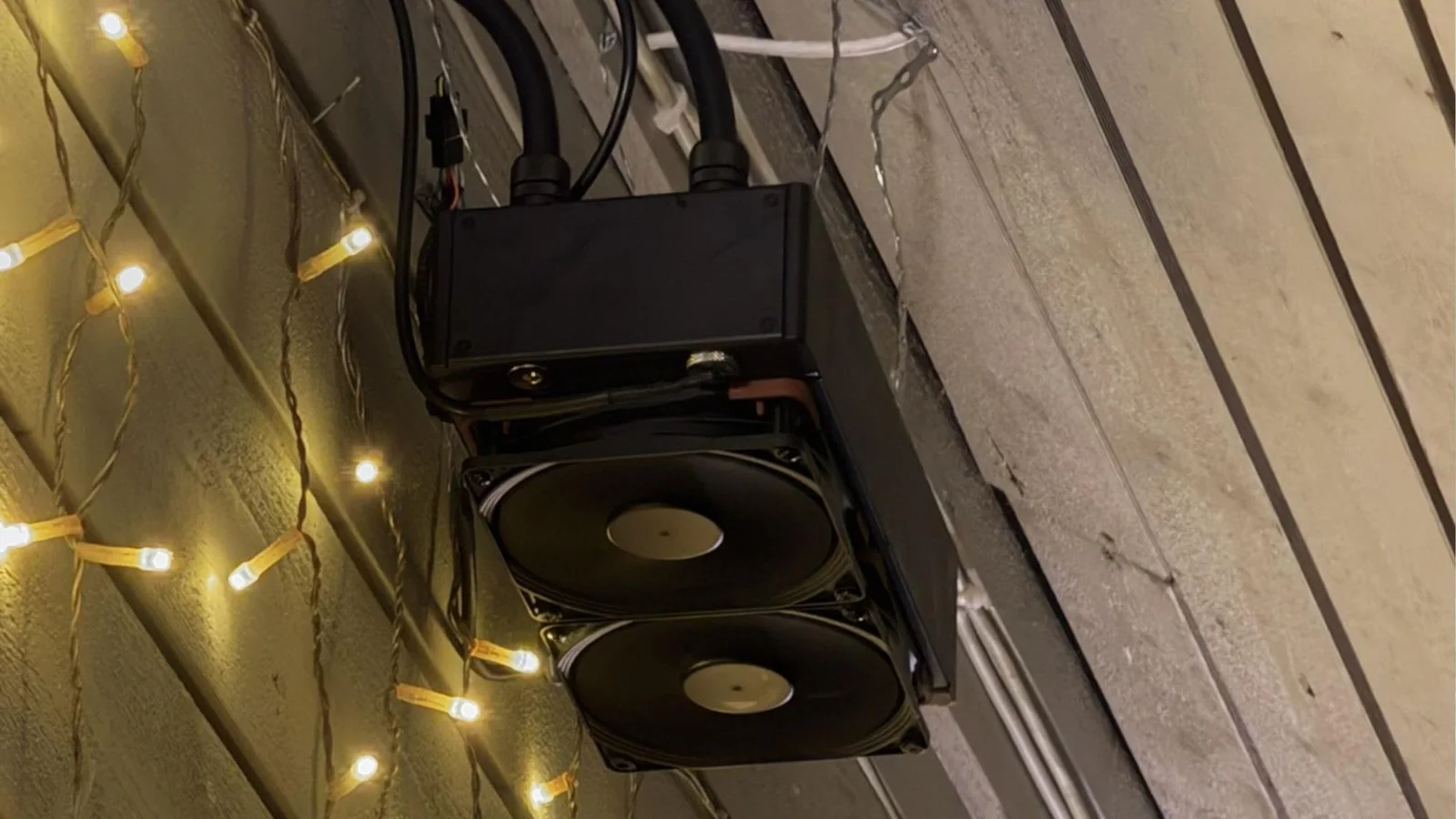
The external portion of the system includes a 240mm radiator equipped with two Noctua iPPC-3000 fans. A secondary box containing a Bykski D5 pump and reservoir manages the flow to the outdoor radiator, activating only when the PC requires supplemental cooling capacity.
Sensor-Driven Thermal Management
Upon startup, a Python script initiates communication between the PC and an Arduino Mega. The controller monitors three coolant temperature probes alongside sensors tracking ambient air and case humidity. This data allows the Arduino to modulate the three-way valve based on real-time environmental conditions.
To mitigate the risk of condensation, which can cause electrical shorts, the system calculates the dew point dynamically. The Arduino is configured to isolate the outdoor radiator if the coolant temperature approaches the dew point, maintaining a safety buffer of 10 °C during standard operation or 5 °C during intensive benchmarking.
Given the potential for sub-freezing operation, the coolant mixture was fortified with pure ethylene glycol. This modification lowers the freezing point of the Aquacomputer Double Protect Ultra Clear fluid from -18 °C to -28 °C.
Thermal Performance
The supplemental cooling system keeps components well under 50 °C during heavy workloads. Under gaming loads, the RTX 4070 Ti maintains 37 °C, while the CPU typically ranges between 45 °C and 50 °C. During synthetic stress tests like Cinebench R23 and 3DMark Steel Nomad, temperatures remained stable at 52 °C and 48 °C, respectively.
This automated solution successfully eliminates the need for manual window adjustments, allowing the user to maintain a comfortable indoor environment regardless of the PC's thermal output.