Seagate FireCuda Forge: 30-second review
The Seagate FireCuda Forge offers a unique approach to external storage by combining a high-capacity 3.5-inch HDD with a user-installed M.2 NVMe SSD. This hybrid configuration, managed by Seagate's Alkemi technology, presents as a single volume to the operating system, automatically prioritizing frequently accessed data on the faster SSD tier.
The drive arrives without an SSD, requiring the user to install an M.2 2280 module. Once configured, the device leverages USB4 connectivity to achieve transfer speeds significantly higher than traditional external hard drives, making it a viable option for intensive tasks like video editing and large-scale data backups.
Seagate FireCuda Forge: Price & availability
While official pricing is pending, the unit is expected to retail at a premium price point. Users should account for the additional cost of a 1TB M.2 SSD, which is necessary for the drive to function.
Seagate FireCuda Forge: Design & build
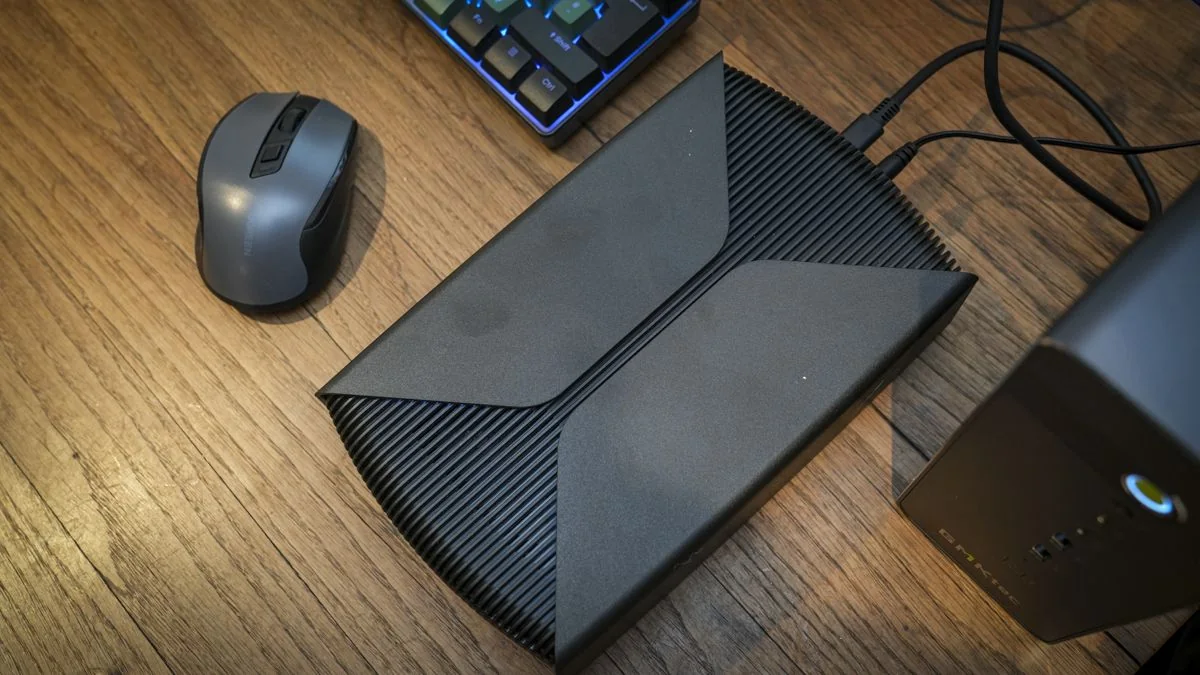
The chassis is robust and well-finished, featuring an integrated LED status light. Installation of the SSD is straightforward, though it requires a cross-head screwdriver. The drive requires an external power adapter, which is included in the box.
Seagate FireCuda Forge: Performance
In real-world testing, the FireCuda Forge demonstrates significant advantages over standard HDDs. During large file transfers, the drive maintains high speeds until the SSD cache is saturated. For video professionals, the drive provides a fluid editing experience, with timeline rendering performance that closely mirrors that of a dedicated SSD.
Should you buy the Seagate FireCuda Forge?
The FireCuda Forge is an impressive solution for users who need massive capacity without the performance bottlenecks of traditional mechanical drives. While it requires a bit of setup and an additional SSD investment, the resulting performance makes it a strong contender for creative workstations.
Buy it if...
You need a large-capacity drive for local video editing or frequent large file offloads and want SSD-like responsiveness.
Don't buy it if...
You require sustained maximum speed for transfers exceeding 1TB or if you prefer a simple plug-and-play solution without the need for manual SSD installation.