Autonomous Warfare Milestone
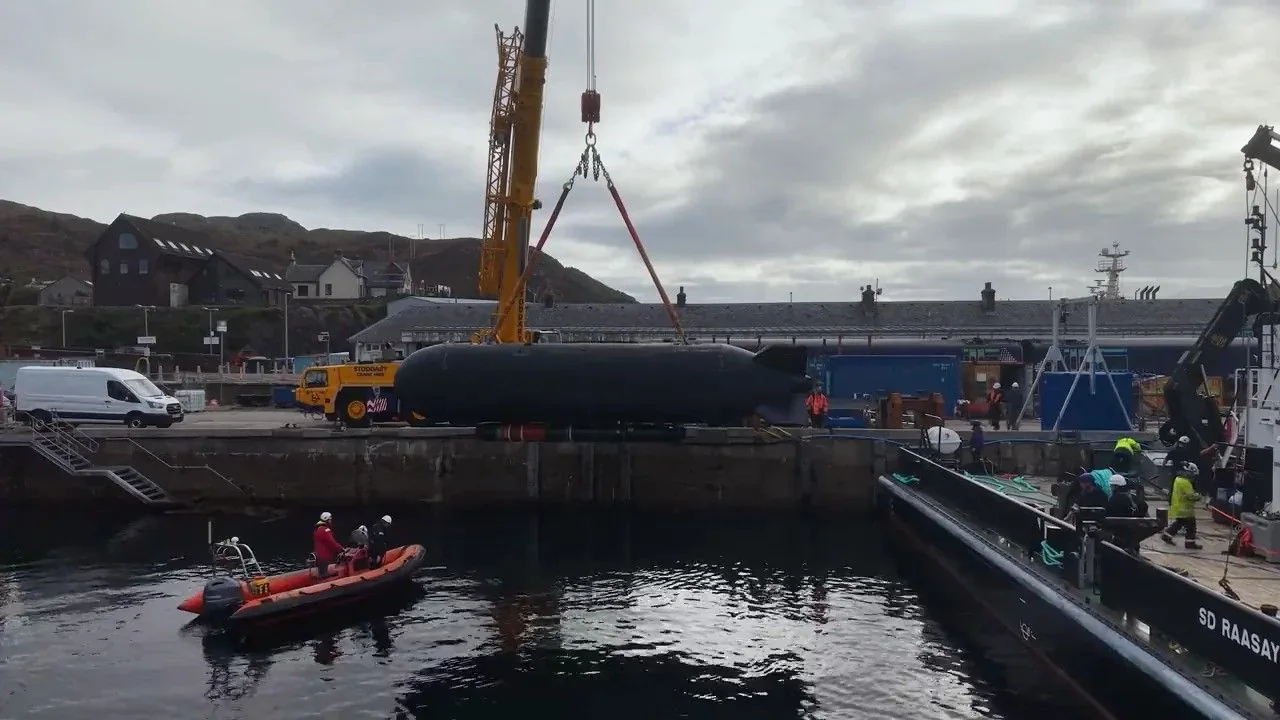
The U.S. Navy and the British Royal Navy have jointly launched an exercise U.S. Mk 48 heavyweight torpedo from the Royal Navy’s uncrewed drone submarine, XV Excalibur, marking a historic milestone in autonomous warfare. The proof-of-concept launch took place on September 13 at the British Underwater Test & Evaluation Center (BUTEC) in Scotland.
Chief of Naval Operations Adm. Daryl Caudle noted that proving the capability to seamlessly launch a U.S. heavyweight torpedo from a Royal Navy autonomous underwater vehicle validates shared strategic interchangeability, increasing combat power and flexibility.
The launch was conducted under AUKUS Pillar 2, a military partnership between the United States, the United Kingdom, and Australia aimed at developing and accelerating advanced defense technologies. The trial validated the mechanical, electrical, and software integration of an American kinetic payload onto a British autonomous platform.
Project Broadsword Execution
The project, designated Project Broadsword, received approval in February 2026 from the Department of the Navy Rapid Capabilities Office (DONRCO) and was executed in collaboration with the Royal Navy, the Defense Innovation Unit (DIU), Naval Undersea Warfare Center (NUWC) Keyport, and industry partners, moving from approval to trials in seven months.
The Mk 48 is a heavyweight anti-submarine and anti-surface torpedo used by the U.S. Navy and allied forces. Typically launched from manned submarines with large crews, the 3,700-pound (1,680 kg) weapon is designed to sink deep-diving submarines and high-performance surface ships. Project Broadsword marks the first time the torpedo has been successfully launched from an uncrewed, autonomous robotic submarine.
The XV Excalibur Vessel
The launch vehicle, XV Excalibur, is the British Royal Navy’s Extra-Large Uncrewed Underwater Vessel (XLUUV), designed to operate autonomously or via remote control. Because Excalibur lacks traditional internal torpedo tubes, engineers attached the 2-ton torpedo externally using a specialized cradle beneath its hull.
Future Developments
Following the success of Project Broadsword, the U.S. Navy confirmed plans to continue follow-on acceleration with Project CUTLASS in collaboration with partners, utilizing the Anduril Dive-XL platform to tackle advanced payload integration data and tactical employment scenarios.
This milestone aligns with fast-rising autonomous warfare developments, where militaries deploy systems capable of capturing data and executing tasks with minimal human intervention across aerial, ground, and sea domains.