The Evolution of Portable Macs
Apple has influenced everything from unibody laptop cases to high-res screens.
The dream of a truly portable Mac is almost as old as the Macintosh itself. Five years after the debut of the original Macintosh desktop in 1984, Apple launched the disastrously expensive, 16-pound Macintosh Portable. It failed quickly. But out of the ashes came the PowerBook 100 in 1991, followed by the more refined PowerBook 500 and PowerBook G3 in 1994. Apple finally struck mainstream consumer gold with the colorful iBook G3 in 1999. With a small handle and an adorably rounded case, what more could you want? It wasn't exactly fast, but it was a clear sign that Apple was aiming to make computers that appeal to the masses.
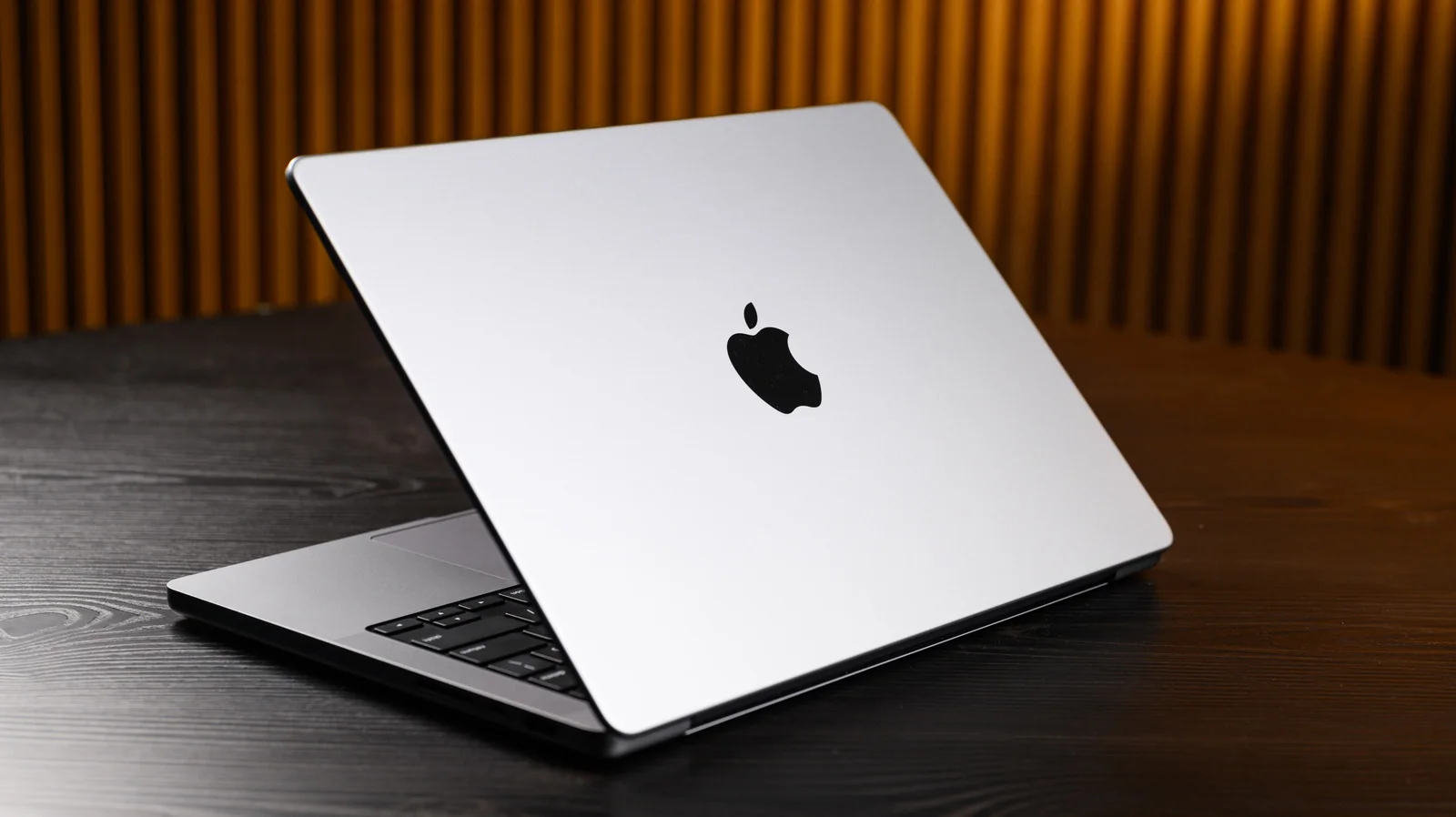
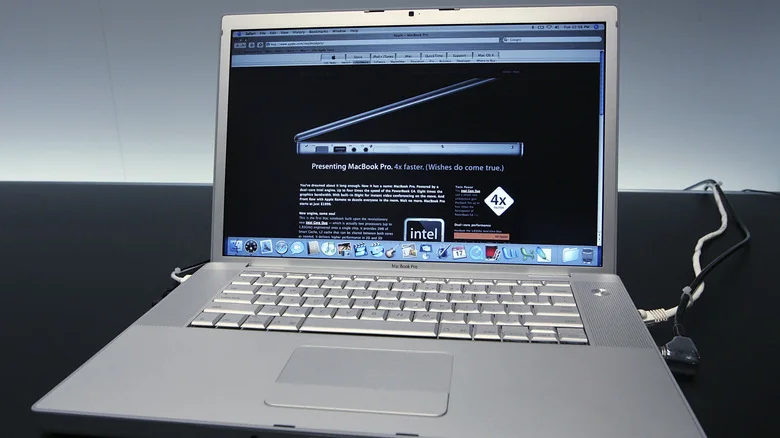
The introduction of the first MacBook Pro in 2006 marked a massive turning point for Apple's portable computers, improving on the PowerBook G4 in every way and shifting the computing landscape significantly.
No matter what opinions exist regarding Apple hardware, there is no doubt that MacBooks have been the defining laptops of the last two decades. PC makers rushed to ape the MacBook Pro's sleek unibody design, and the introduction of the MacBook Air spurred on the creation of ultraportable laptops.
Apple experienced missteps along the way — the first MacBook Air was underpowered, and the later removal of crucial ports from the MacBook Pro drew heavy criticism — but even those choices served as lessons for the wider PC industry.
The Intel Transition
Apple's major switch to Intel CPUs in 2005 marked a move away from the PowerPC chips it had relied on for years. That made the first MacBook Pro and MacBook quite intriguing systems when they arrived in 2006. They were not just updated Macs, but a sign that Apple was directly competing with standard PCs using the exact same Intel Core Duo chips.
The MacBook Pro and MacBook showcased Apple's design prowess and served as a warning to the PC industry. The MacBook Pro offered a slimmer, more refined version of the PowerBook G4 aluminum case. At the time, most PC makers focused on utilitarian designs, with Sony being a rare company leaning into premium aesthetics with VAIO systems.
Unibody and Ultraportables
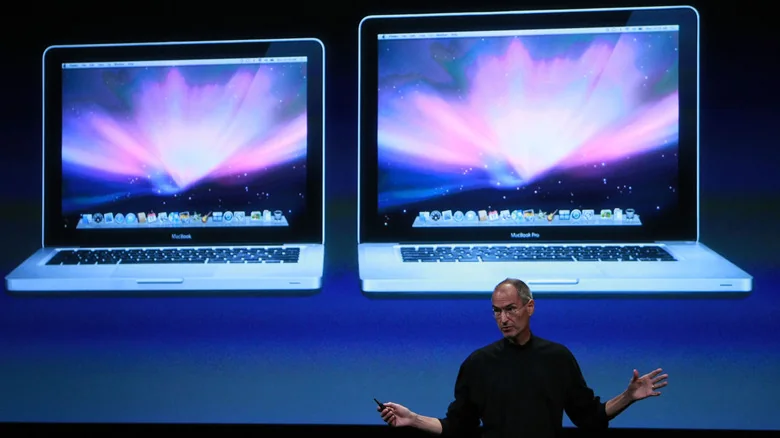
In 2008, Apple debuted the MacBook Pro and MacBook Air featuring unibody cases carved out from a single block of aluminum. Apple's unibody cases were stronger, lighter, and more attractive than mainstream laptops of that era, continuing to evolve over the next two decades.
PC makers struggled to replicate unibody manufacturing for years due to supply chain constraints. Eventually, Razer approached the design with its Blade gaming laptop, while Intel's Ultrabook push led competitors to adopt metal chassis and alternative premium materials.
Apple's redesign of the 11-inch and 13-inch MacBook Air in late 2010 set a new standard for laptop shapes with a wedge profile that accommodated larger batteries and faster solid-state drives, heavily inspiring Windows ultraportables throughout the decade.
The Retina Era
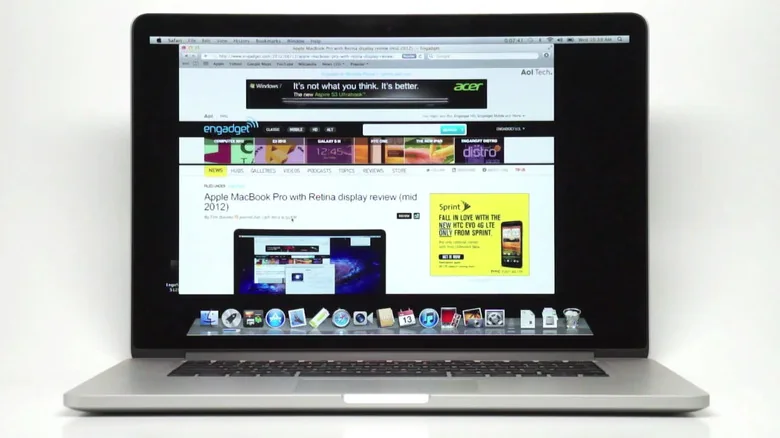
With the 2012 MacBook Pro, Apple brought over the Retina Display concept from the iPhone 4, offering pixel densities high enough that individual pixels were indistinguishable. This sparked an industry-wide race toward higher-resolution laptop screens, though competitors like Dell eventually pioneered razor-thin bezels ahead of Apple.
Minimalism and Controversy
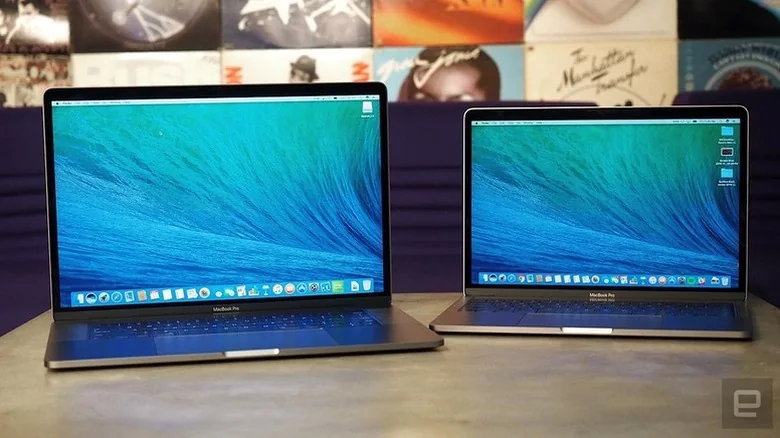
The 2016 MacBook Pro introduced the Touch Bar and removed legacy ports in favor of USB-C connections and a headphone jack. While thinner and lighter, it eliminated built-in SD card readers, USB-A ports, and HDMI connections, reflecting Jony Ive's minimalist style at the cost of day-to-day practicality.
The Touch Bar remained divisive, with few competitors adopting similar secondary display strips. However, Apple's removal of legacy ports prompted high-end Windows laptops to experiment with similar minimalist port selections before eventually restoring broader connectivity.
2020 and Beyond: Apple Silicon and Functional Ports
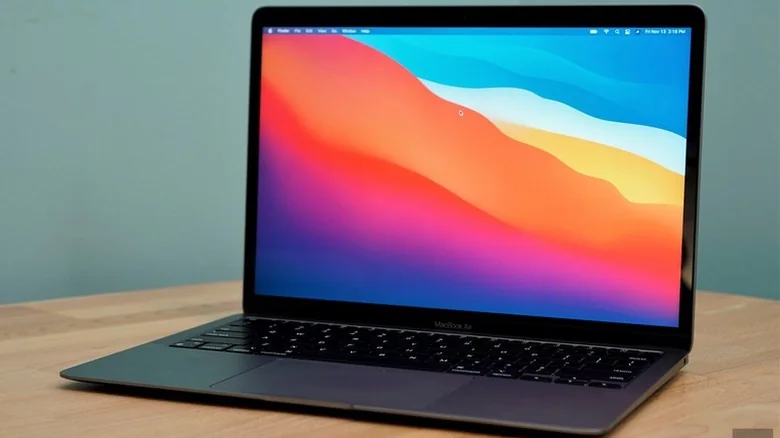
In 2020, Apple transitioned its computers to the M1 chip, an Arm-based system-on-a-chip that combined CPU cores, GPU cores, unified memory, and input-output connections. The M1 MacBook Air and MacBook Pro delivered high performance, exceptional battery efficiency, and robust handling of emulated applications, establishing a new benchmark for Arm-based computing.
Later revisions in 2021 restored the SD card reader and HDMI ports, while subsequent models continued to influence the PC landscape, encouraging Microsoft and Qualcomm to develop alternative Arm-powered Copilot+ hardware.
Modern high-end AI systems continue to chase the performance and efficiency standard initially popularized by Apple's transition to unified custom silicon architectures.