Amazon Teases New Alexa Hardware and Neo Design Language
Yet another tech thing named Neo.
Expanding the Alexa Ecosystem
Amazon has been hard at work releasing new devices week after week. As part of the introduction of the Alexa Tablet series, the company's Senior Vice President of Devices and Alexa, Panos Panay, sat with a small group of reporters to tease upcoming products and design paradigms.
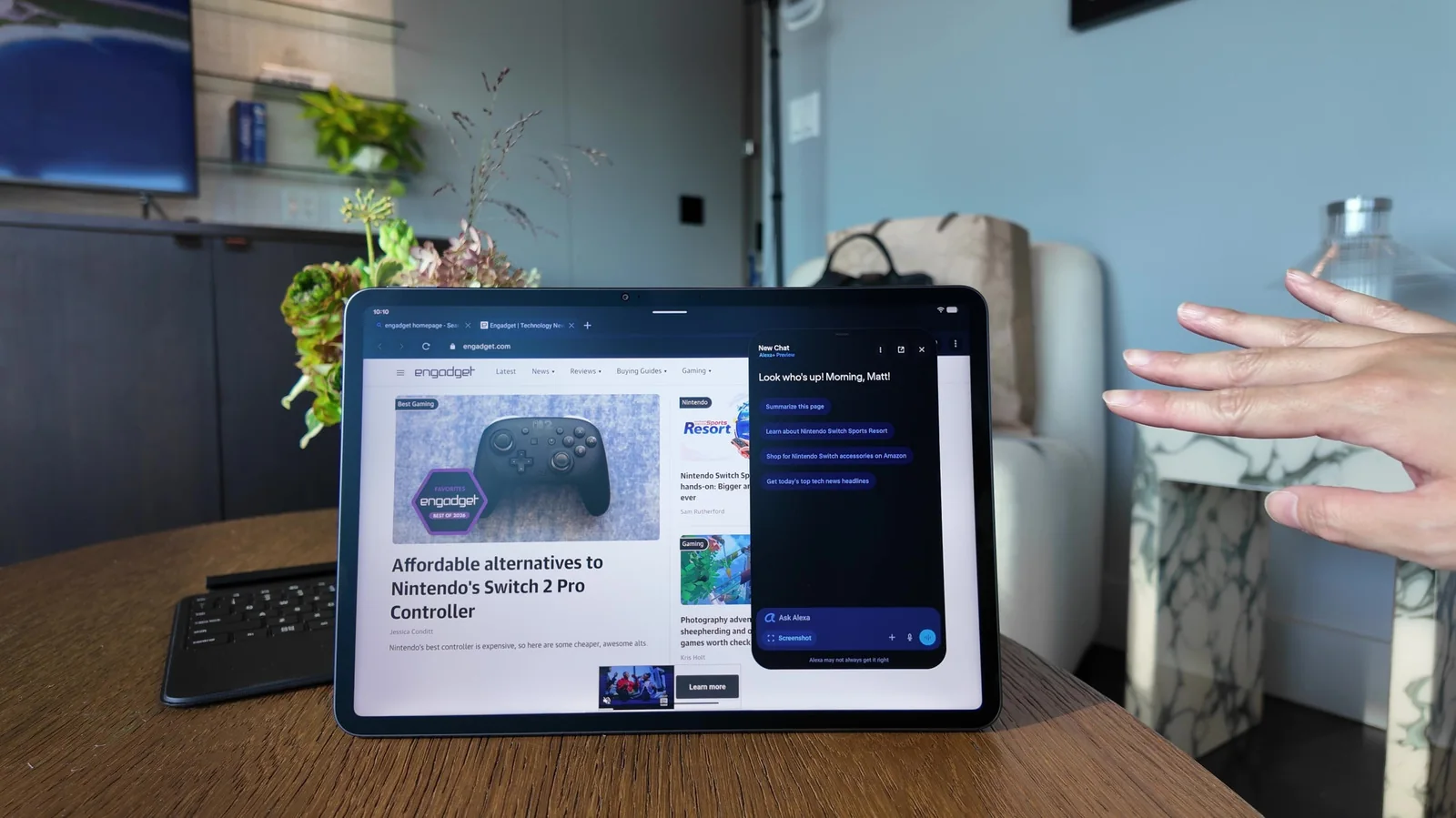
The new Alexa Tablet series replaces the popular Fire tablet family and places the company's AI assistant front and center. This marks the first major hardware line by Amazon to carry the Alexa brand directly, sitting alongside established names like Echo, Fire TV, Kindle, Ring, and Eero.
When asked if the new tablet series signals a broader shift toward hardware bearing the AI's name, Panay noted it would happen when it makes sense, adding that there are more developments to come.
Tech companies of Amazon's scale routinely maintain experimental prototypes in global R&D labs, and Panay has previously hinted at concepts like a foldable Kindle.
The Neo Design Language
Addressing the software interface that integrates the Alexa layer into the tablets' Android operating systems, Panay discussed an internal project.
Ralf Groene, who leads design for Amazon Devices and Services, is developing what he calls a Neo design language, according to Panay.
Echo speakers and displays have not yet received their moment in the new hardware lineup, but Panay indicated he would share more on that brand and the Neo interface later in the month.
Panay described the Neo design language as a structure for how information is moved and presented to the customer across different contexts and locations.
Connecting Fragmented AI Experiences
Panay highlighted a growing challenge for users navigating disparate AI agents and applications, noting that the connection between products can easily become bifurcated and difficult to track.
As users jump between multiple applications to solve different problems, remembering where specific answers or data originated can quickly become tricky.
Amazon aims to provide a unifying frame designed to connect these experiences simply, with additional details promised at the end of the month.
The interface strategy suggests Amazon is preparing a cross-device ecosystem anchored by Alexa.
Echoing existing capabilities, devices like Fire TV can already track media playback across rooms, allowing users to pause a show on Prime Video in one location and resume it elsewhere via Alexa.
Similarly, the new Alexa tablets can maintain conversations started on Echo Show devices, while the companion app operates across iOS, Android, and the web to maintain continuity.
Features like the beta About You dossiers further reflect Amazon's ongoing work in user profiling alongside preview versions of advanced AI capabilities.
Smart Home Competition
With new Echo products anticipated, competition in the smart home category continues to heat up amid reported hardware and AI ecosystem pushes from competitors like Apple and Google.
Google has steadily integrated its Gemini AI across speakers, TVs, thermostats, and cameras.
As a pioneer in the smart home space with established Alexa and Echo hardware, Amazon is positioned to counter these emerging rival ecosystems.