Bee unveils two AI note-taking devices, its first new products since being acquired by Amazon
The Eclipse and Frontier are cheap and colorful, but you'll need a Pro subscription to make the most of them.
Just over a year after being acquired by Amazon, wearable AI startup Bee has quite a few products to unveil. It's introducing two new AI devices today, alongside a Pro subscription offering and some software updates.
Bee Frontier
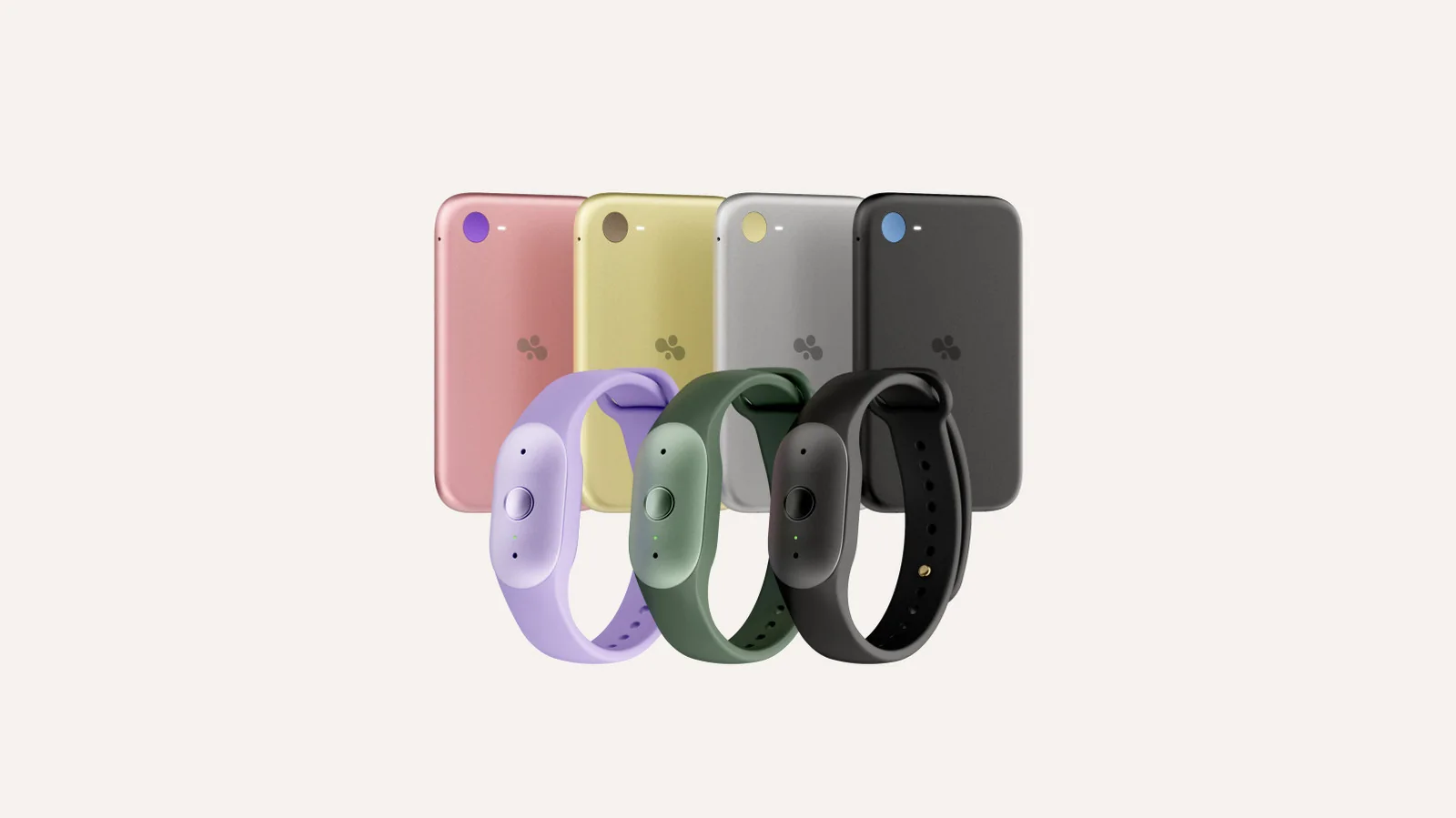
First up is the Bee Frontier, which is essentially a follow-up to and replacement of the previous Pioneer. Like it, the Frontier is basically a Fitbit-like module that you can slot into a bracelet or a clip so you can attach it to your clothes or bags. It has an onboard button, like the Pioneer, to initiate a note-taking session or invoke the app's Buzz AI assistant, as well as an LED indicator to convey when it's listening or charging, for instance.
But the Frontier has evolved from its first-gen predecessor, which cost $50 and seemed like a product that would appeal most to early adopters. This new version is not only smaller and lighter, but also comes in more colors. The original was only available in one version, and in the box with it came a black band and a yellow band, along with a clip attachment. That selection might fit the bee vibes, but certainly isn't the most sartorially versatile. I'm a fan of the Lavender and Sage color options for the Bee Frontier, and those who want something more generic can opt for the black (Onyx) version.
Additionally, the Frontier is rated IP67 for dust and water resistance, according to Amazon, whereas the Pioneer was not even water-resistant. Both models have dual microphones with noise filtering to tune out background chatter, though the effectiveness of the Frontier's attempts at this will require in-depth testing to determine.
Those are the main physical differences between the Frontier and the Pioneer. The two share the same 7-day battery life estimate, USB-C charging port and similar functionality. One press of the button can initiate a recording session, where Bee listens to your surroundings and delivers transcripts and summaries of conversations. Pressing and holding the button allows you to ask a question of the AI assistant or leave yourself a voice note.
The Bee Frontier is available now for $75 at Amazon, and you may want to wait till full reviews are out to decide if the water resistance, new colors and smaller size are worth the money. The Pioneer is no longer available to purchase.
The Bee Eclipse is a magnetic AI note taker for your phone
The other piece of hardware that Bee is announcing today is the Eclipse — a magnetic, rectangular puck you can snap onto your phone. It's like a thicker credit card with three onboard microphones, a button on the top left corner and an LED indicator light next to it. The Eclipse is a lot bigger than the Frontier, which also means it can last a lot longer. In fact, it offers three times the battery life, with Bee promising it will last "more than 21 days."
This is a new type of device for Bee, since it's not really a wearable for people and more like a wearable for phones. But at its core the Eclipse basically performs the same functions as a Frontier (or Pioneer). You can push a button to start a session, the indicator light turns on and the AI gets to work, summarizing your discussions and attempting to identify who is speaking or what is being said.
The company said that "like all Bee devices, audio is never stored, cannot be accessed or shared, and users are prompted to gain permission from call participants each time a recording is started." It added that the Eclipse, like the Frontier, "is designed with privacy at its core, with one button to turn it on or off and a visible indicator light on when it's summarizing a conversation."
While the rationale behind a little light signaling to people nearby that a device might be recording is sound, it's worth noting that the shape, size and magnetic attachment of the Eclipse means it closely resembles a portable battery charger. Those things have indicator lights as well, and it can be easy to see how someone might assume an indicator LED means something is charging, rather than listening.
Still, Bee is far from the only company making AI note-taking devices that snap onto your phone. There's Pocket, Plaud, Comu, Innaio, Ruune, Raycon and undoubtedly countless more littering the venture capital-fueled grounds of Silicon Valley. And the issues that Bee's Eclipse will run into relating to its form factor will likely be faced by the entire category as well.
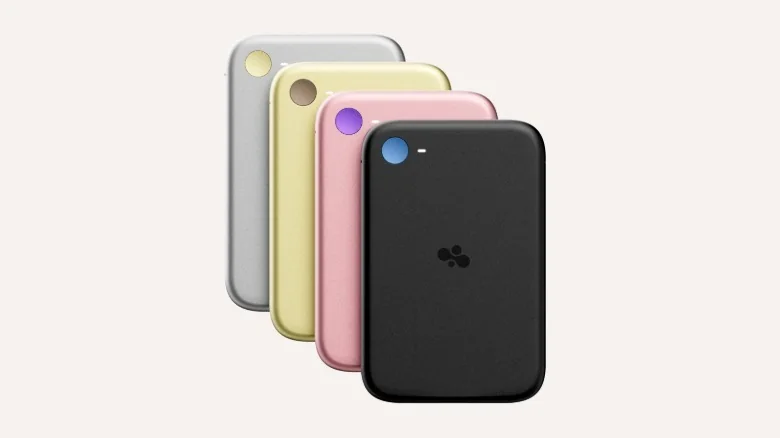
If Bee's offering is of interest and you have $100 to spare, you can get the Eclipse in one of four admittedly attractive colors — Silver, Midnight, Honey and Blush. Amazon says it will be "available soon," and nothing more specific on time frame has been shared.
Bee Pro subscription, plus Amazon and Alexa+ integrations
The company is also unveiling the Bee Pro subscription plan today. For $11.99 a month, it offers some additional features like unlimited recent conversation summaries, suggested to-dos, daily memories, conversation templates, and a few new integrations that were also announced today.
Before I get into those, though, a quick note for existing Bee users. If you're feeling nervous as these sound like features you've been enjoying and you're concerned they might suddenly be wrested away and put behind a paywall, you might not be affected. Bee's founder Maria Zollo told me in a briefing that for the customers that have been with the company since its early days, "as a sign of gratitude, we're giving to them the Bee they have today." Zollo added that for them, the "entire featureset is free forever." (All new Bee customers also get 30 days of free Bee Pro use.)
If you want the features I'm about to mention, then you'll need a Pro subscription. First, the company is expanding its in-app integrations, which previously included Google Calendar, Gmail and Apple's HealthKit. It's introducing "the ability to connect to Alexa+ and Amazon.com." If you connect it to your Amazon account, your Bee can suggest items you might have mentioned in conversations that you wanted to purchase. These product recommendations will show up on Amazon's homepage, as well as in the Bee apps. You'll also be able to create custom shopping lists including things that came up in your conversations.
If you connect Bee to Alexa+, you can ask your Echo or other Alexa-enabled device for information that your Bee might know. This could be anything from conversation summaries, to-dos or book recommendations from friends. With this enabled, you won't have to hunt for and open the Bee app on your phone and ask for what you want — you can just ask your speaker or TV to do so. Amazon said that the Alexa devices would use voice identification to ascertain that it's you and not, say, a random interloper or nosy partner, before sharing the information.
Amazon stressed that both these features are opt-in, so the user has to give permission before information is shared.
Finally, Bee is launching a desktop app for Mac or Windows, which you can access with a Pro plan. This doesn't just give you access to your recaps and chats on your computer, but also allows you to do additional transcribing from the desktop. It's as full-featured as the mobile app.
A refresher on Bee Private Compute
Given the recent controversy around Apple's Audio Intelligence features — specifically Siri Recap and Live Rewind — it's worth bringing up Bee's "Private Compute." It's what the company described in a blog post on September 24 as a "secure and isolated processing environment that no one, including Amazon and Bee, can access." That's not to say this did not exist prior to the Apple event — the post does not make that very clear, other than saying that "Amazon and Bee developed Private Compute from the ground up, and the technology builds on the foundation of the AWS Nitro System and its AWS Nitro Trusted Platform Module."
In today's announcement, Amazon reiterated the tenets of Bee Private Compute, including reminders that no audio is ever stored. "Audio is processed into insights in real time and deleted after processing," the company said in a press release. It also said that no one can access your data unless you choose to share it, transcripts are encrypted using keys that can only be created and controlled by your device and that you can delete your transcripts and summaries whenever you want.