Design and Concept
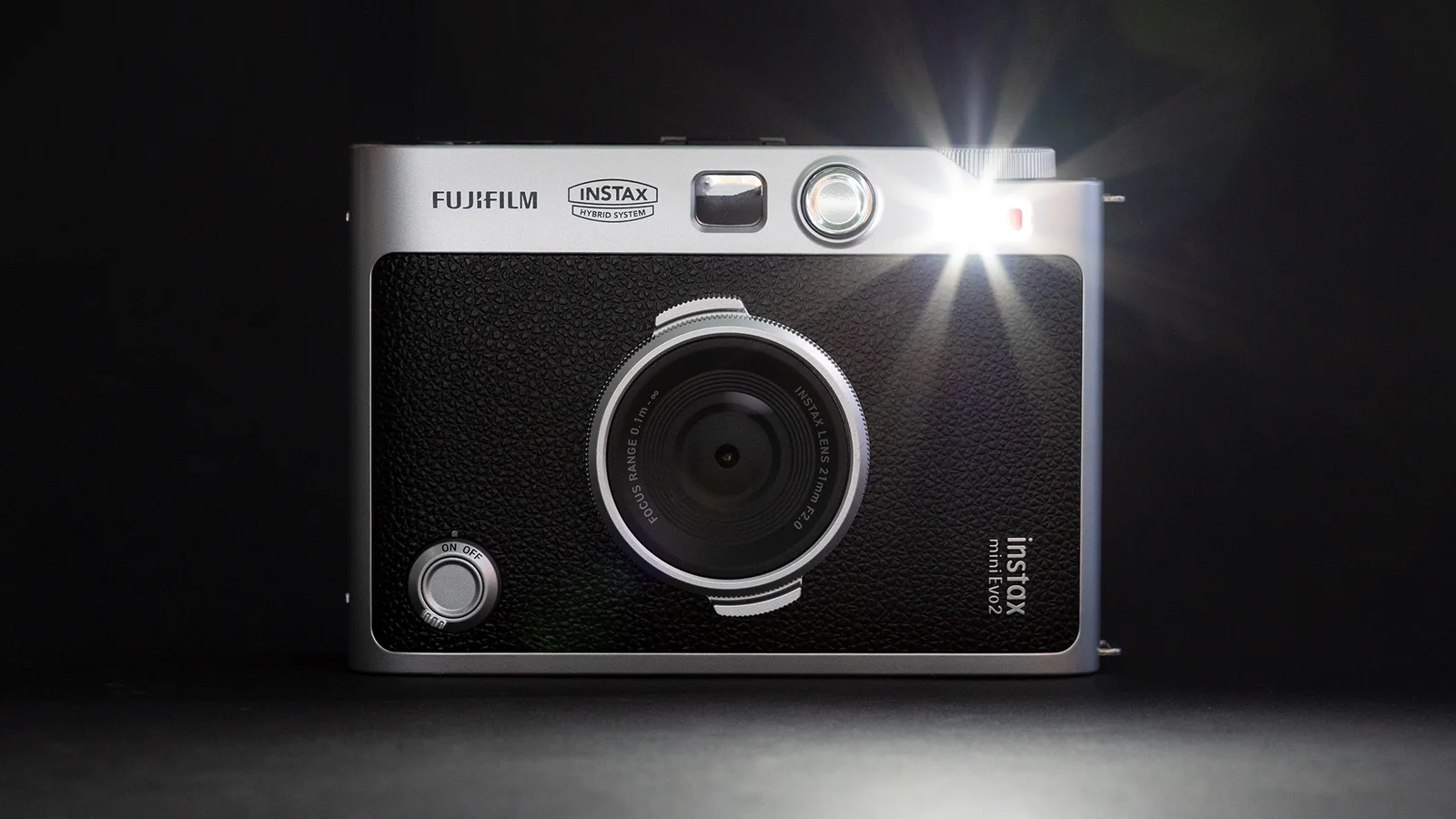
The Mini Evo 2 from Fujifilm’s Instax brand functions as a hybrid digital camera and instant film printer. It bridges the gap between digital convenience and the tactile appeal of analog instant photography, utilizing multiple lens and filter options to create distinct aesthetics.
Image quality stands out for this camera category, delivering acceptable color accuracy, contrast, and fine detail. The printed output from both captured images and smartphone transfers appears vibrant, with a more muted natural print mode also available.
The primary design critique involves its slight bulkiness, though this is expected given the internal film mechanism. The button layout also feels somewhat unconventional, yet the device remains an enjoyable tool for creative photography.
Hardware and Performance
Beneath its retro exterior, the Mini Evo 2 utilizes a compact 1/2.77-inch sensor comparable to typical smartphone cameras, meaning low-light performance is inherently limited.
In dimmer lighting conditions, the integrated flash provides sufficient illumination to mimic a retro digital aesthetic. However, users must take care not to obstruct the flash with their fingers due to its proximity to the shutter buttons.
Physical controls include dual shutter buttons, a lens selection ring, a top filter dial, and a film advance lever used to trigger printing. The camera is heavily optimized for vertical framing, featuring a dedicated thumb rest in that orientation.
The wide lens provides a generous field of view. Sensor resolution accommodates minor cropping, which aligns well with the printer resolution limits. Users can adjust contrast, saturation, brightness, and cropping directly on the device without needing a smartphone app.
A large 4.5-inch touchscreen simplifies framing and reviewing, while a front-facing convex mirror assists with self-portraits.
While internal storage is limited and caps image resolution, utilizing a microSD card allows for higher-resolution captures up to 4,128 x 3,100 pixels depending on the active shooting mode.

Usability and Filters
The hybrid workflow allows users to capture multiple shots and selectively print preferred frames, minimizing wasted film. The source review notes that this experimentation adds significant value, though users strictly seeking a screen-free analog workflow might prefer alternative models.
Adjustable picture settings include exposure and white balance, complemented by self-timer options and a macro setting capable of focusing as close as four inches.
The core feature set relies on separate lens effects and film simulation filters, offering a total of 100 different combinations to alter the look of each photograph.
Combining these varied effects introduces an element of experimentation that elevates the device above standard analog-only alternatives.
Due to its physical dimensions, operating the dials and power controls typically requires two hands, and the body will fit comfortably only in larger pockets.
The companion smartphone app supports wireless image transfer and remote camera operation, though early software limitations can occasionally restrict transferring unprinted captures directly from the app interface.
Conclusion
The source review emphasizes that starting with a competent digital sensor before applying creative filters provides superior flexibility compared to strictly analog cameras.
Ultimately, the device functions reliably as a dedicated camera rather than merely a novelty toy, justifying its higher cost for users seeking an engaging instant photography platform.
Score breakdown
Scored out of 10Price & Release Date
Instax Mini Evo 2