Introduction
The television market has increasingly shifted toward RGB LED technology, with major manufacturers introducing new models. Among them is a 75-inch Micro RGB evo display that brings notable brightness and color capabilities, though it also introduces drawbacks that rival alternatives manage more effectively.
A combination of minor design and performance issues prevents the television from justifying its steep price point compared to cheaper competitors.
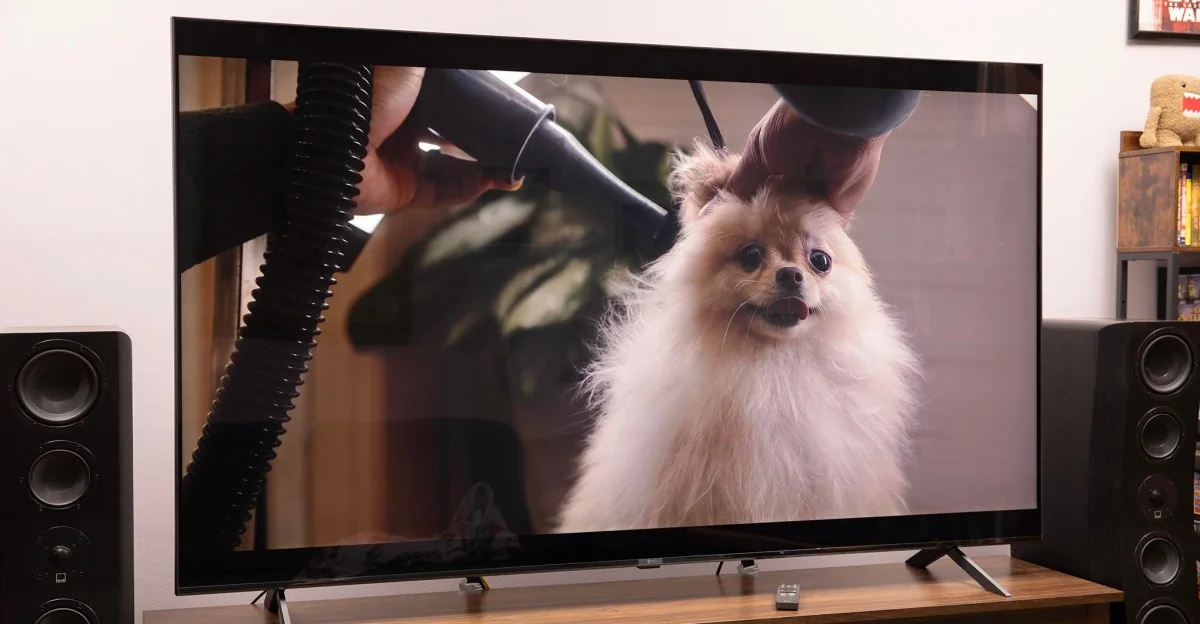
The panel delivers a bright and punchy picture, but its surface is exceptionally reflective.
Design, Connections, and Software
The display comes in three large sizes, starting at 75 inches. It features four HDMI 2.1 ports and supports Dolby Vision, though it omits Dolby Vision 2 and HDR10+. It utilizes a traditional remote shape rather than a curved wand, and runs on webOS. While the operating system is fast, it can feel less intuitive than competing platforms like Google TV or Apple TV, though it does support all major streaming applications.
Regarding software safety, users can choose to bypass webOS account creation by declining the terms of use during setup, requiring an external streaming device if internet connectivity is completely avoided.
The appeal of RGB LED technology stems from its hardware layout.
Display Technology and Performance
RGB LED panels use zones of individual red, green, and blue LEDs as backlights rather than relying on white or blue LEDs with color filters or quantum dots. Because the backlight already generates specific colors, color filters do not need to work as hard, allowing for higher color brightness and a wider color gamut.
While manufacturers label the technology as Micro RGB or Mini RGB LED, smaller diode sizes do not automatically translate to a higher zone count or superior performance compared to standard Mini LED.
Measurements show peak brightness reaching over 4,000 nits in HDR Filmmaker mode, providing impactful highlights in bright or dark environments. However, the display struggles with near-black shadow detail and exhibits noticeable blooming around bright objects against dark backgrounds, such as subtitles, compared to other RGB LED displays.
The panel covers 100 percent of the P3 color gamut and nearly 90 percent of BT.2020. Despite this wide color volume, out-of-the-box accuracy in Filmmaker mode shows a visible lean toward light blue, giving white elements and skin tones a cooler tint than intended.
Such color discrepancies are difficult to excuse for a high-end television in this price bracket.
Reflections and Viewing Angles
While daytime performance is strong, evening viewing can be problematic due to the glossy screen coating. Ambient light from lamps or overhead fixtures creates prominent reflections and rainbow artifacts across darker scenes.
Viewing angles remain an inherent limitation for LED panels, resulting in washed-out colors for viewers seated off to the side.
Market Competition and Verdict
In isolation, the television is capable in bright environments, but it struggles to compete against lower-priced alternatives like the Sony Bravia 7 II or Hisense UR9, which handle reflections and color accuracy more effectively.
The most significant challenge comes from internal competition. OLED models like the LG G6 or Samsung S95H are available for a similar cost, offering vastly superior contrast, zero blooming, and wider viewing angles.
Ultimately, the model serves as a reminder that OLED technology remains the preferred choice for discerning home theater enthusiasts.