Introduction
Many smart video doorbells introduced recently offer new features, from AI-powered conversations to detailed camera descriptions. However, these advanced functionalities typically come with additional monthly subscriptions or fees. The Tapo D260 aims to change this trend.
The TP-Link Tapo D260, priced at approximately $220, is notable for combining high-end features like 4K resolution and advanced AI detection without requiring a subscription for its core functionalities. This makes it a compelling option for consumers who prefer to avoid ongoing fees while still benefiting from a robust security device, provided a microSD card is purchased separately.

Design and Installation
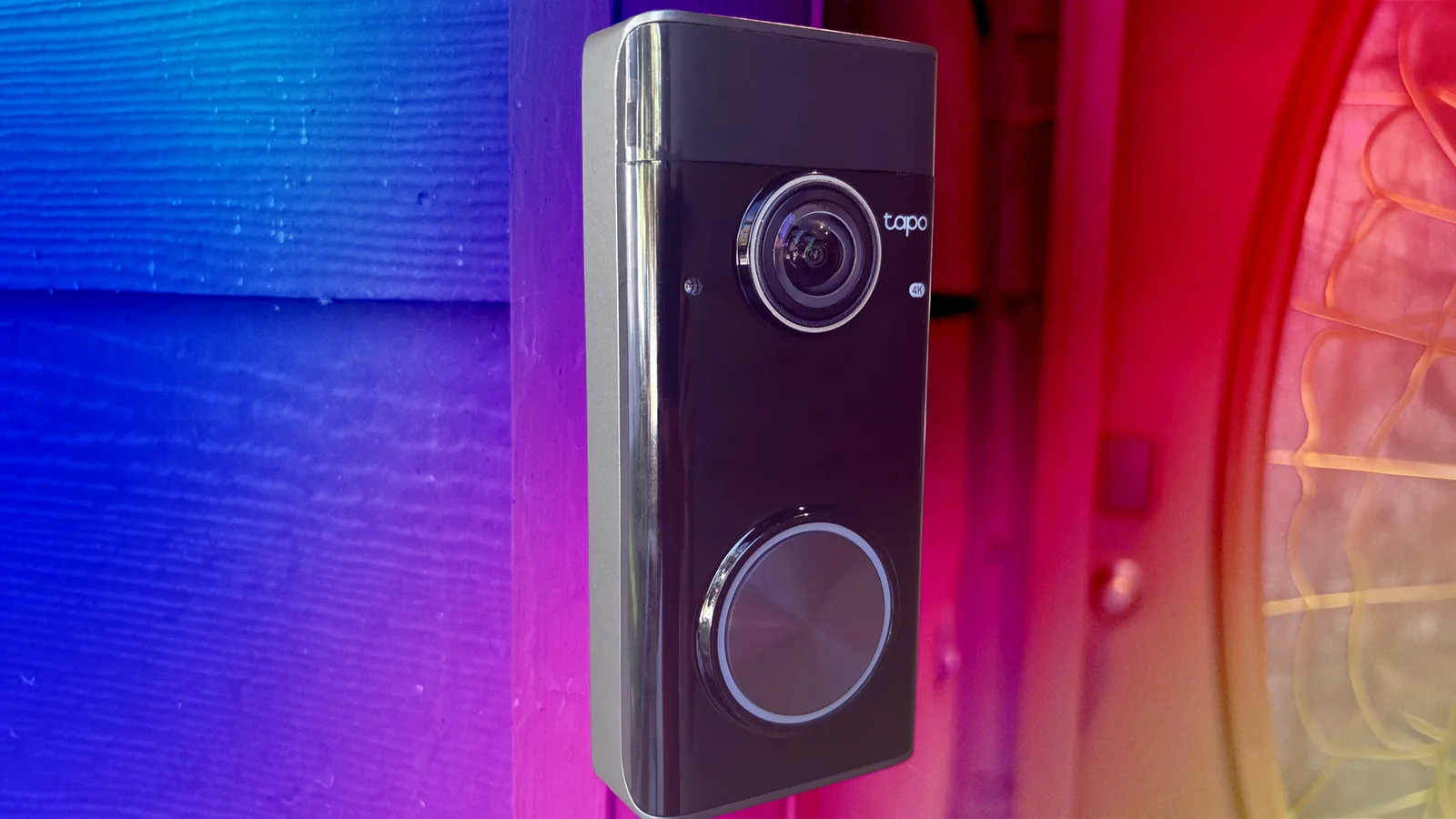
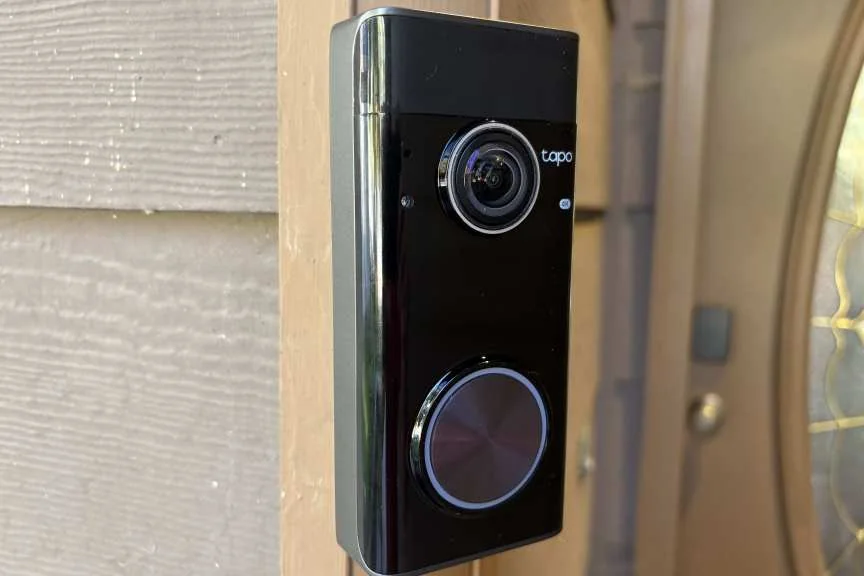
The Tapo doorbell is considerably larger and heavier than many competitors, measuring about 5.7 by 2.6 inches and weighing approximately 12 ounces. This may necessitate extra installation space. However, the kit includes multiple installation options, such as adhesive strips, screws, and wiring connectors for those opting for a wired setup over the rechargeable battery. An angling device is also provided to adjust the doorbell's direction.
The installation process was straightforward due to the variety of options. Despite its size, the design feels sturdy and lacks flimsy components, boasting an IP66 weather rating. A minor drawback noted by the source reviewer is that the shiny front plate quickly accumulates fingerprints.
App setup was uncomplicated, though the Tapo system does not include an installation walkthrough, requiring users to consult the manual for specific details. The app's navigation is generally good, but some menu controls may take time to learn. The video doorbell's control panel within the Tapo app was found to be particularly effective, despite offering a multitude of options, some of which were unfamiliar to the source reviewer.
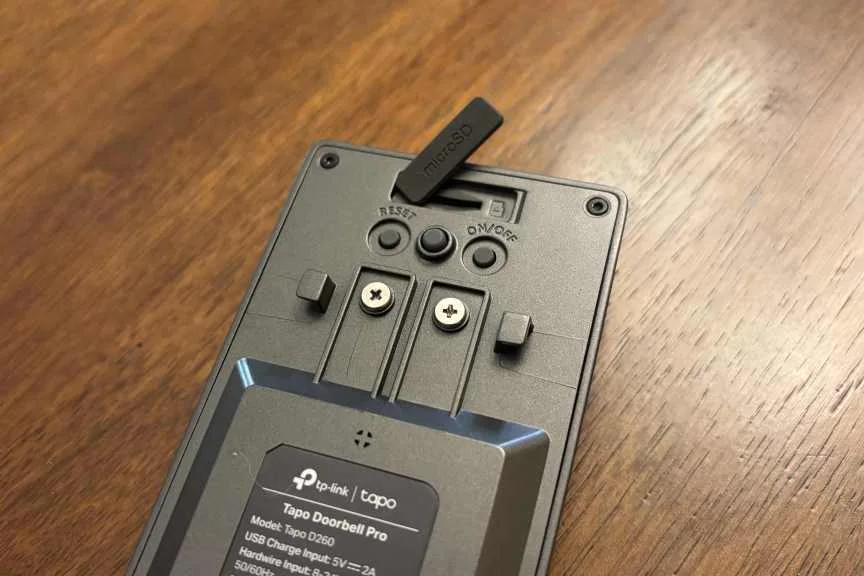
While the app offers a prompt to subscribe to Tapo’s Care cloud storage, this is not mandatory. To avoid subscriptions, users can install a microSD card in the doorbell and format it within the app. Smaller capacity cards, suitable for video doorbell use, are inexpensive, typically adding around $12 to the one-time cost. This local storage approach is central to Tapo’s subscription-free model, a feature more commonly found in security cameras than video doorbells.
Video and Audio Performance
The Tapo D260 boasts 4K resolution, among the highest available in video doorbells, which translates to superior detail in the view of the porch and front yard. The source reviewer observed this enhanced detail in the app’s live view, though some glare from the afternoon sun was present. A convenient battery percentage icon is displayed under the model name, indicating when a recharge is needed.
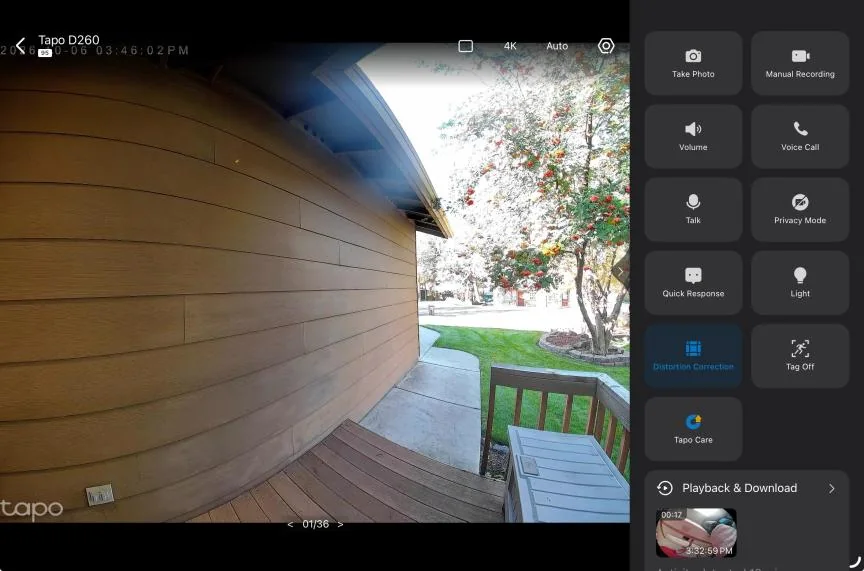
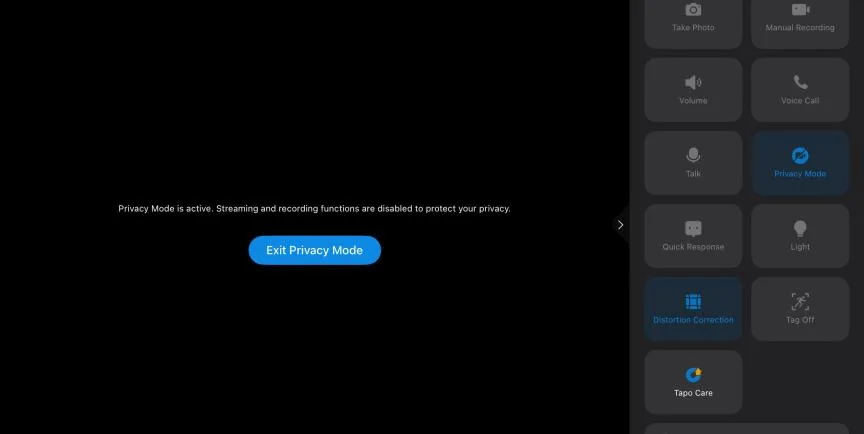
The app interface includes unique buttons that enhance user options. A privacy mode allows for quick deactivation of the camera’s video and audio, without fully shutting down the doorbell, a feature the source reviewer found to be distinct.
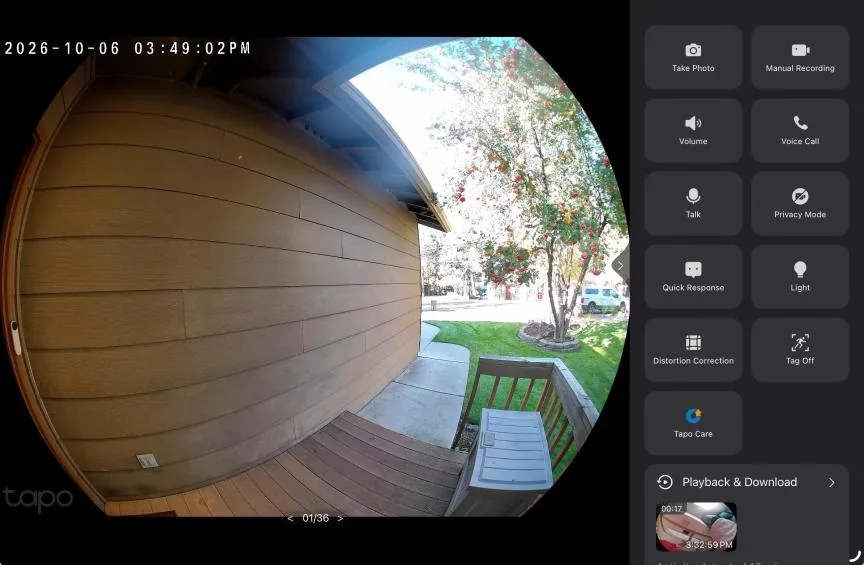
Another notable feature is a distortion correction button. While typical video doorbell views often appear slightly stretched, activating this mode provides a more accurate, rounded-lens perspective. The source reviewer experimented with both views before preferring the distortion-free option.
Audio clarity was found to be very good, particularly when compared to more compact doorbells, with easy volume control and chat mode access via the app.
The doorbell also includes a spotlight that can automatically activate upon motion detection, illuminating visitors in low-light conditions. While perhaps less critical than dedicated security cameras, it serves as a useful backup if porch lighting is insufficient, though it will accelerate battery drain.
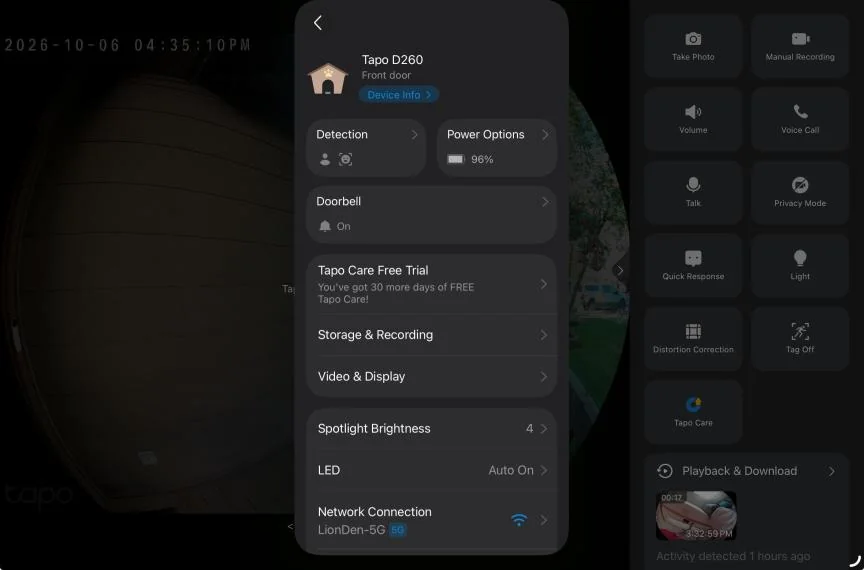
The Tapo app supports automatic recording based on motion and other triggers, alongside manual video and photo capture, with content saved to the microSD card or cloud storage. The source reviewer noted occasional hesitation or dropped connections with manual recording options, but automatic recording functioned flawlessly.
Smart Detection and Advanced Features
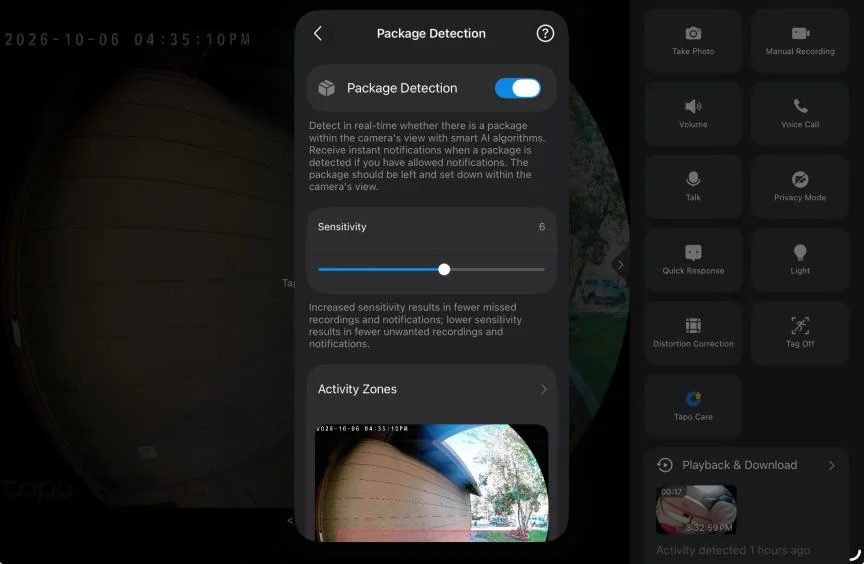
The smart detection system monitors for specific objects, initiating recordings and alerts based on user settings. Tapo allows users to detect and record people, animals, vehicles, packages, and general motion. This on-device AI ensures no data is sent to external servers, and users can freely customize detection types and alert preferences, or disable everything except general motion detection.
A distinctive feature is the ability to set separate motion zones for each detection type. For instance, users can configure the system to monitor for animals across the entire front lawn while restricting human detection to the porch area, preventing alerts for passersby on the sidewalk.
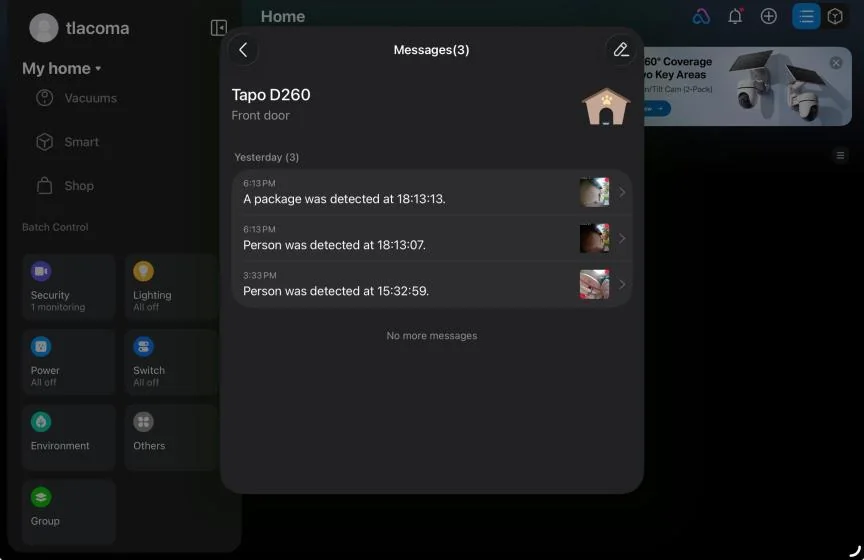
Most detection features offer sensitivity settings, which the source reviewer adjusted and found to be highly accurate during testing. Alerts and recordings were conveniently consolidated in a dedicated section of the app for review.
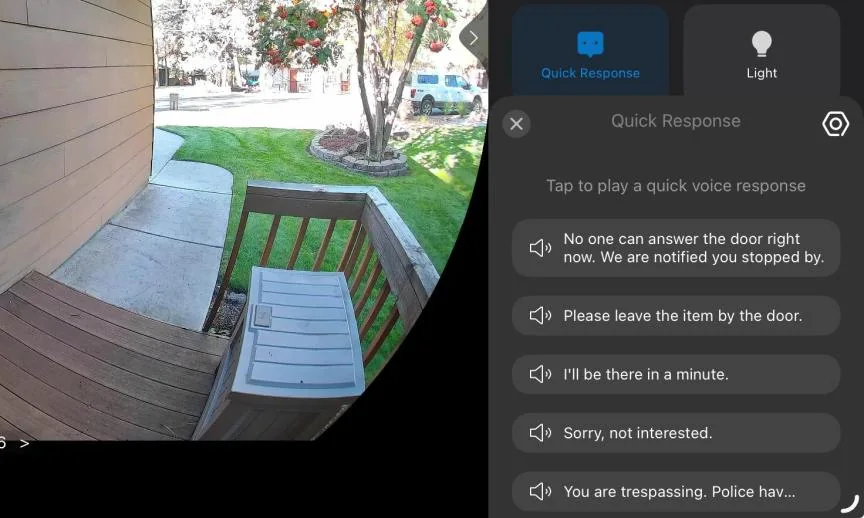
Upon detecting a person or a doorbell ring, users can utilize quick response options. While these replies are not customizable like those from brands such as Nest or Ring, a selection of predefined messages like “leave it by the door” or “I’m calling the cops” is available.
Subscription Options and Privacy
Tapo does offer a subscription for its most advanced smart features, including facial recognition for identifying individuals, as well as intelligent summaries and detailed notifications. These features are common among smart doorbells and often incur high subscription costs, with Tapo being no exception.
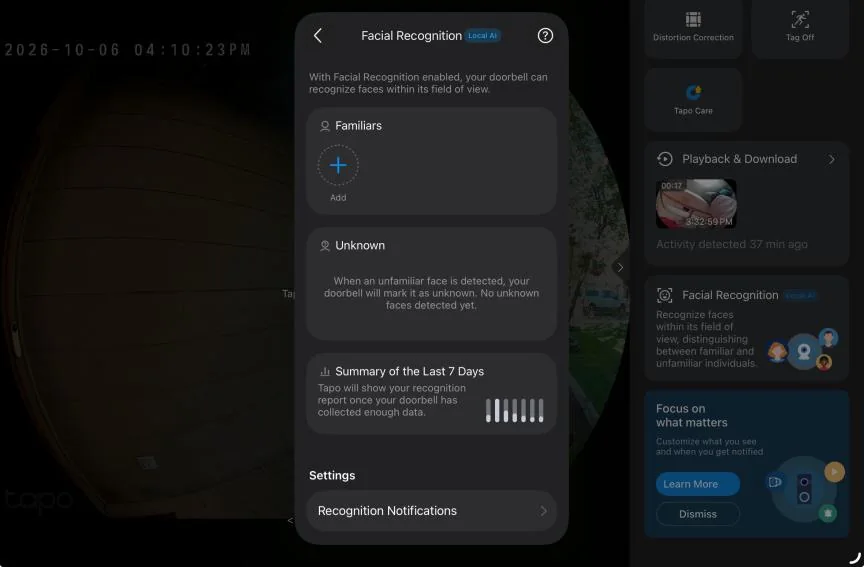
For users aiming to avoid fees and cloud storage, such a subscription is undesirable. Furthermore, facial recognition raises privacy concerns for many. While Tapo labels its facial recognition as local AI, which presents a legal gray area compared to cloud-based processing, the company restricts this feature in states with stringent privacy laws, such as Illinois and Texas.
Fortunately, facial recognition can be disabled, and subscriptions can be avoided, which the source reviewer considers the preferred solution given the extensive free capabilities of the doorbell.
Conclusion
The Tapo D260 Video Doorbell Pro stands out for its focus on subscription-free operation while providing a wealth of in-depth features. While other companies like Anker Eufy are also advancing in this segment, Tapo's latest offering is highly regarded by the source reviewer.
Although not every feature is free, advanced AI descriptions and facial recognition are often non-essential for many users. The doorbell still delivers more free capabilities than most competitors, including object detection, privacy mode, a built-in spotlight, distortion correction, and advanced motion zones.
The doorbell performed well overall, with only minor, occasional lag in connections. While its price point of over $200 is on the higher side, it is comparable to other 4K video doorbells, many of which require subscriptions for features Tapo offers for free. With the addition of a microSD card, the Tapo D260 provides a complete, cloud-free security solution.