An Atmospheric Descent
The satisfaction of the metroidvania genre comes from a sensation of mastery – taking an unfamiliar place and slowly unraveling its complexities until commanding dominance over its spaces and threats. For its debut game, End of Abyss, developer Section 9 Interactive applies that format to an atmospheric horror adventure with twin-stick controls, instilling a striking sense of dread inside a gargantuan labyrinthian facility. Its atmosphere only carries it so far, though; exploration and combat slowly descend into a slog, never fully recovering from feeling like a routine procedure.
End of Abyss centers around a young combat technician named Cel, a silent observer trained to interact through the scope of a gun. Cel skulks around a massive, desolate complex alongside a few other soldiers, attempting to discern what happened to the abandoned facility. Run by a series of AI boxes known as Security Control Units, the station struggles to avoid total disarray while zombified station workers have transformed into enemy Husks.
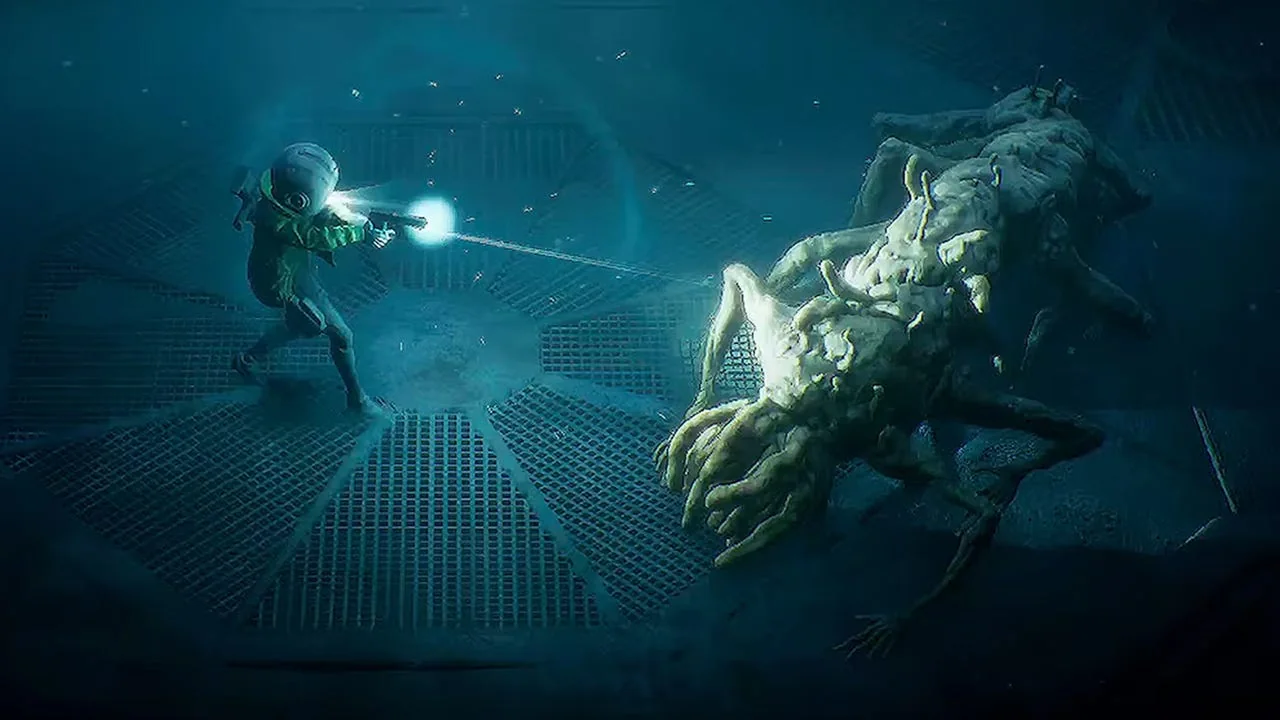
Thrust into cold concrete corridors with little explanation, players navigate dimly lit hallways and parasitic flea-infested tunnels. The influence of former developers behind Little Nightmares is evident in the clay-doll aesthetic and isometric perspective, establishing atmosphere as the game's most captivating trait.
The grotesque detritus of vacant bedrooms litters the Habitation Sector, crafting a harrowing opening section. Flickering lights and enemy bodies encased in parasitic fungus constantly feed into the uneasiness expected from a horror experience. However, these tricks become overly familiar as the adventure wears on.
What were once terrifying jump scares become predictable, with corpses holding important items in large arenas consistently triggering expected combat encounters. Supposedly dead enemies waking up to pursue the player turn into a predictable routine, prompting preemptive strikes.
The overarching mystery relies heavily on the absence of information. Characters trade vague uncertainties, offering little useful context about the protagonist's presence in the facility. While notes and documents provide slight backstory, pushing forward largely involves turning on AI boxes to activate elevators, searching for power cells, and descending into the lower levels.
It is not until the back third of the approximately 10-hour campaign that the plot gains momentum. The story eventually takes center stage as characters explain the reasons behind the dangerous trek, though the lack of tangible stakes earlier on makes the mystery feel somewhat inconsequential.
The final act redeems some narrative beats, particularly when navigating the lower levels. Finding notes that detail the horrors of this world alongside rooms filled with strange experimental remnants helps illustrate an underlying terror.
Combat and Arsenal
A variety of weapons keeps the search-action engaging, ranging from the reliable Pulse Gun with unlimited ammo to a room-clearing flamethrower. The twin-stick shooter mechanics require precision; combat encounters can swing drastically if players roll incorrectly or get cornered. The combat thrives when walking the razor's edge between confidence, hubris, and uncertainty.
Enemy variety encourages experimentation. Grenades become essential in group encounters, while manipulating aggressive behavior and grouping mobs to trigger red barrel explosions serve as key tactics. Challenging adversaries like the long-necked Husk Latcher make maintaining safe distance a persistent tactical challenge.
While moment-to-moment combat remains strong, boss fights feel rote by comparison. Circular arenas featuring large creatures typically devolve into rolling away and firing shots repeatedly. Some foes like the Centipede Husk mix things up by emerging from corners, but others rely strictly on health-pool depletion, proving disappointing for an otherwise brilliant game.
Outside of the pistol, players must manage ammunition and craft supplies at workbenches near save points. Early resource management echoes classic survival horror, but after a couple of hours, plentiful materials make ammo counts largely irrelevant. Acquiring the long-range Security Rifle further minimizes this resource tension.
Fragments serve as a ubiquitous currency found everywhere from defeated enemies to lockers. Their sheer abundance eventually diminishes the excitement of discovering them.
Exploration and Navigation
Resource issues expose a larger problem: exploration is not truly rewarding. While interconnected hallways form the backbone of a metroidvania, navigating this dilapidated station becomes increasingly frustrating. A lack of visual variety across different areas makes environments look identical, forcing players to constantly check the map rather than soaking in the atmosphere.
Unlocking shortcuts often brings confusion rather than satisfaction regarding how rooms connect. When every zone shares a gray-and-blue hue, opening steel doors becomes a tired cycle executed merely for unneeded fragments.
The Containment Sector introduces radiation that slowly drains health, forcing precise navigation to avoid frequent deaths and respawns. The severe damage scaling strongly hints at missing protective gear.
Discovering a radiation suit modification brings relief rather than elation, concluding a scavenger hunt that feels disconnected from the sector's main goals.
Backtracking remains cumbersome despite a transit system, compounded by slow sprinting speeds and random bugs such as invisible walls on ladders. These glitches frequently force checkpoint reloads and result in lost progress.
Sound Design and Conclusion
Despite exploration frustrations, the tone-setting audio design stands out as a high point. Pulsating reverberations, distorted gurgles, and the wet squelching of approaching enemies deliver a spine-chilling experience that expands the perceived scope of the cramped corridors.