Evolution Over Revolution
Running a virtual menagerie in Planet Zoo feels distinct from entertainment-focused theme park builders. The sequel places an even deeper emphasis on conservation as a core objective, featuring real endangered and vulnerable species.
When handling daily tasks like building enclosures, hiring staff, and caring for animals, the core gameplay loop remains largely unchanged from the original title, functioning as a gentle evolution rather than a complete reinvention. Players familiar with the first game will easily find their footing.
The species list is robust, featuring over 130 creatures of varying sizes, including exhibit-based animals housed in smaller terrariums. While only a portion of the roster is eligible for eventual release into the wild, the variety keeps the experience fresh.
Aquariums and Fine Control
The introduction of aviaries and aquariums marks a major mechanical addition. Unlike rigid modular pieces seen in similar titles, Planet Zoo 2 grants players fine control over the shape, look, and depth of exhibits.
Designing complex layouts, such as glass tunnels through an aquarium, adds a layer of creative immersion. Managing different water temperatures, salinity levels, and separate filtration networks introduces a welcome layer of realism and planning.
Economic Challenge
Unlike more casual park builders, Planet Zoo 2 offers a genuinely challenging economic simulation. While sandbox mode allows players to turn off financial pressures, the standard mode ensures that keeping the lights on requires careful financial strategy.
Managing six different staff types, complex guest demands, and realistic pricing tolerance prevents players from easily exploiting the economy. Although certain management metrics like sustainability feel somewhat trivial, building a reputable zoo remains a rewarding endeavor.
Customization options have also expanded significantly, with fully modeled building interiors that staff and guests can interact with. Modular gift shops and restaurants allow players to directly influence dining capacity and available merchandise.
The campaign mode acts primarily as an extended tutorial and inspiration source. While its narrative tone targets a lighter demographic, it successfully guides players through the newly introduced tools.
Wildlife Reserves and Terrain
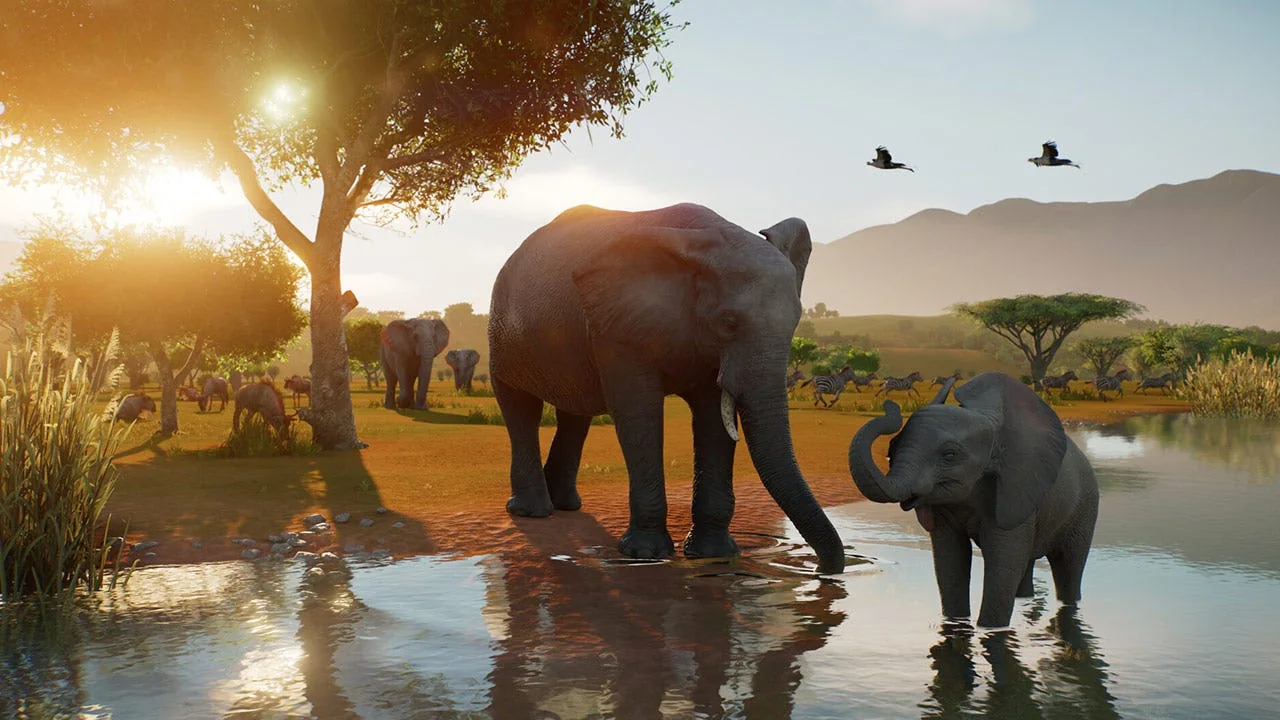
Wildlife reserves provide entirely separate maps where players can paint biomes and rewild native species. While visiting former zoo residents in their natural habitats offers a rewarding gameplay loop, the management depth of these reserves feels somewhat limited.
Maintaining ecosystems lacks intricate land management requirements, as invasive plants can be removed instantly using basic tools. However, the inclusion of versatile nature brushes greatly simplifies the process of painting diverse plant life.
Water tools offer high visual customization, but bodies of water remain bound to fixed heights within troughs, making natural-looking downhill rivers difficult to construct without advanced tweaking.
Despite minor limitations, reserves provide a functional space to visit retired animals, photograph them for Conservation Credits, and fund new conservation projects to support the main park.