Overview and Core Design
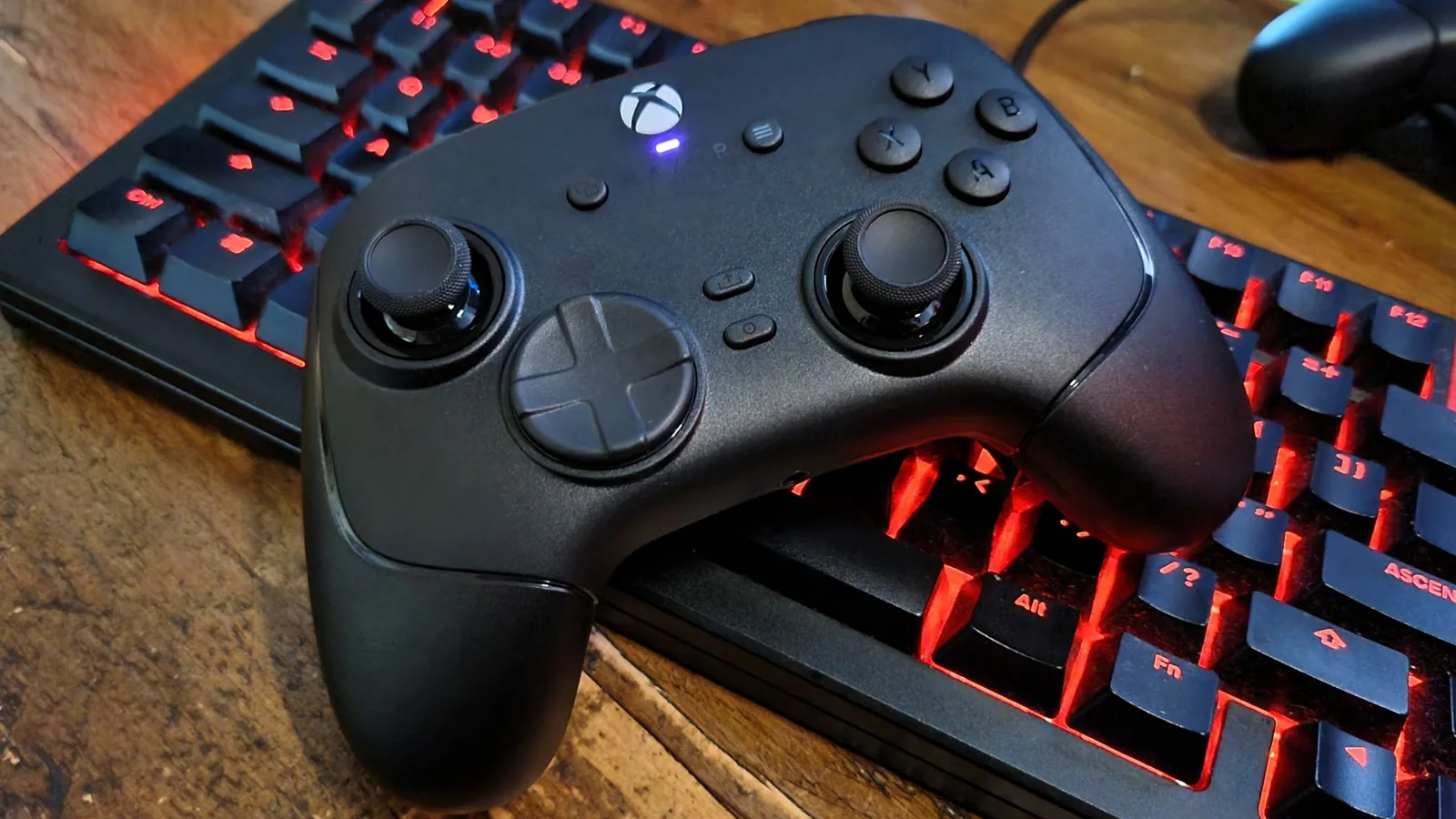
The Razer Wolverine V4 Pro builds upon the comfortable chassis shape and heavyweight dual-action triggers of its predecessor while introducing substantial internal hardware upgrades and modular customisation options. The controller features a familiar, comfortable form factor combined with enhanced hardware performance.
Alongside improvements to movement accuracy and a maximum battery life of 27 hours, the device supports 8K polling and features wrist-shaking haptic rumble. However, the $200 price tag places it at the premium end of the market, requiring a significant investment from prospective buyers.
The Razer Wolverine V4 Pro refines the strengths of the previous generation with snappier thumbstick sensors, rapid response rates, and versatile modular control switching.
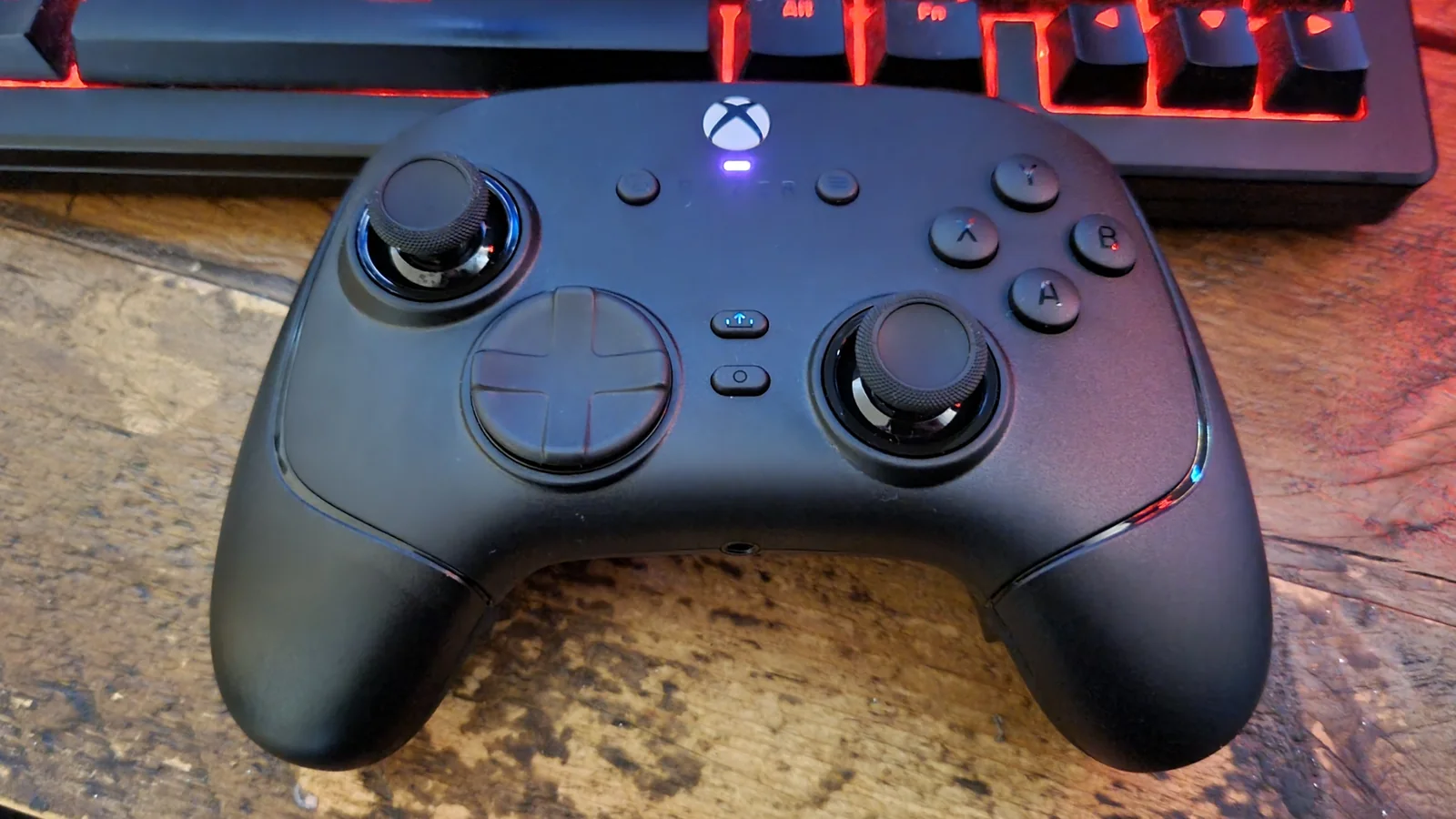
At its core, the Razer Wolverine V4 Pro is an asymmetrical, Xbox-style controller supporting 2.4 GHz wireless and USB Type-C wired connectivity, with a maximum 8K polling rate delivering sub-1 ms response times.
Additional physical controls include two configurable buttons placed between the bumpers and triggers, alongside four mouse-click paddle buttons on the underside. Rear toggle switches allow triggers to alternate instantly between full-throw action and a rapid mouse-click feel.
The front layout includes PBT face buttons with mecha-tactile switches offering a shorter travel distance, accompanied by a responsive, clicky D-pad.
The thumbsticks feature a lighter, snappier feel than previous iterations while maintaining controlled resistance, driven by next-generation contactless capacitive sensors.
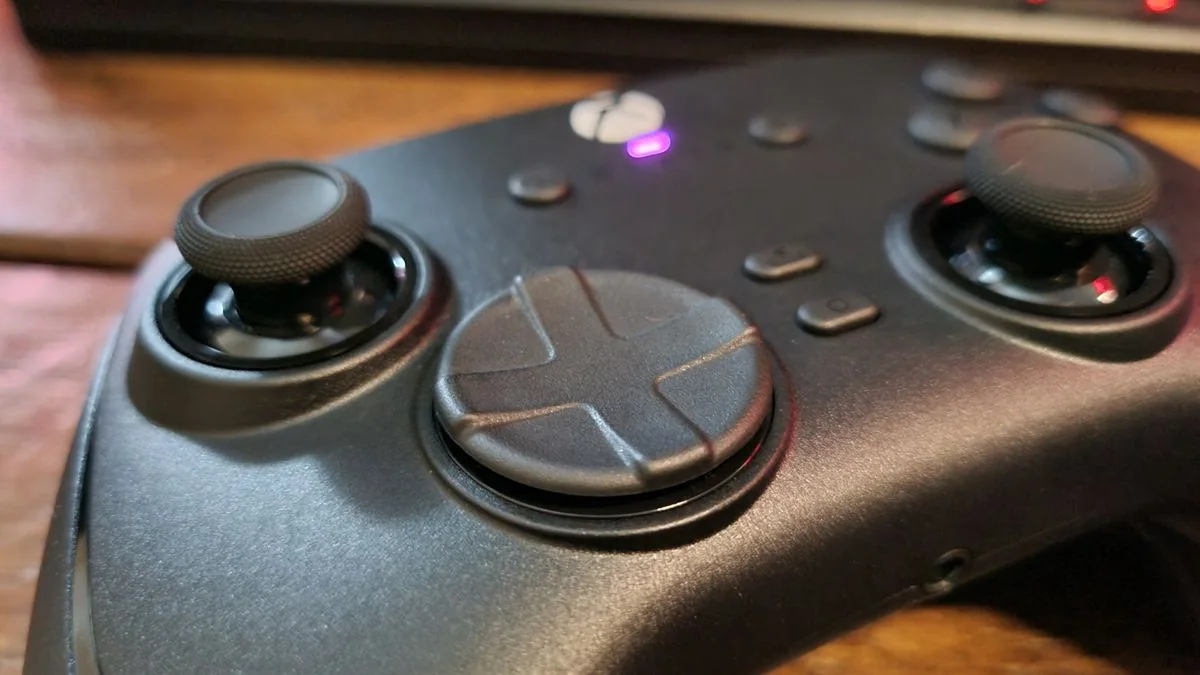
These capacitive sensors offer superior resolution and enhanced resistance to magnetic interference compared to standard Hall effect or TMR models, while eliminating stick drift. Paired with an internal 16-bit ADC chip, the tracking yields approximately 3,000 steps of movement per sensor.
Customisation is a major focus, highlighted by a magnetic front faceplate that can be easily removed to swap components or access alternate aesthetic options.
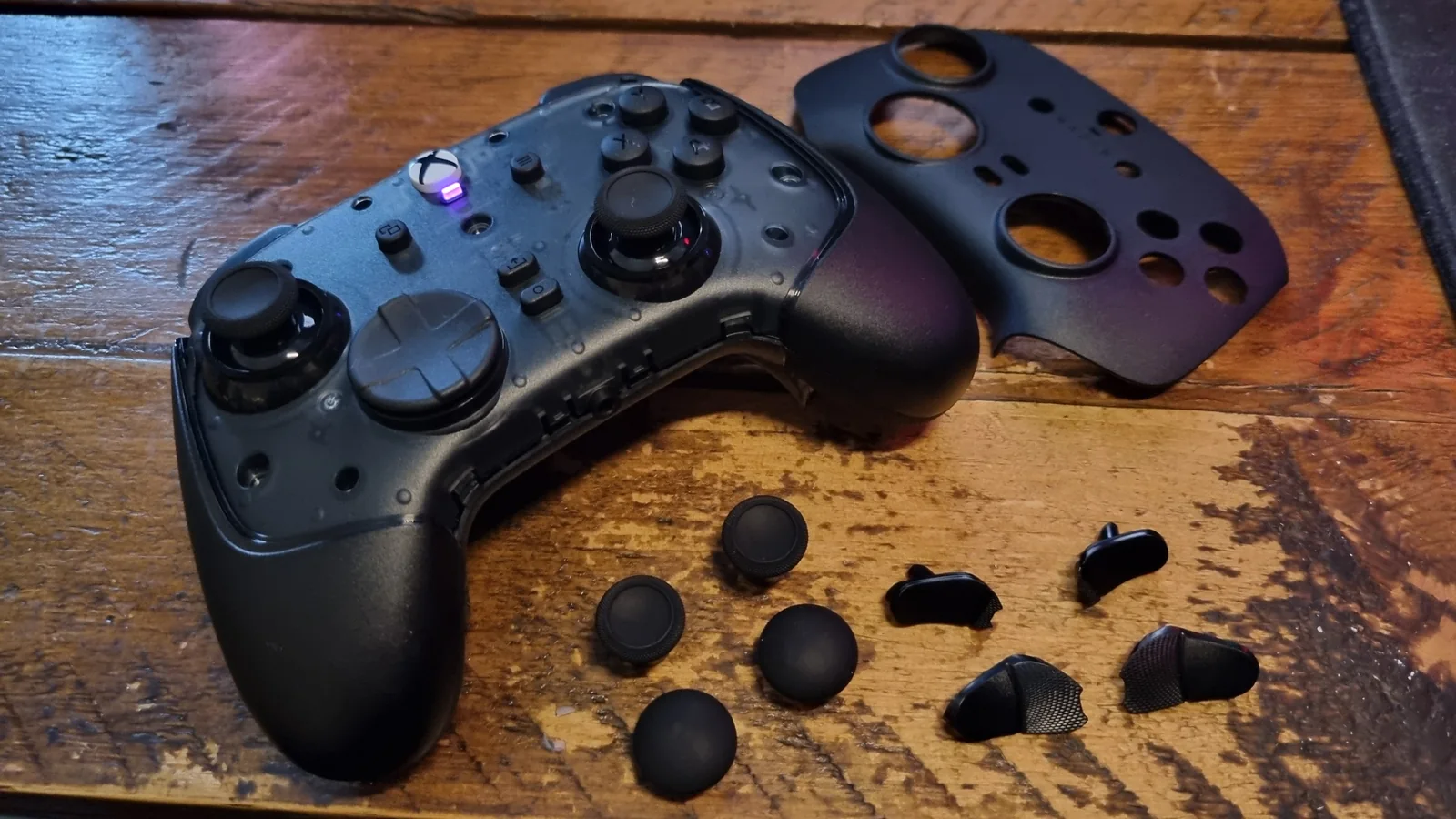
Users also receive six interchangeable thumbstick caps, providing options for standard short concave models, taller variations, and convex configurations.
The rear paddle buttons are entirely removable, allowing users to seal the resulting gaps with flush-fitting magnetic plates. Software profiles can also be cycled on the fly via onboard button combinations.
Battery life reaches up to a maximum of 27 hours depending on polling rate and haptic settings, with a full charge taking approximately three hours via USB Type-C.
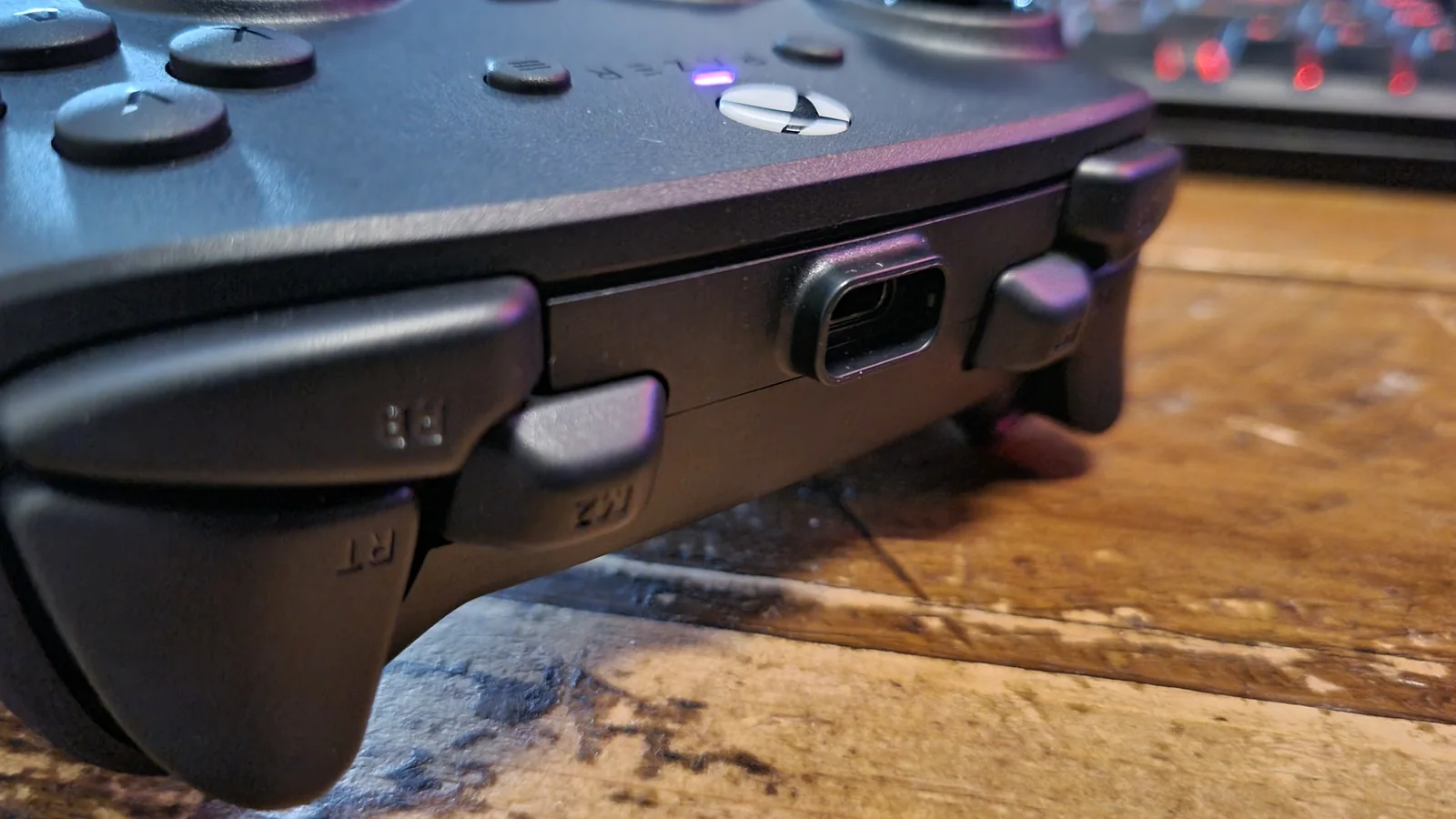
A pronounced protective lip surrounds the rear USB Type-C port to prevent cable strain damage over time, though its prominent visual protrusion stands out against the otherwise sleek chassis.
Ergonomics and Performance
The controller retains the comfortable chassis shape of its predecessor, featuring finely textured rear grips that ensure a secure hold during extended gaming sessions.
Tactile feedback varies pleasingly across the control surface, from the smooth resistance of the triggers to the precise click of the bumpers and macro buttons.
The matte-finish PBT face buttons provide excellent fingertip grip and deliver a fast actuation action that improves upon older models.
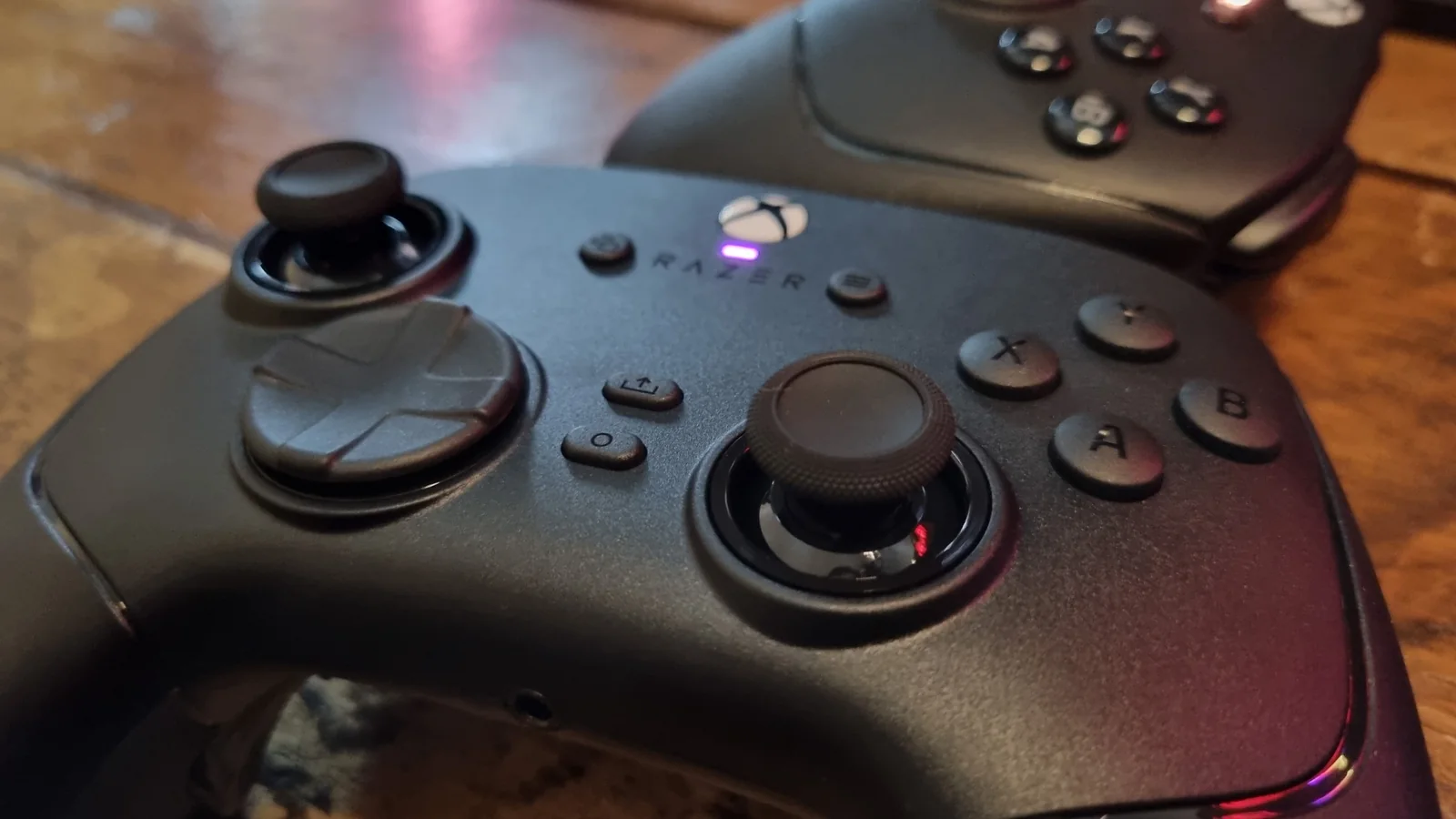
The lighter resistance of the thumbsticks noticeably improves target acquisition speed and aiming responsiveness, providing clean pushback and a swift return to center.
The modular customisation hardware feels remarkably robust, allowing thumbsticks and faceplates to be swapped securely with reasonable force without compromising structural integrity.
The physical components can be detached and reconfigured effortlessly even during casual handling.
Rear paddle customisation is particularly seamless, as magnetic locking plates snap firmly into place to eliminate accidental presses when paddles are not in use.
This modularity accommodates different finger placement styles, allowing users to configure or block off individual rear controls entirely.
Users can block off individual rear controls or keep specific paddles mapped for targeted tasks.
Despite its extensive modular features, the controller maintains a solid, premium build quality free from loose parts or cheap plastic feel.
In practical gaming evaluation across various titles, the controller demonstrates an immediate improvement in fast-paced action and rapid target switching.
Snappier thumbsticks and low-latency input performance make complex directional movements feel notably more fluid and responsive.
The haptic rumble system is exceptionally powerful, delivering robust feedback that vibration enthusiasts will appreciate.
Responsive face buttons and heavyweight triggers add a satisfying sense of purpose to in-game actions like drawing a bow or executing combat maneuvers.
For fast-paced shooters, the controller delivers exceptional accuracy, making thumb-based aiming remarkably swift and reliable.
The refined hardware precision offers a sharper, more agile experience compared to standard alternatives.
The ability to customize rear paddle configurations further enhances long-term comfort during extended play sessions.
Switching back to a standard controller highlights the distinct performance advantages of Razer's high-end peripheral.
Aesthetics and Software
Razer has opted for a mature, stealthed-out aesthetic, omitting flashy RGB-lit lettering in favour of a clean, all-black matte finish.
The understated design lacks multi-coloured button guides, making it better suited for experienced gamers rather than absolute beginners.
The primary visual drawback remains the protruding USB-C port housing, which slightly interrupts the otherwise refined chassis lines.
Configuration is handled through Razer Synapse, providing a structured menu system that will be familiar to existing ecosystem users.
The software offers dedicated tabs for customising polling rates, haptic intensity, button mapping, and advanced features like SOCD handling.
SOCD settings allow users to define controller behavior when opposing directional inputs are registered simultaneously.
Additional tabs enable trigger range adjustments and thumbstick dead-zone calibration through a relatively straightforward interface.
Power management and individual control calibration round out the utility options, making the software suite notably superior to many competing utilities.
Real-world usage confirms strong battery longevity, easily lasting through multiple multi-hour gaming sessions before requiring a recharge.
Extended wireless operation remains consistent across heavy weekend gaming sprints.
However, the omission of an included charging stand or cradle is a notable disappointment given the premium price point.
Value and Conclusion
Priced at $200, the Wolverine V4 Pro faces stiff competition from more affordable alternatives such as the GameSir G7 Pro, which offer similar modular features for a fraction of the cost.
While competing models feature drift-resistant TMR sticks and swappable faceplates, they often lack the comprehensive rear paddle design and robust customisation of Razer's flagship.
Alternative options may win on pure financial value by including charging docks at lower price points, but they do not match the complete feature set of the Razer.
For dedicated enthusiasts who spend hours gaming every weekend, the superior controls, lightning-fast inputs, and extensive customisation justify the investment.
The ability to tailor inputs to diverse playstyles without relying on loud, overblown gaming aesthetics makes it a mature peripheral for serious players.
While expensive, the Wolverine V4 Pro proves its worth as a top-tier investment for users who demand uncompromised performance from their primary gaming hardware.