Revisiting Liberty City in Grand Theft Auto IV offers a fascinating lens through which to view the evolution of the open-world genre.
The Ambition of Smaller Scale
Grand Theft Auto IV is physically smaller than its predecessor, San Andreas, featuring a reduced vehicle variety, zero car customisation, and a streamlined feature set. Despite having fewer surface-level mechanics and a lack of RPG-inspired skill systems, the title achieved critical acclaim by focusing its immense ambition on unprecedented, granular environmental details.
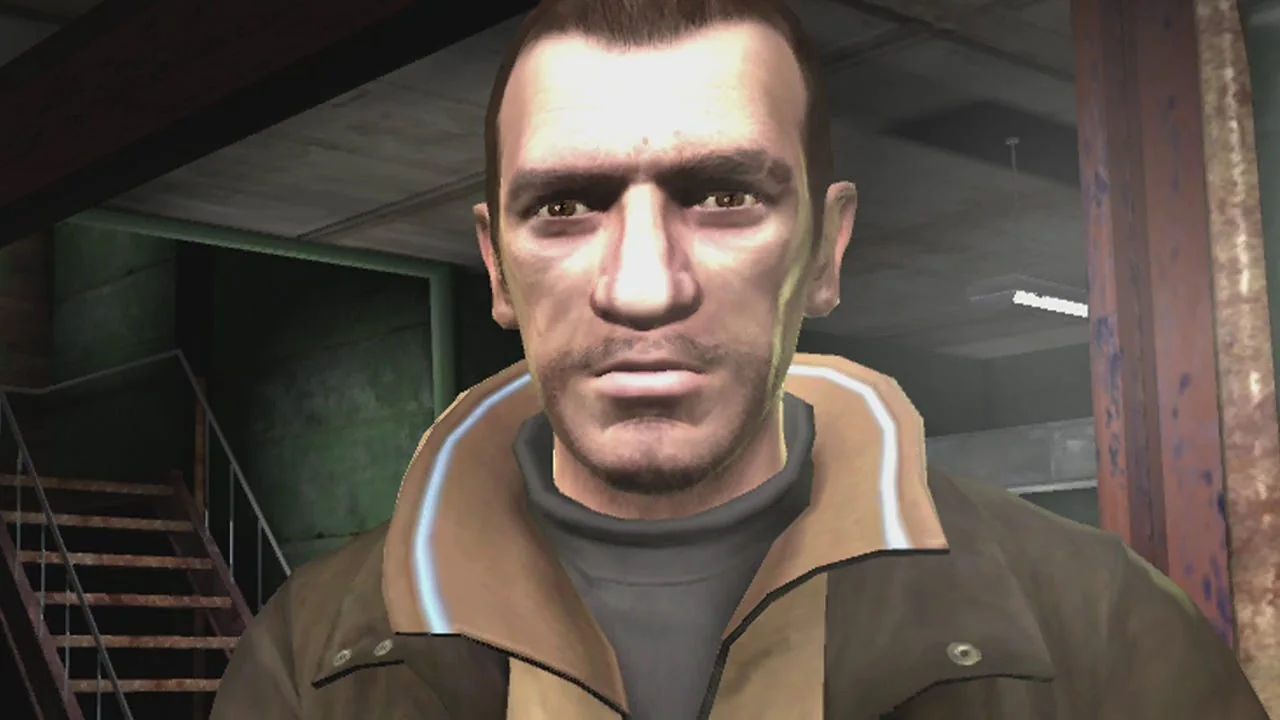
As an Eastern European war veteran with a troubled past, Niko Bellic emerges as one of the most relatable and grounded protagonists in the franchise. Lured by false promises of the American Dream, his disillusionment provides an effective emotional anchor for navigating the cynical underbelly of Liberty City.
Set in a pre-smartphone era, the game captures a specific snapshot of the late 2000s. While technological and aesthetic trends have shifted, the world design avoids feeling overly dated, maintaining a strong sense of place and historical context.
Flashing Lights
Liberty City remains a benchmark for virtual environmental design. Its commitment to tiny, hyper-realistic details holds up remarkably well against subsequent open-world releases.
Though more compact than San Andreas, the environment is vastly more dense, authentic, and intimate, creating a living urban ecosystem that feels genuinely inhabited.
From the neon-drenched bustle of Star Junction to the gritty realism of Hove Beach, every neighborhood features unique architecture, distinct storefronts, and environmental storytelling that encourages exploration.
The use of simulated weathering, customized signage, and detailed road textures gives the city an aged, lived-in quality. While original hardware limitations introduce a somewhat muted color palette and soft resolution, the visual artistry of the metropolis remains striking.
One Vision
A cornerstone of the game's physical realism is NaturalMotion's Euphoria procedural animation technology. This physics solution entirely transformed how characters moved, reacted to impacts, and interacted with the surrounding environment.
By replacing traditional pre-authored animations with dynamic physics reactions, characters respond organically to gunfire, vehicle collisions, and environmental obstacles, introducing a high degree of emergent gameplay.
These systems frequently result in unpredictable, physics-driven moments, enhancing the organic chaos and replayability of encounters throughout the world.
This granular approach to realism extends to all facets of the simulation, ensuring that players feel like active participants within a functioning city rather than observers moving through a static backdrop.
Goodbye Horses
Despite its widespread critical acclaim, certain gameplay systems remain divisive. The in-game friend relationship mechanic, while conceptually sound for providing rewards, often feels repetitive and chore-like due to limited activity variety.
Similarly, the heavy vehicle handling model features pronounced body roll and sluggish steering, which suits heavier vehicles like trucks and muscle cars well, though sports cars can feel less responsive than desired.
Radio station selection draws mixed opinions, though subsequent expansions significantly enriched the overall audio landscape.
Verdict
Grand Theft Auto IV took a bold step by trading unhinged freedom for a grounded, deliberate crime drama. By establishing a meticulously detailed setting and pioneering procedural animation technology, the title cemented its legacy as a foundational prototype for modern open-world gaming.