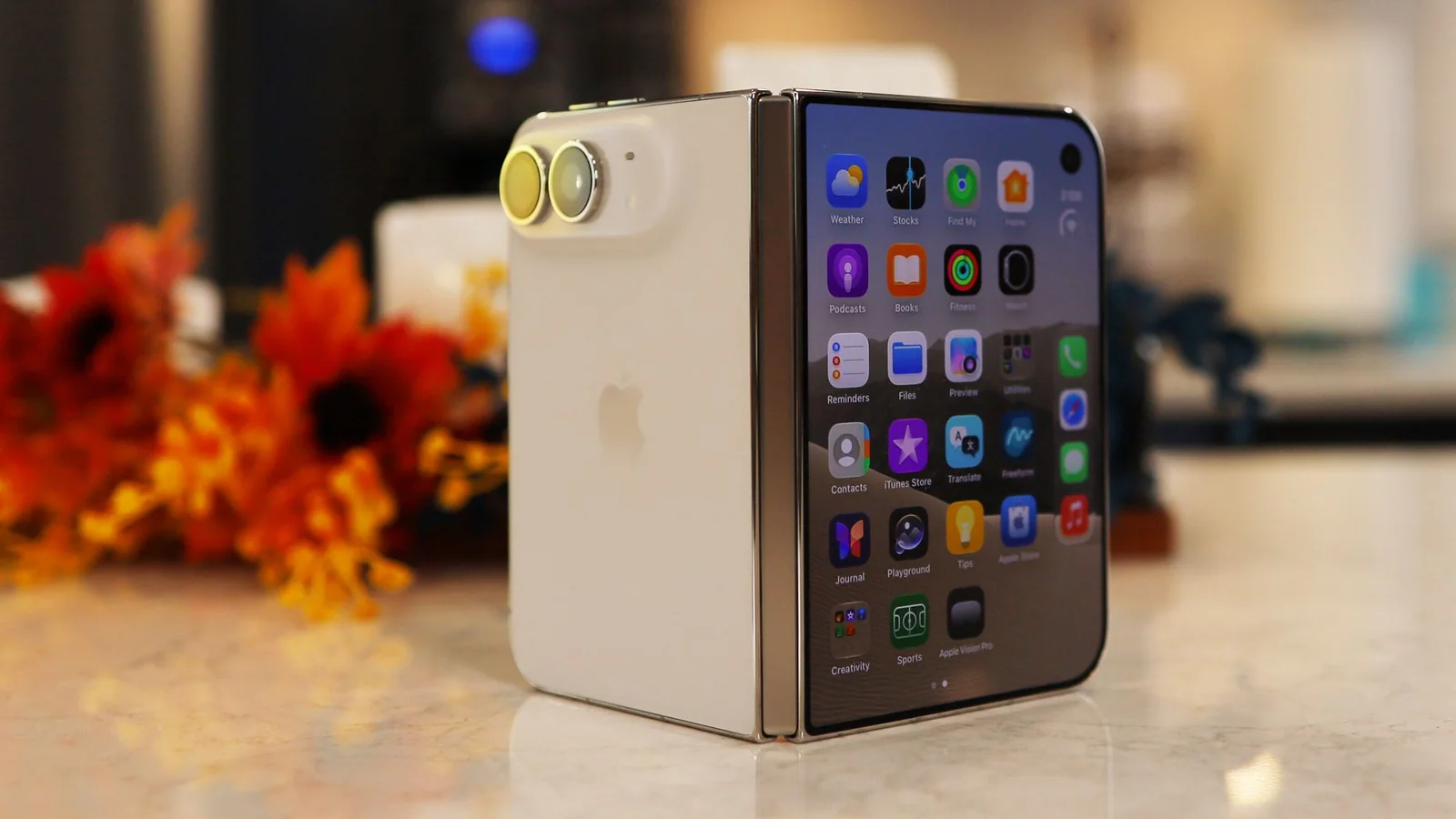
Apple iPhone Duo: Two-minute review
In the early days of the smartphone market, seeing an innovative design immediately drew attention. Over the years, however, standard glass and metal slabs made distinct releases harder to differentiate until now. The iPhone Duo breaks the mold completely.
Carried in a protective case, the device still manages to turn heads the moment it is opened to reveal its inner display. People instantly notice that this is not simply another iterative smartphone upgrade.
It is immediately obvious that the iPhone Duo cannot travel incognito, representing Apple's first truly new form factor in years.
The interest is entirely warranted.
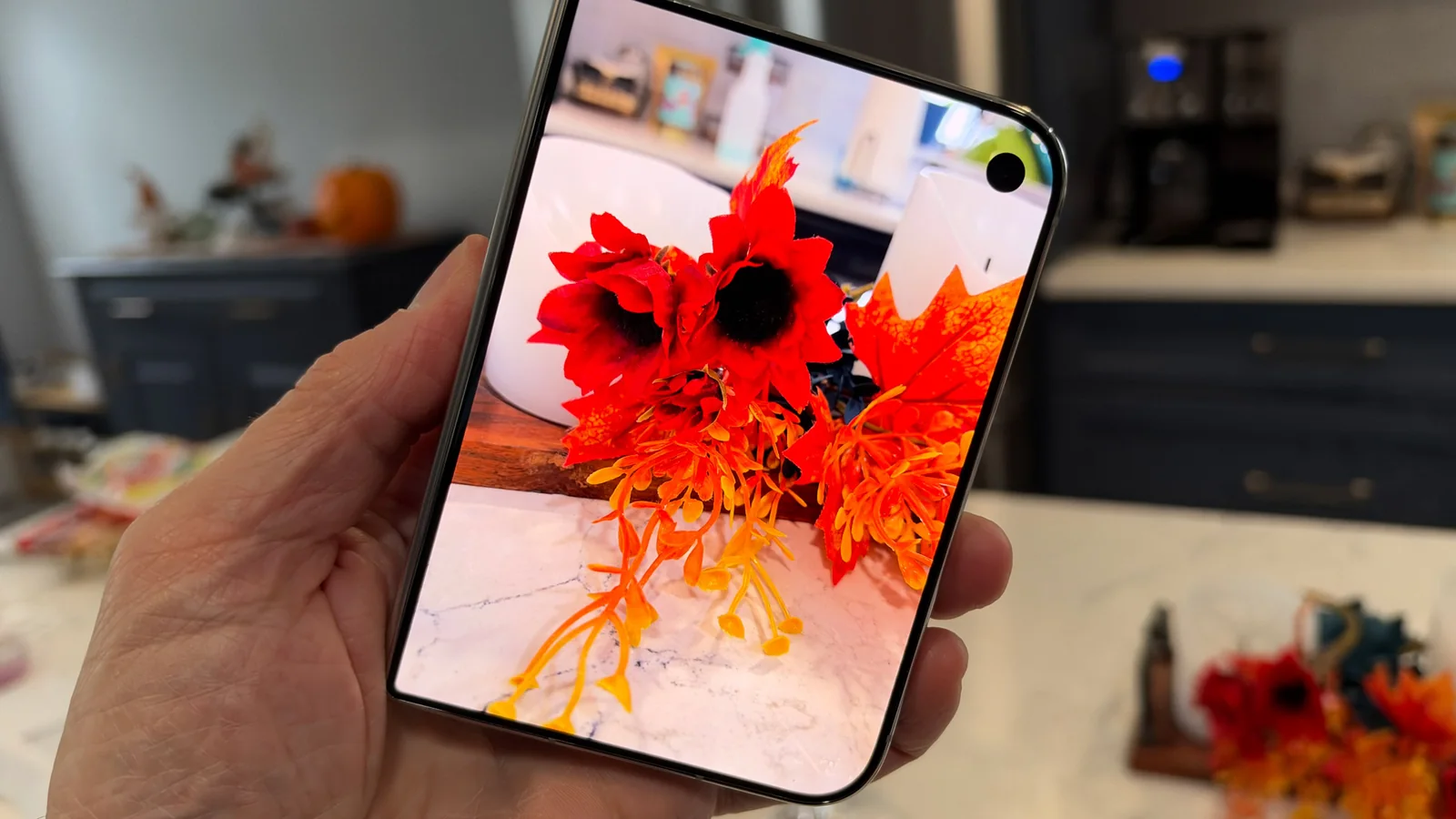
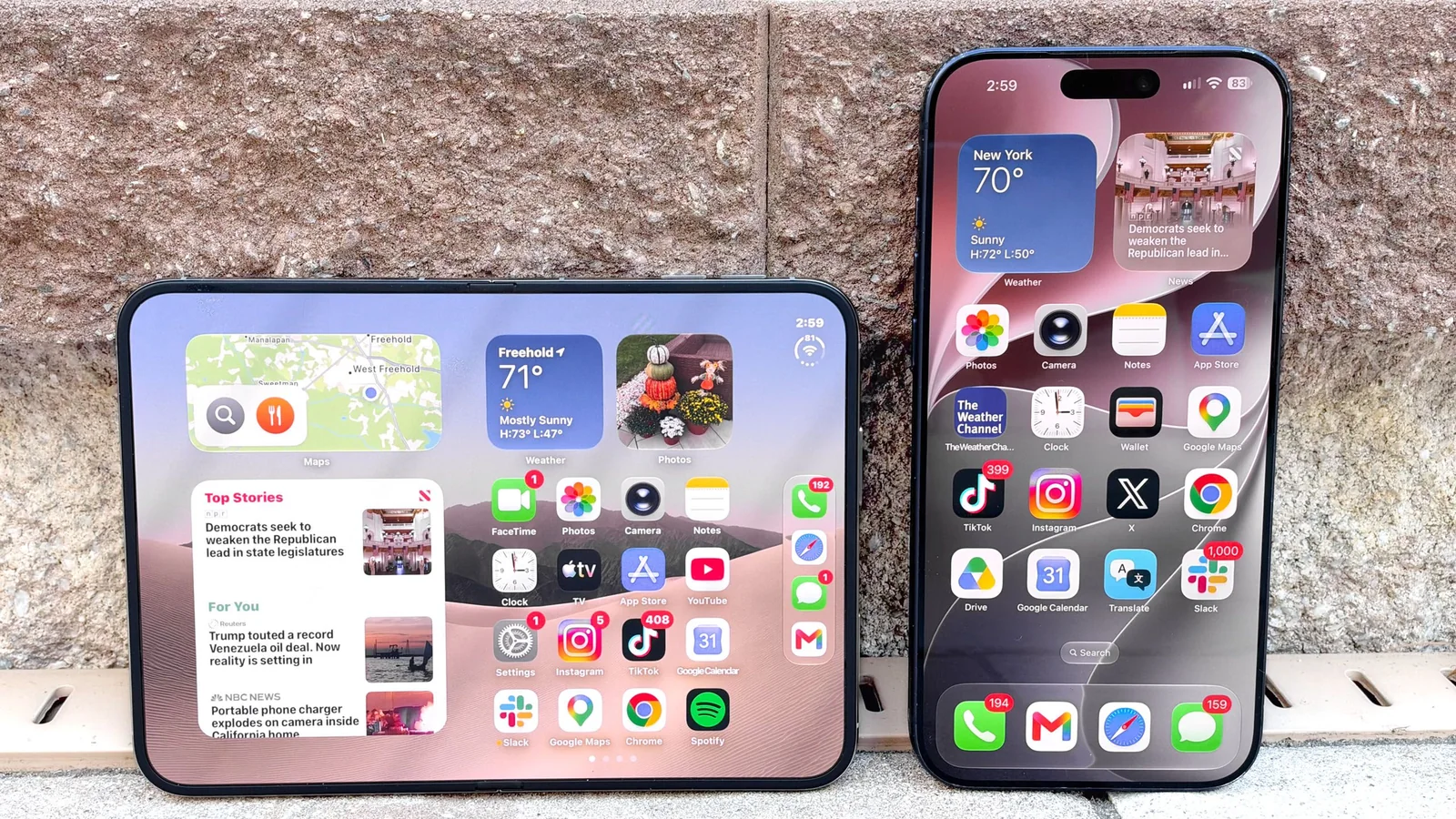
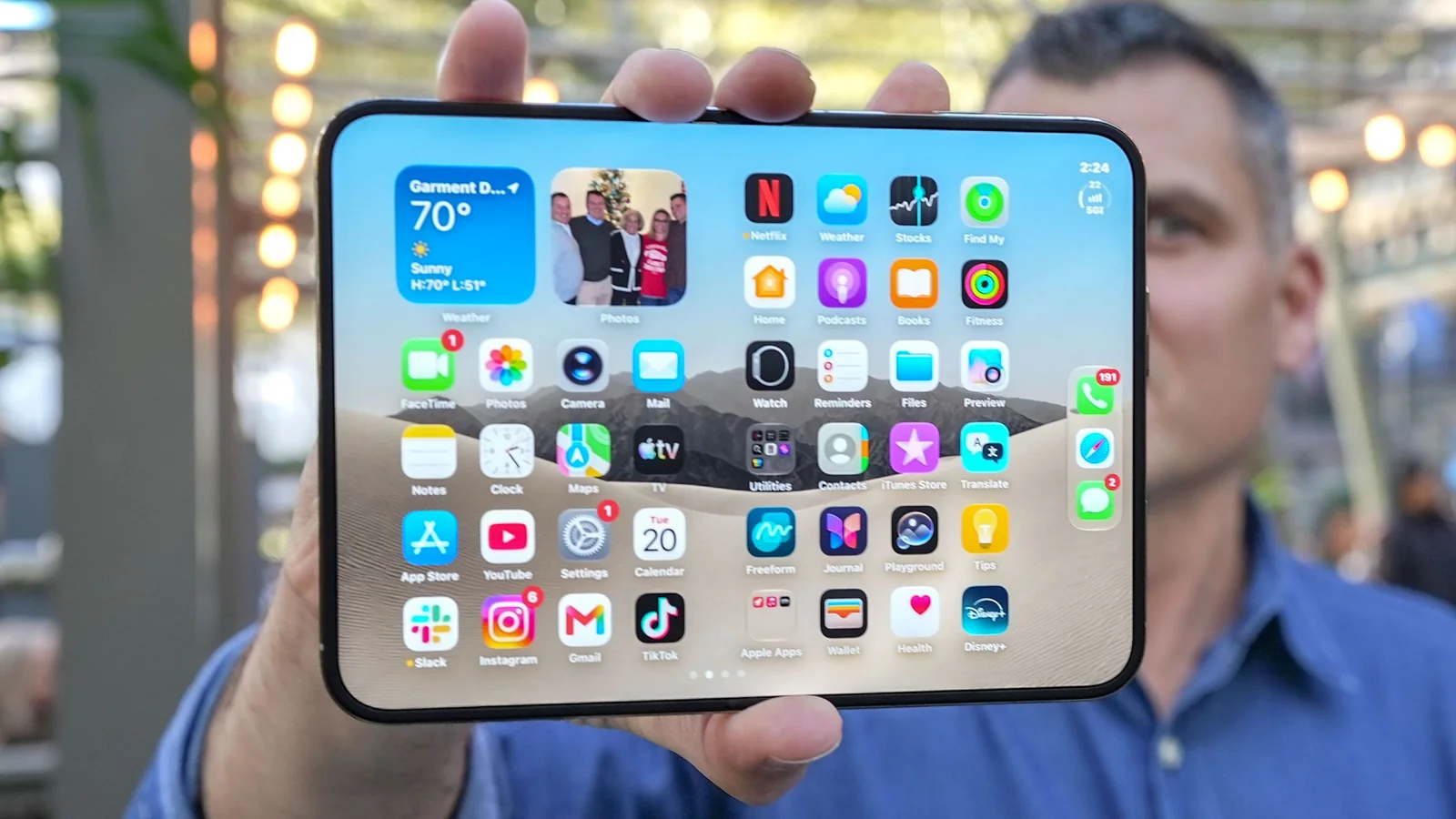
The iPhone Duo is not simply an iPhone folded in half. It functions more like a hybrid, splitting the difference between a compact smartphone and a larger 8-inch mini tablet.
From the polished titanium frame to the precise engineering tolerances, the design represents Apple at its best. Crucially, the nano-texture finish on the main display solves the primary complaint of folding phones by making the crease virtually invisible during daily use while cutting down reflections in bright sunlight.
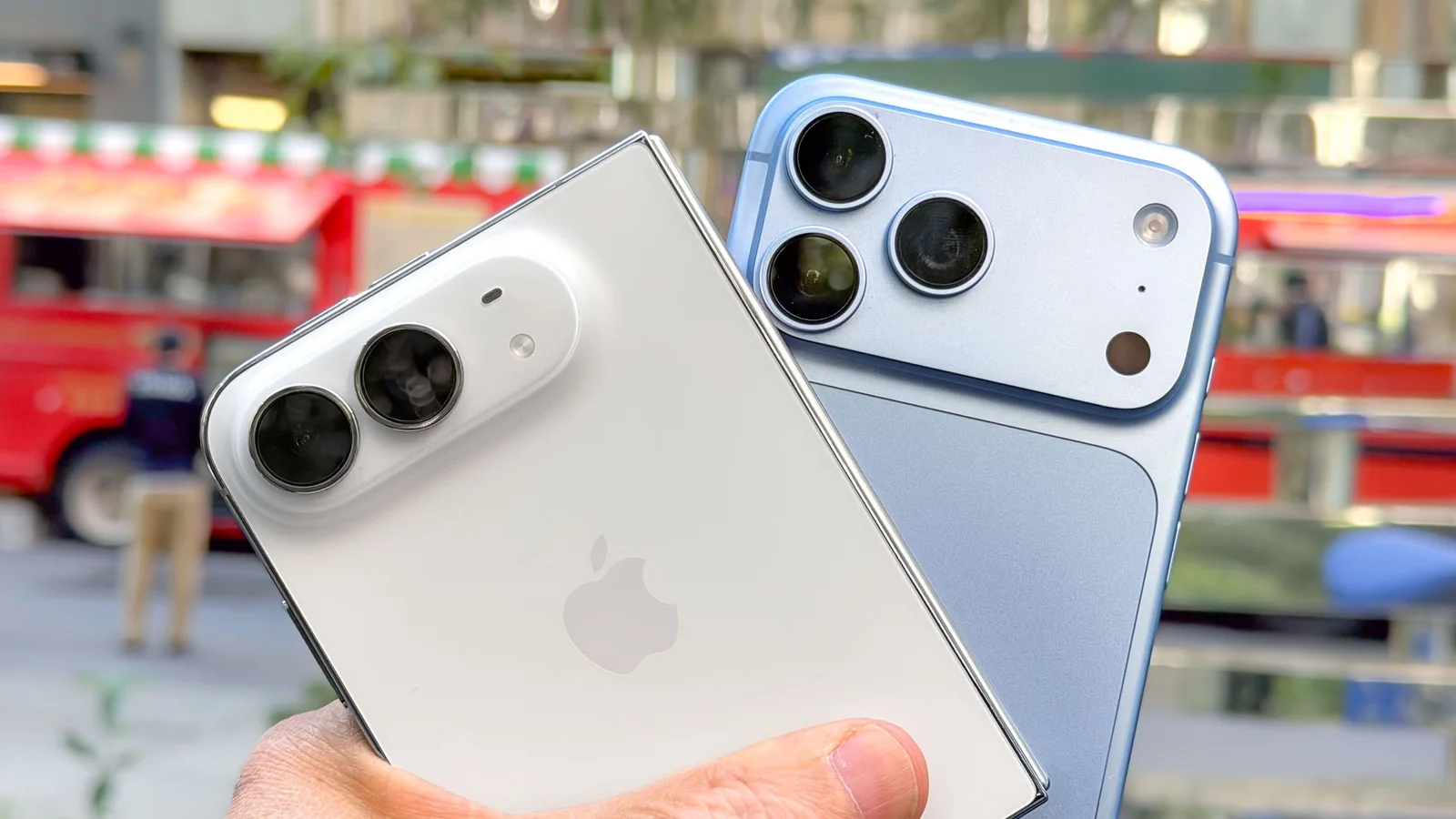
Apple includes four cameras, three of which deliver high-quality photos with excellent color accuracy and low-light performance. The inner camera is a modest 4MP sensor, perfectly adequate for casual selfies and video calls.
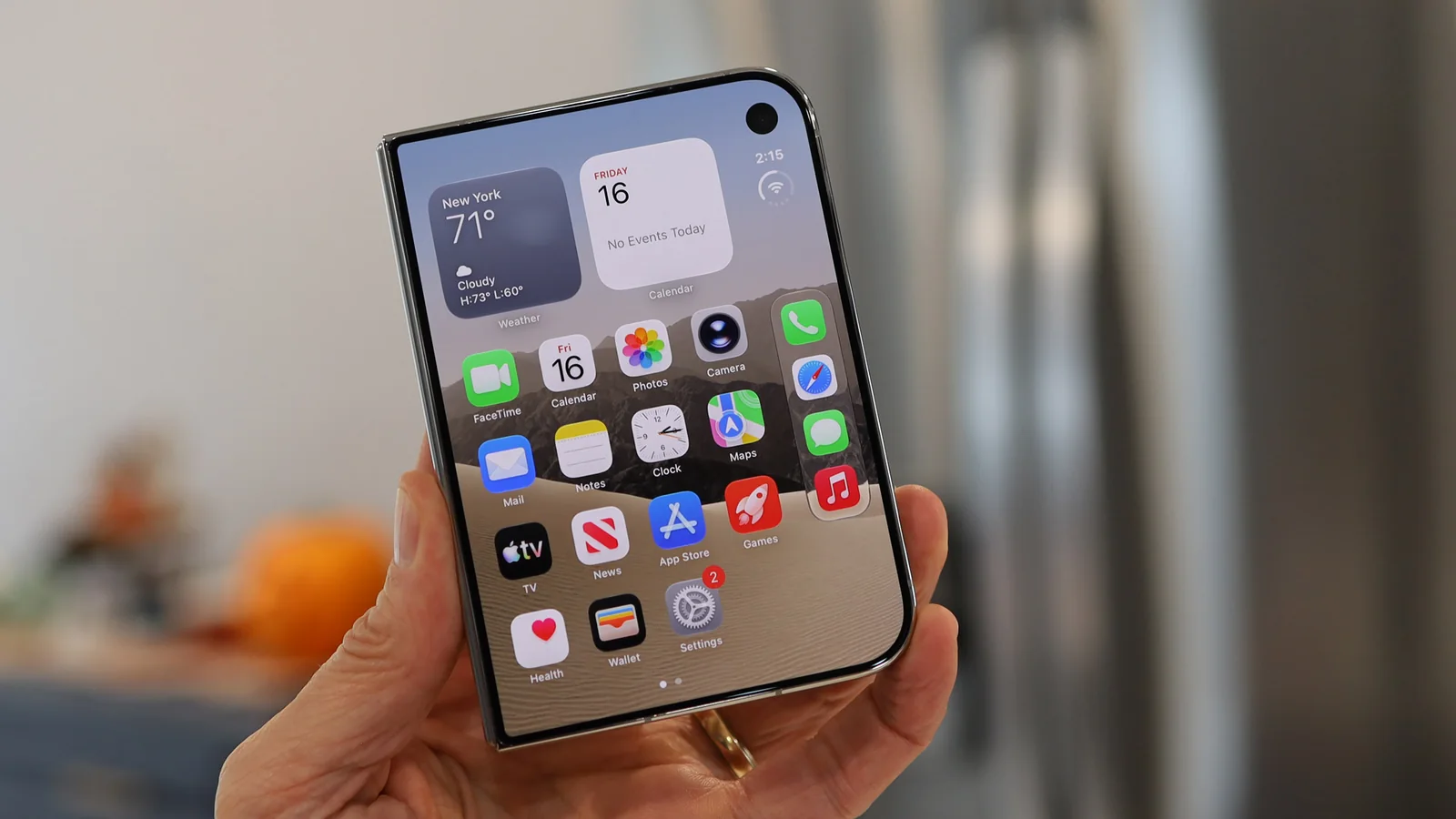
While the design is largely successful, some UI choices may divide opinion. Moving the status bar and dock to the right side of the cover screen makes single-thumb usage easier, but leaves some app interfaces feeling slightly cramped.
Additionally, the lack of Face ID on the cover screen means users must rely on fingerprint authentication.
Pricing starts at a hefty $1,999 / £1,999 for the base 256GB configuration, placing it firmly in line with competing high-end foldables.
Overall, this is a fantastic entry into the folding phone market, successfully combining a pocketable everyday phone with a versatile tablet.
Not every user needs a dual-screen device or wants to pay top dollar, but for those seeking maximum utility in a compact footprint, the iPhone Duo is well worth considering.
Apple iPhone Duo review: Price and availability
From $1,999 in the US
From £1,999 in the UK
From $3,499 in Australia
Apple unveiled the iPhone Duo, its first folding phone, as its one more thing during the Surprise and Shine event on September 9, 2026.
The list price starts at $1,999 / £1,999 / AU$3,499 for the 256GB model, with configurations extending up to 2TB for higher-tier storage needs.
As Apple's most expensive iPhone to date, it functions as a two-in-one device combining a pint-sized smartphone and a larger tablet with digital pen support.
Buyers can offset the initial cost through trade-in programs or monthly carrier financing options.
Ultimately, the device offers strong value for users fully invested in a hybrid form factor.
Apple iPhone Duo review: Specs
These are the key specifications of the Apple iPhone Duo:
Apple iPhone Duo review: Design
Polished titanium construction
Exquisitely engineered hinge and folding operation
Unfolds completely flat
IP68 dust and water resistance
Thicker and heavier than its nearest competitors
No Face ID biometric support
Opening and closing the device yields a remarkably satisfying mechanical feel, encouraging frequent use.
Advanced internal torque components allow the phone to spring open easily and hold any angle between zero and 180 degrees.
Hundreds of internal magnets secure the chassis when closed while ensuring smooth operation when opening.
At 5.2mm thick in tablet mode, it is exceptionally slim, though it measures 11.3mm when folded and weighs 254g.
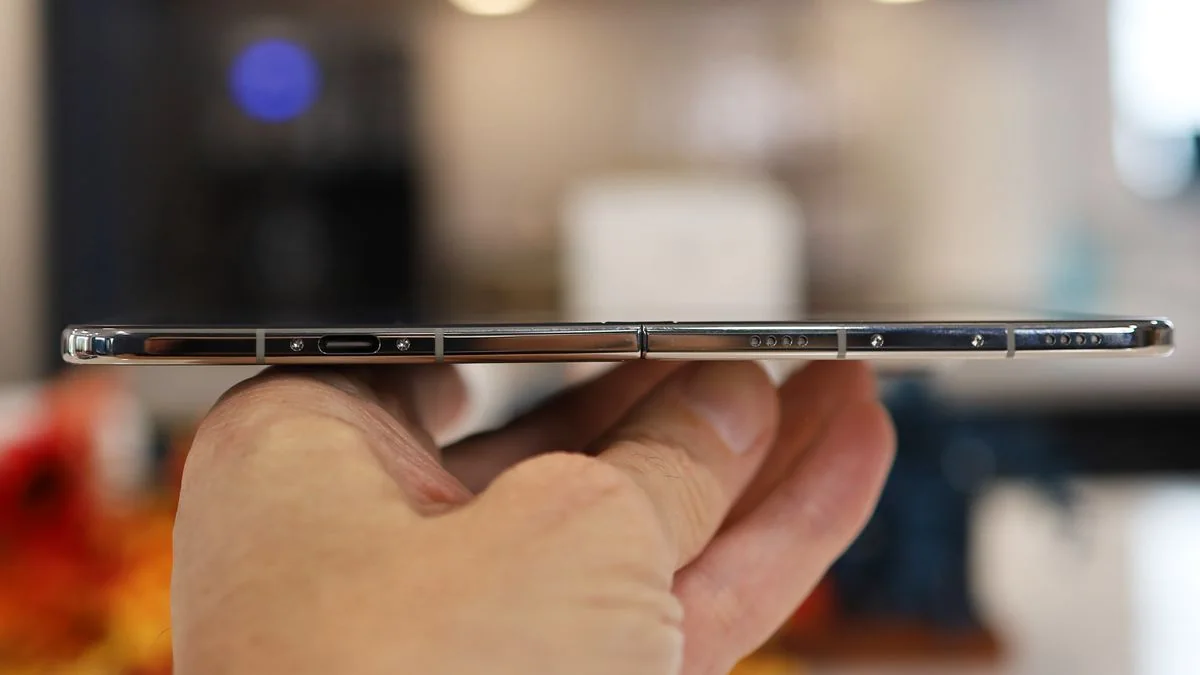
While the folded form factor fits easily into smaller pockets, the device's heft is noticeable during extended one-handed use.
The squat, near-square profile when folded gives the iPhone Duo a distinct aesthetic identity.
Ceramic Shield 2 glass on the front and back, combined with a matte finish, provides a secure, slip-resistant grip.
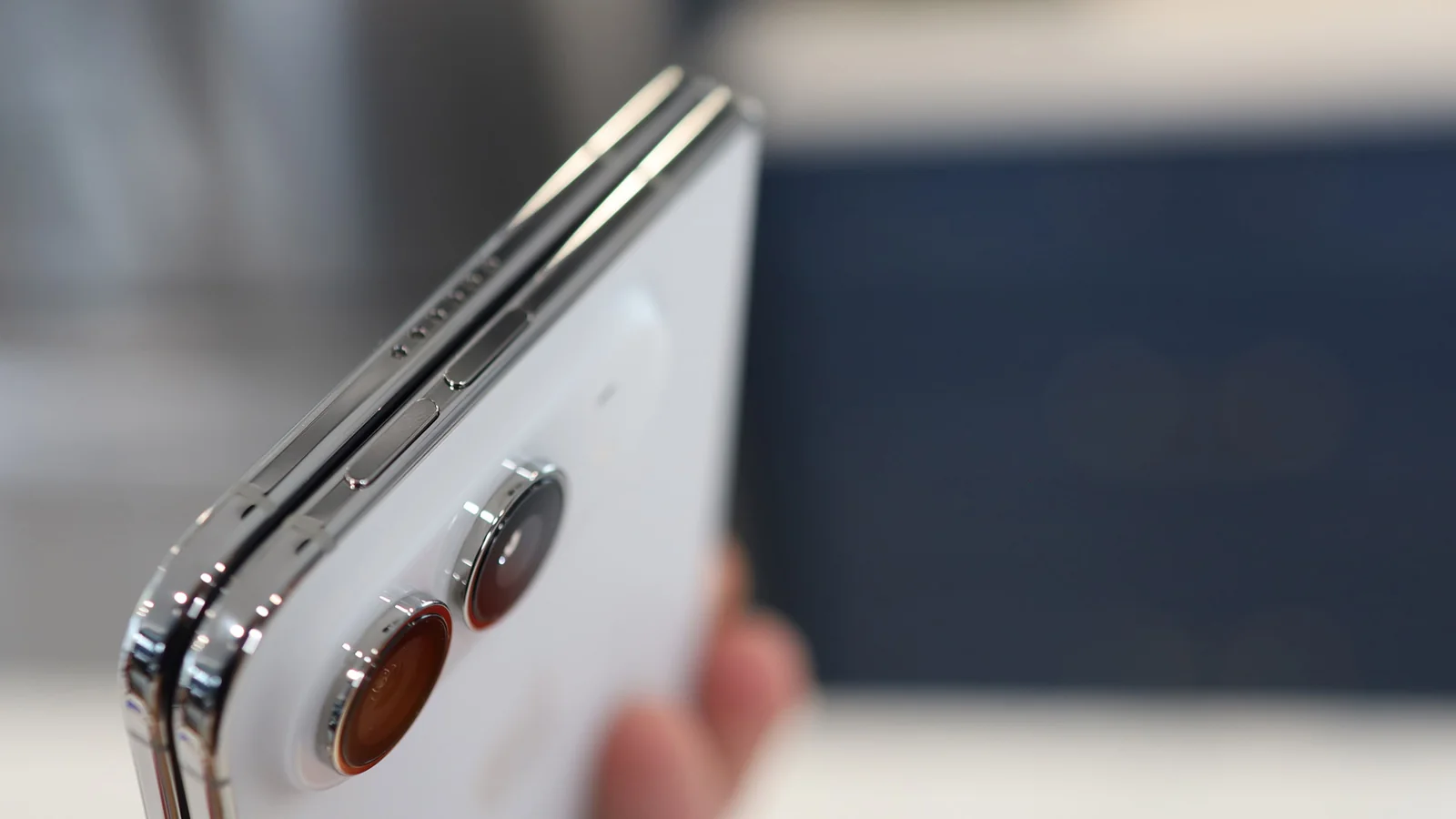
Volume buttons are positioned along the top edge, while the right side houses the Touch ID power button and Action button.
The omission of Face ID on a premium device forces reliance on fingerprint input, which may frustrate users accustomed to instant facial scanning.
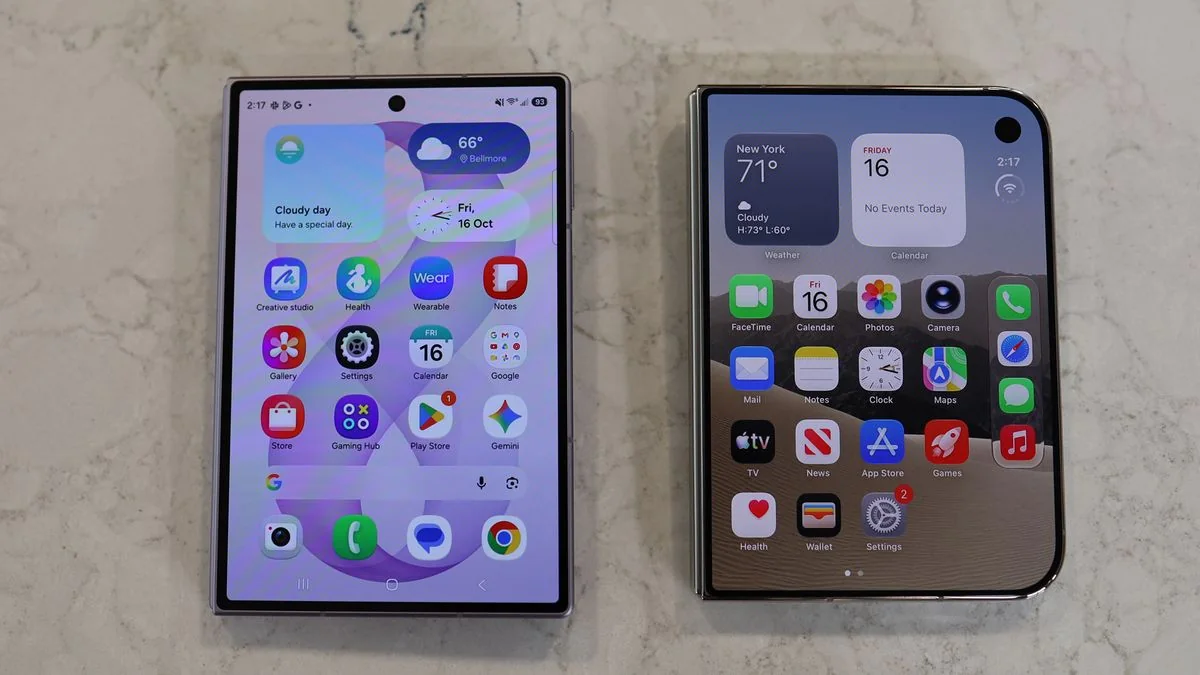
A USB-C port, speakers, and microphones line the bottom edge.
Unfolded, the device offers a compact tablet experience powered by an adapted version of iOS.
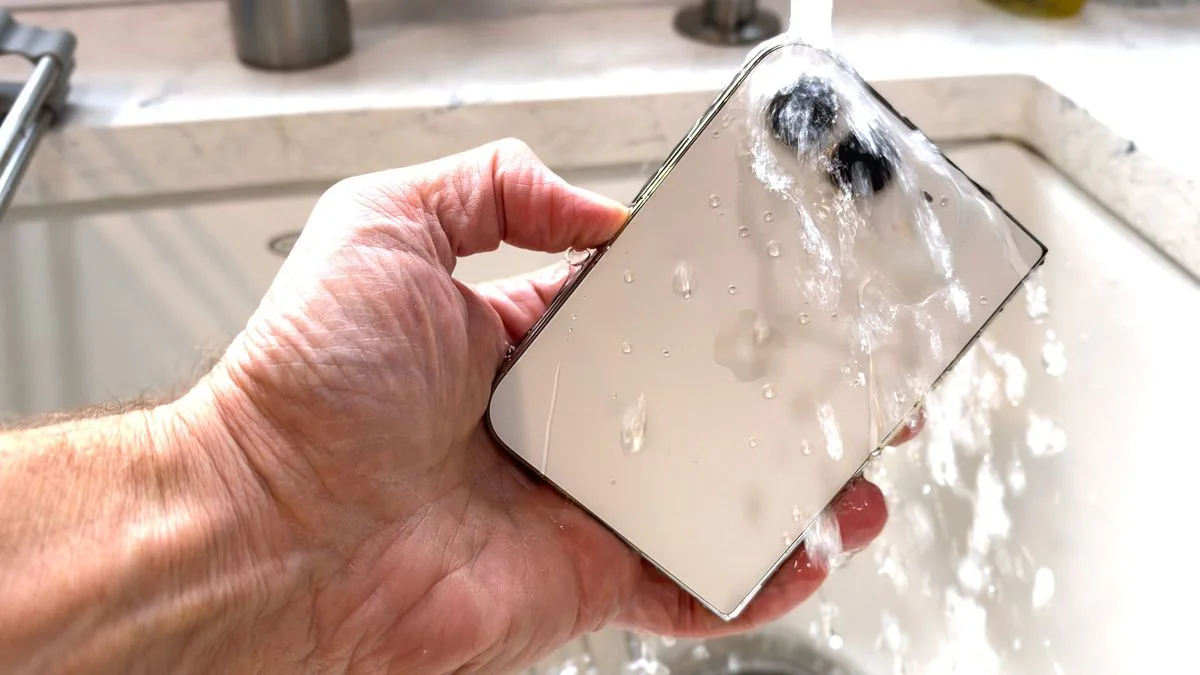
An IP68 dust and water resistance rating ensures protection against accidental spills and submersion.
The unconventional form factor requires a brief adjustment period, particularly regarding photography ergonomics.
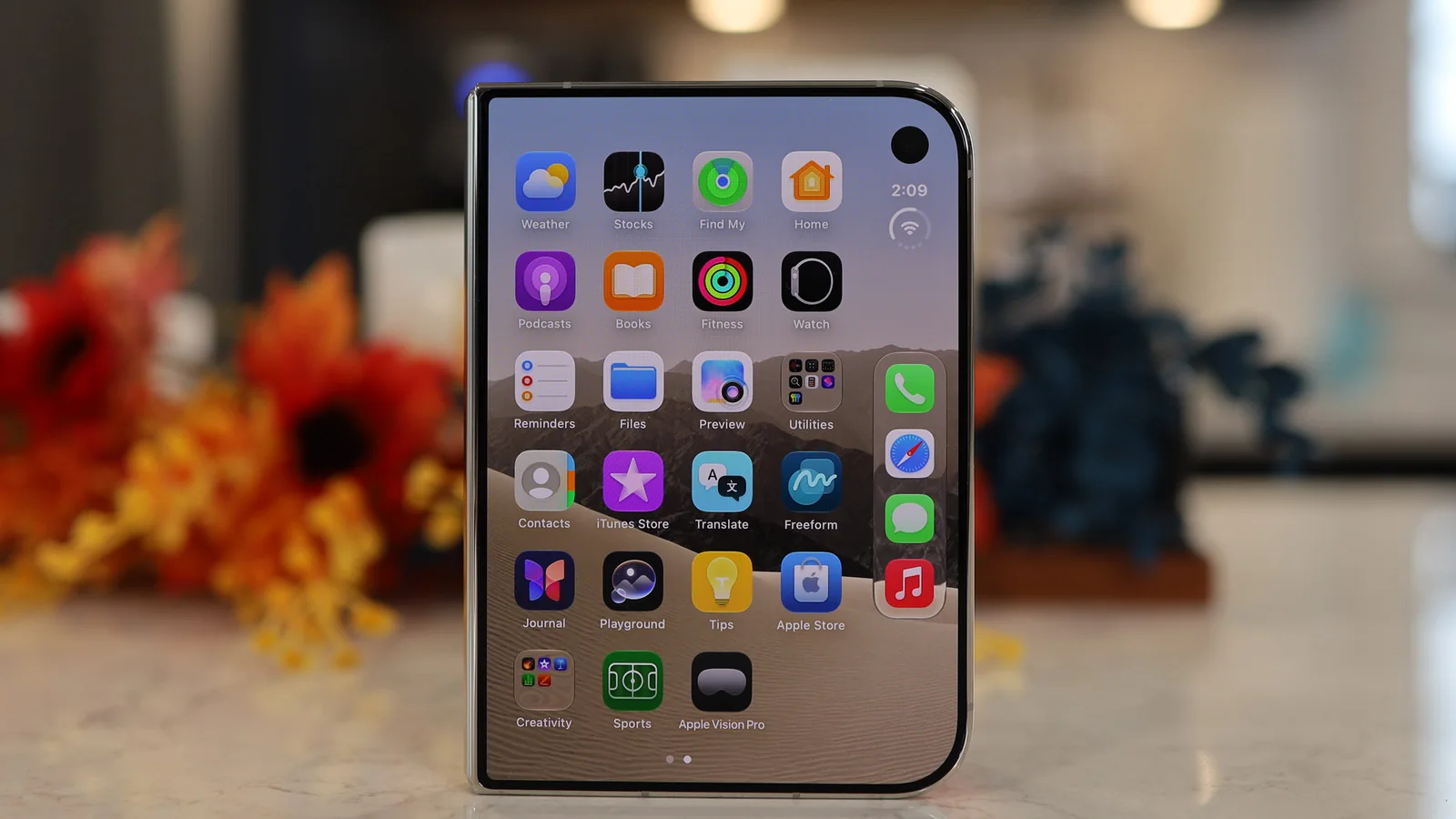
Apple iPhone Duo review: Displays
Compact 5.4-inch cover display with an unusual aspect ratio
Industry-leading 7.6-inch foldable internal display
Nano-etched display finish effectively conceals the screen crease
Bright, sharp, and fluid panel performance
Both the 5.4-inch outer and 7.6-inch inner panels are Super Retina XDR OLED displays featuring variable refresh rates up to 120Hz, always-on capabilities, and peak brightness up to 3,000 nits.
Resolutions on both screens exceed those found on competing foldable devices.
The cover display boasts a 2034 x 1398 resolution, while the inner main display reaches 2670 x 1878.
The cover screen incorporates a vertical Dynamic Island and interface adjustments to accommodate its wide aspect ratio.
Certain web layouts and applications can feel cramped on the outer screen due to reserved interface space.
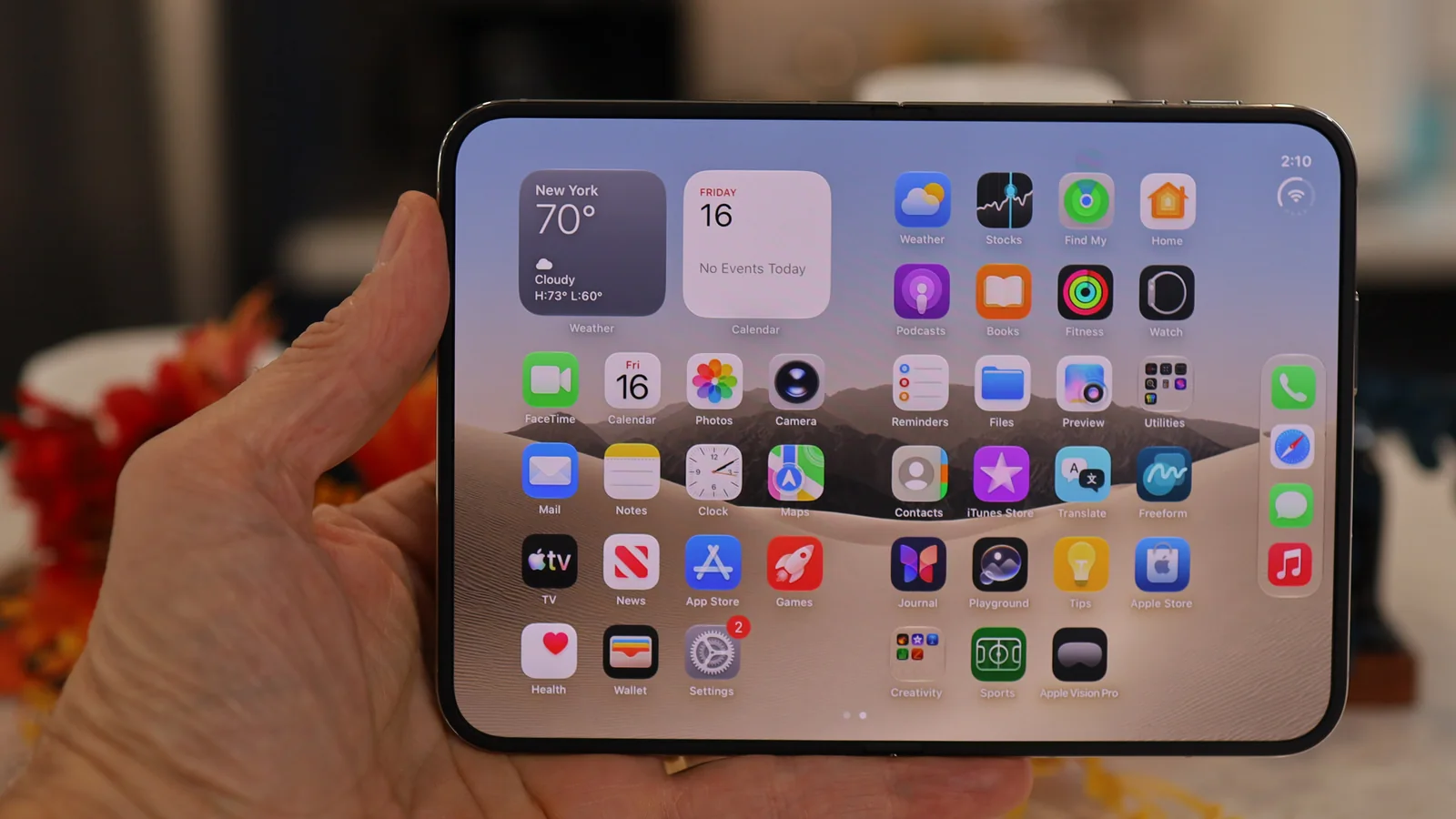
The inner main display is exceptionally responsive, and its matte coating successfully disperses reflections to make content look pristine.
Support for the USB-C Apple Pencil adds strong creative potential to the inner canvas.

The 4MP inner camera cutout is visible due to differing pixel density around the lens.
Vertical status and dock positioning on the inner screen takes some adjustment compared to traditional tablet layouts.
App compatibility varies across the dual-display architecture.
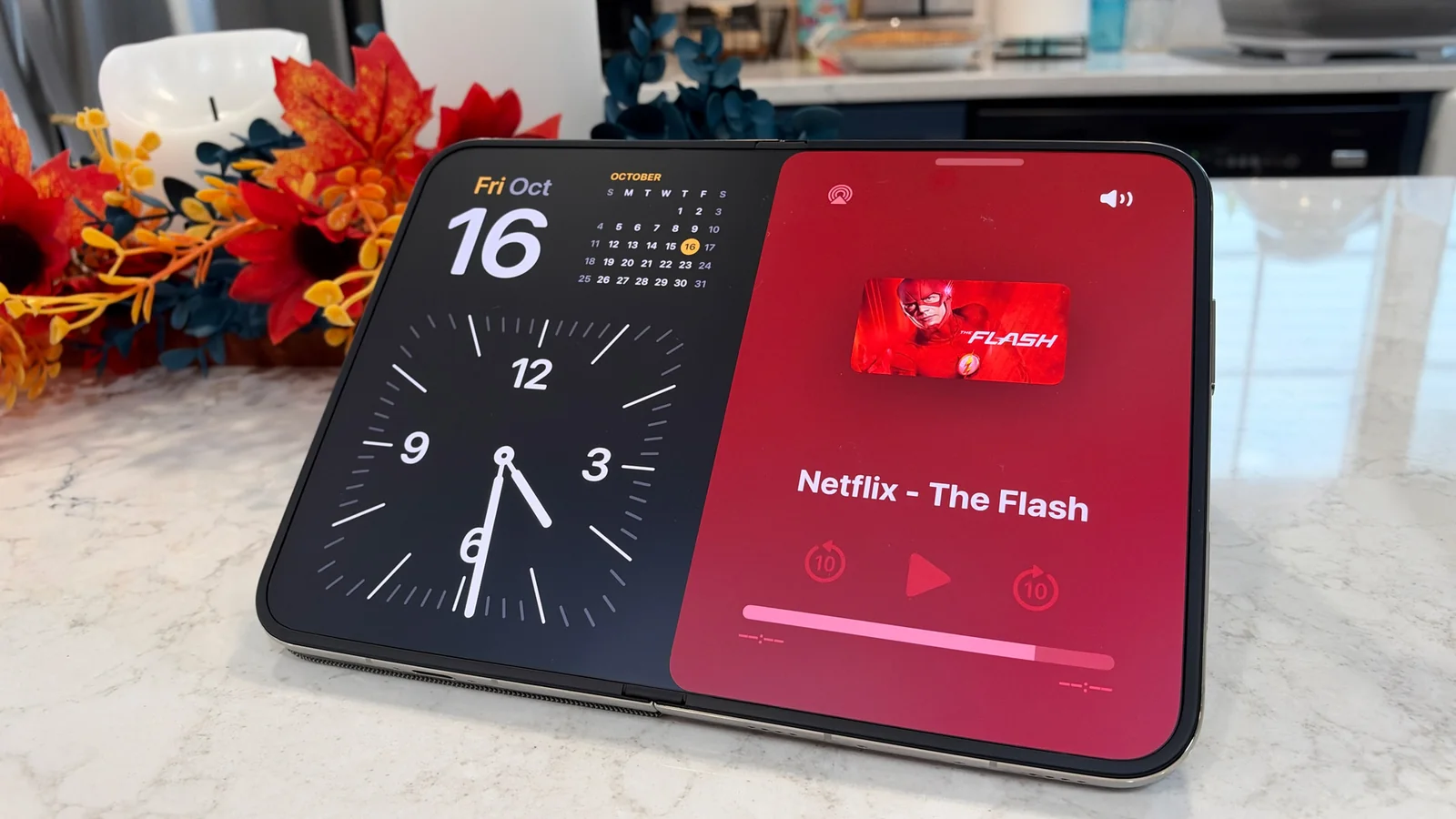
A redesigned Standby mode intelligently shifts interface elements depending on whether the phone is propped up like a tent or opened like a book.
Overall, the dual-display system delivers versatile multi-screen functionality.
Apple iPhone Duo review: Cameras
Two robust 48MP external cameras
High-quality 12MP Center Stage front camera
Lower-resolution inner camera suitable for basic video calls
Absence of a dedicated telephoto zoom lens
Hardware engineering takes center stage on the iPhone Duo, but the optics remain largely competitive.
The primary setup features a 48MP f/1.6 main lens, a 48MP f/2.2 ultra-wide lens, and a 12MP Center Stage shooter.
Testing across various lighting conditions demonstrates strong color accuracy and low-light performance.
External sensors utilize pixel binning to default to detailed 24MP captures.
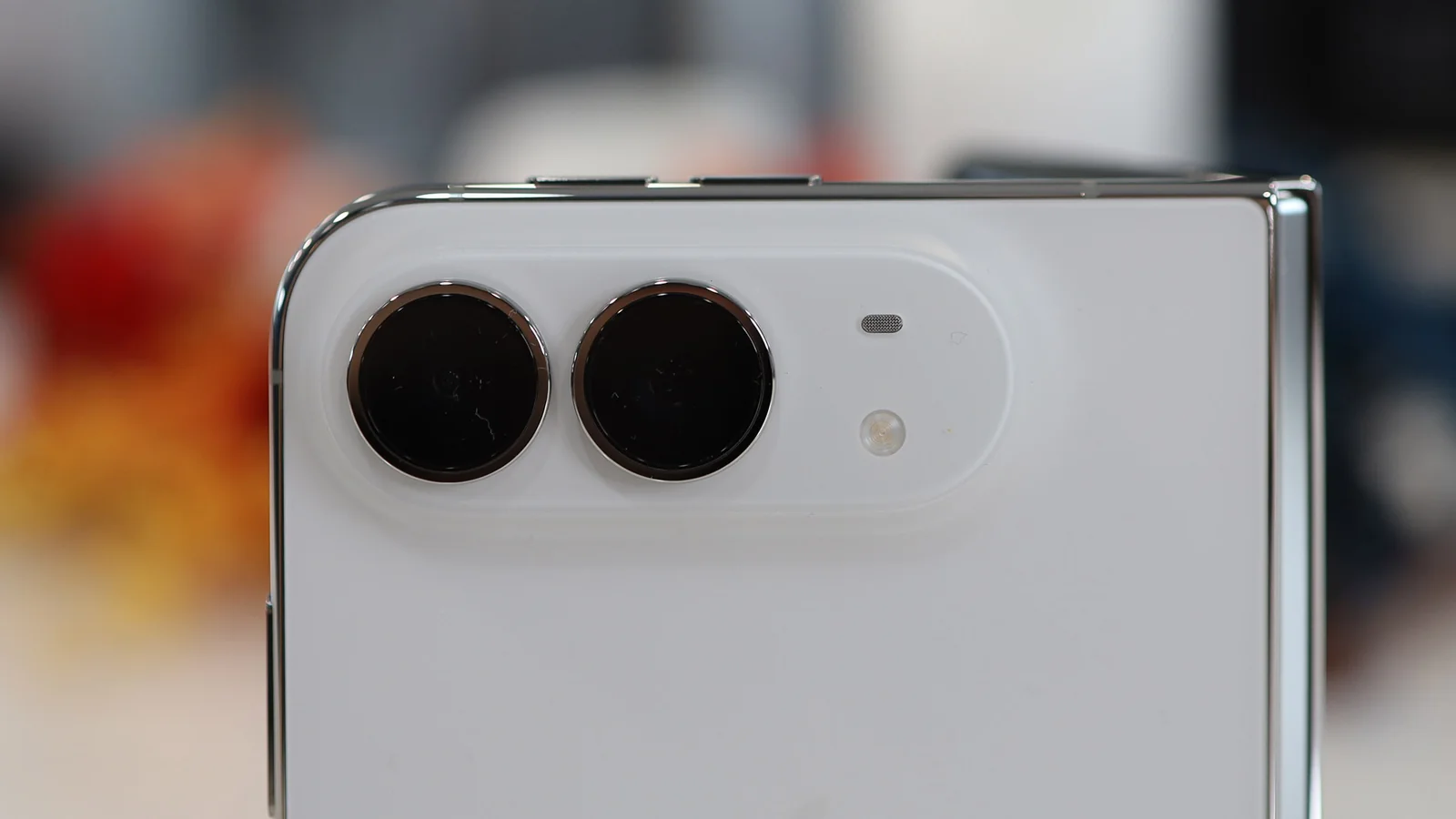
Fine details and exposure balance in bright environments are handled exceptionally well.
Challenging indoor settings are managed cleanly with effective exposure adjustments and minimal grain.
Smart Take functionality allows the phone to automatically capture optimal shots when positioned on a flat surface at a 90-degree angle.
Framing shots without a direct monitor requires some trial and error when using hands-free modes.
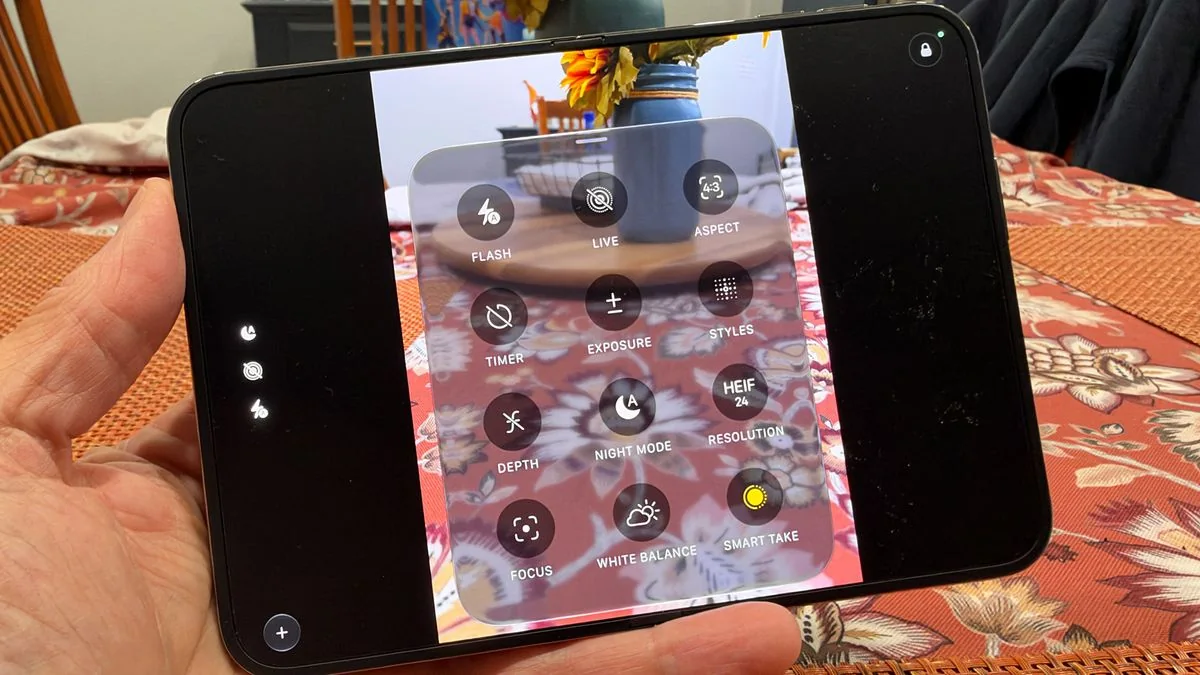
Duo Preview mode enables the cover display to act as a viewfinder while utilizing the higher-quality rear lenses for portraits.
Zoom functionality relies on a 2x sensor crop rather than a dedicated optical telephoto lens.
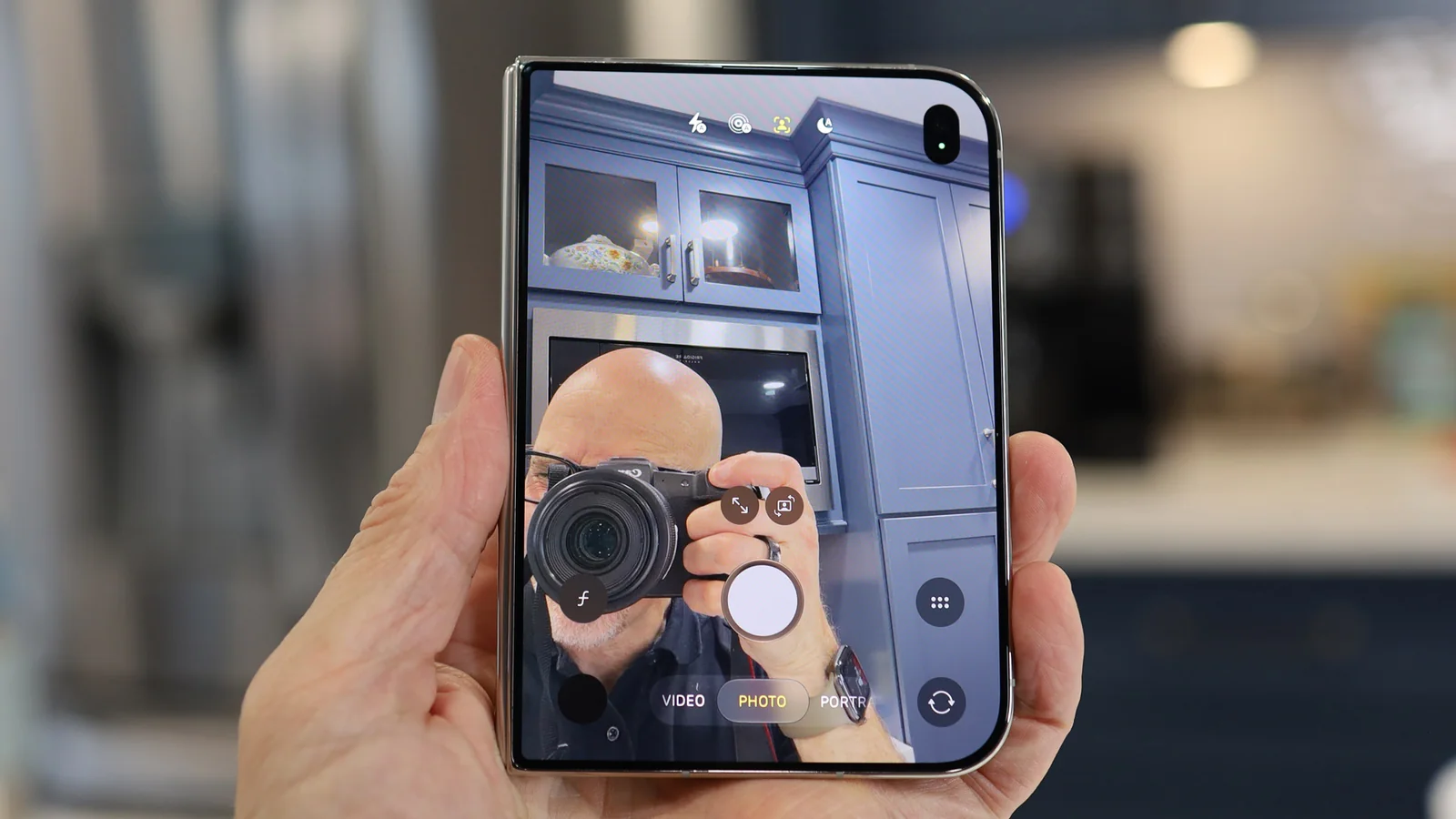
Portrait selfies captured via the cover camera yield impressive background bokeh effects.
Overall camera output matches the high standards set by previous generation iPhone flagships.

Apple iPhone Duo review: Software
iOS adapted effectively for a multi-hardware tablet hybrid
Unconventional dock positioning requires user adaptation
Split-screen multitasking enhances productivity
Third-party app optimization remains a work in progress
iOS forks intelligently to support the unique dual-screen hardware configuration.
Certain interface adjustments, such as relocating status bar information and rotating the dock, break from traditional iOS conventions.
Cover screen layout choices occasionally impact usable space within specific apps.
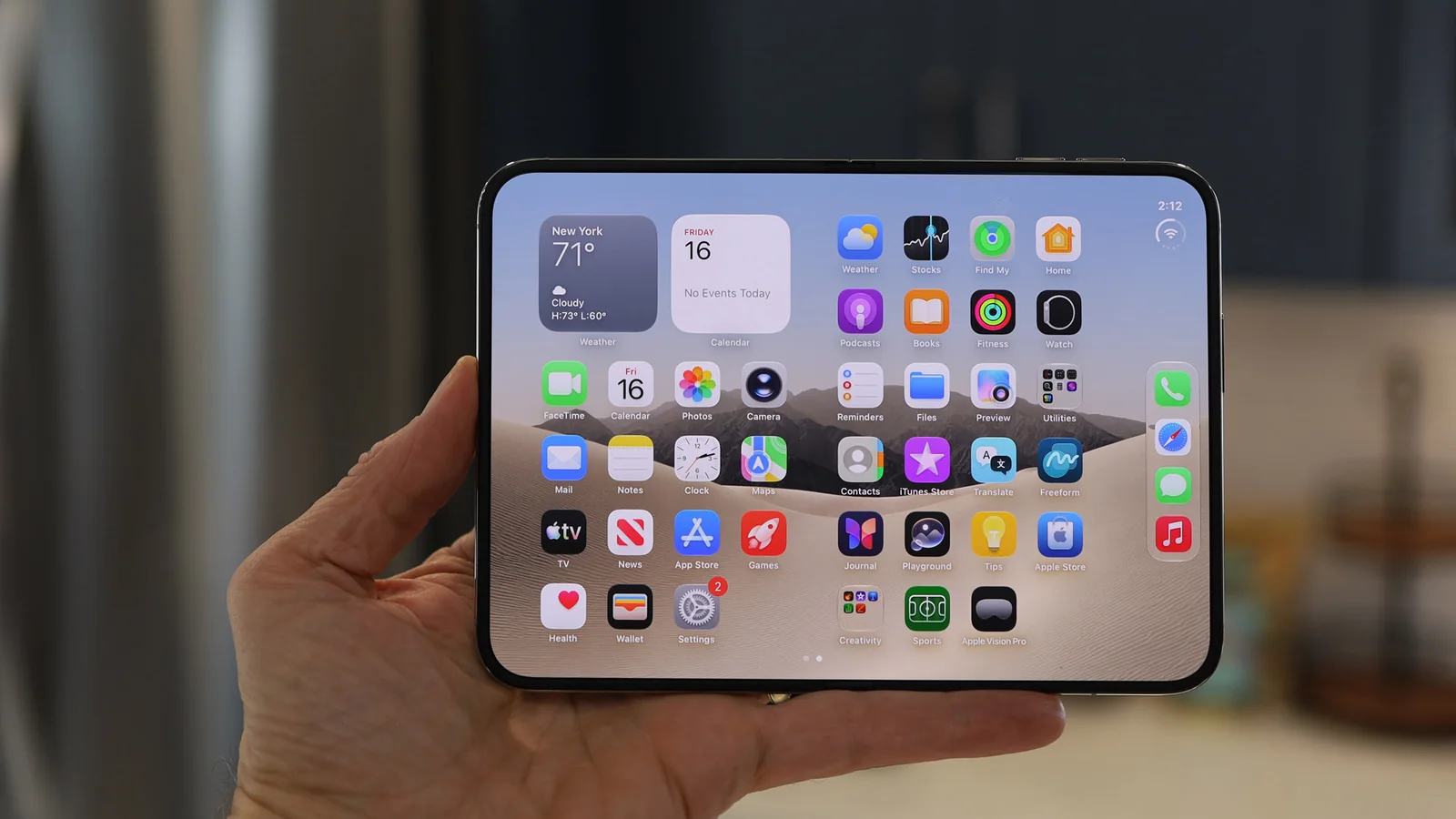
Unoptimized third-party applications may display scaling inconsistencies or pillarboxing.
Scaling tools allow users to stretch apps to fit the display, though isolated interface quirks can occasionally occur in games or media tools.

Optimized first-party apps and select media software utilize the full 7.6-inch canvas seamlessly.
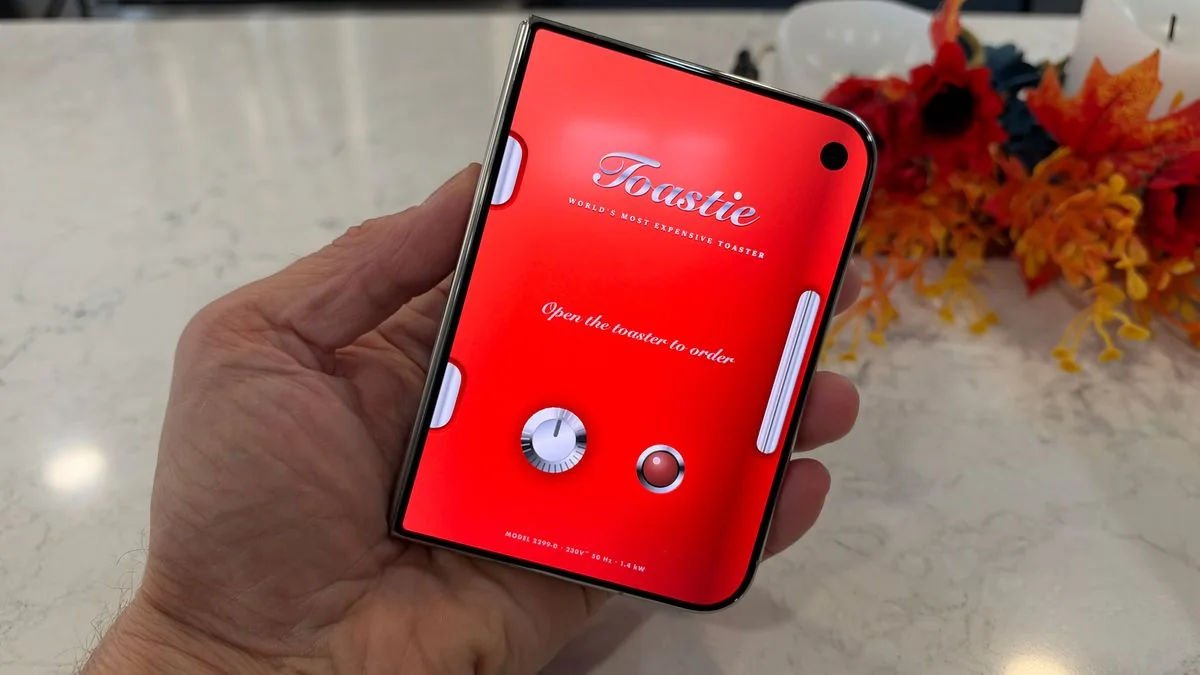
Custom-designed folding games take advantage of the hinge mechanism for unique interactive mechanics.
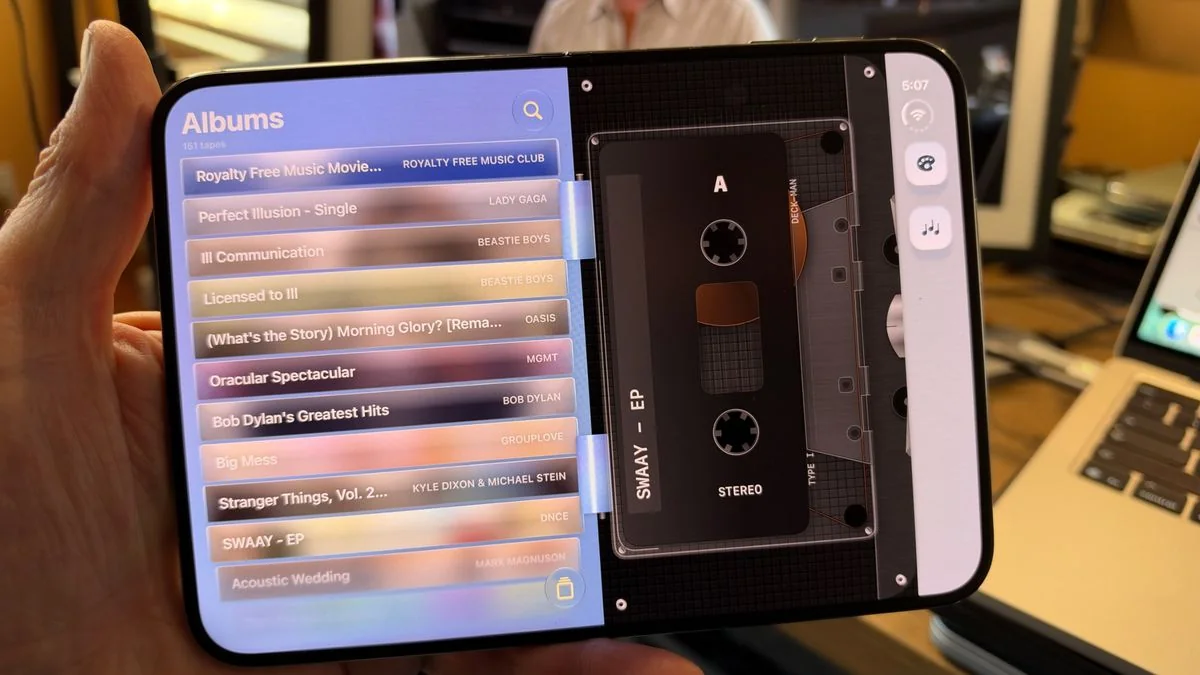
Novelty applications leverage physical folding states to mimic retro media players.
Tabletop mode offers practical utility for board games and productivity utilities.
While creative, these apps complement rather than define the overall software ecosystem.
Multitasking via split-screen gestures allows side-by-side app execution on the inner display.
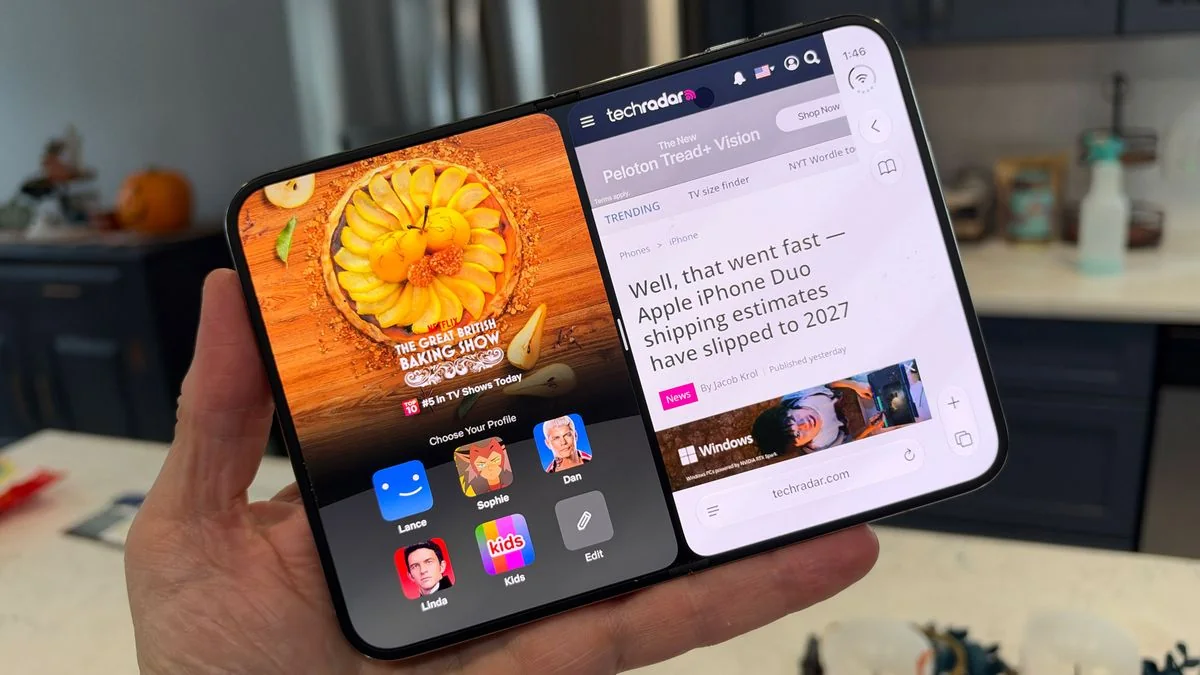
Dual-app split views can be supplemented with picture-in-picture video overlays.
Siri AI features integrate deeply with system mail and context tracking, though occasional query errors still occur.
Overall, iOS handles the transition to foldable hardware effectively despite minor early ecosystem friction.
Apple iPhone Duo review: Performance
Equipped with the powerful A20 Pro CPU
Features 12GB of system RAM
Delivers smooth and fluid performance across all tasks
Apple equips the iPhone Duo with the same 2-nanometer A20 Pro processor found in its standard Pro flagships, ensuring top-tier benchmark results and processing speeds.
Transitioning apps fluidly from the cover screen to the expanded inner display occurs without stutter or hesitation.
Intensive workflows like 4K video editing run smoothly, though unoptimized software may not fully utilize the screen estate.
Extended gaming and heavy processing sessions can generate mild warmth near the camera module.
On-device AI tasks and local photo cleanup tools execute rapidly thanks to the robust neural processing hardware.
Connectivity options include a custom C2 modem for enhanced 5G, Wi-Fi 7, Bluetooth 6, and satellite messaging support.
Apple iPhone Duo review: Battery
Solid all-day battery endurance
Supports fast wired and wireless charging
A nearly 5,000mAh battery powers the device, yielding impressive video playback endurance figures.
Real-world testing comfortably achieves a full day of mixed productivity usage.
Users can cruise through standard daily tasks without battery anxiety.
Fast charging protocols allow a compatible 45W adapter to replenish 60% capacity in 30 minutes.
Buy it if...
You have been waiting for Apple to enter the foldable market with a polished, highly refined device.
You prefer a pocketable, ergonomically curved form factor that easily fits into smaller hands and bags.
You want a folding screen without a prominent, distracting crease.
Don't buy it if...
You are looking for an affordable smartphone option.
You require a dedicated physical telephoto camera lens.
Apple iPhone Duo review: Also consider
Samsung Galaxy Z Fold 8
Samsung offers a practical size, excellent screens, and cohesive software potential, though it remains a costly investment.
Motorola Razr Plus 2026
A strong flip-style alternative for users prioritizing battery longevity and a standard outer screen experience.
Samsung Galaxy Z Fold 8 Ultra
Provides expanded screen space, a dedicated telephoto camera, and longer battery endurance for a similar price tier.