For years, phone manufacturers have sought to legitimize their imaging chops by partnering with camera brands. While some of these partnerships have merely been branding exercises, others have resulted in significant improvements in camera performance.
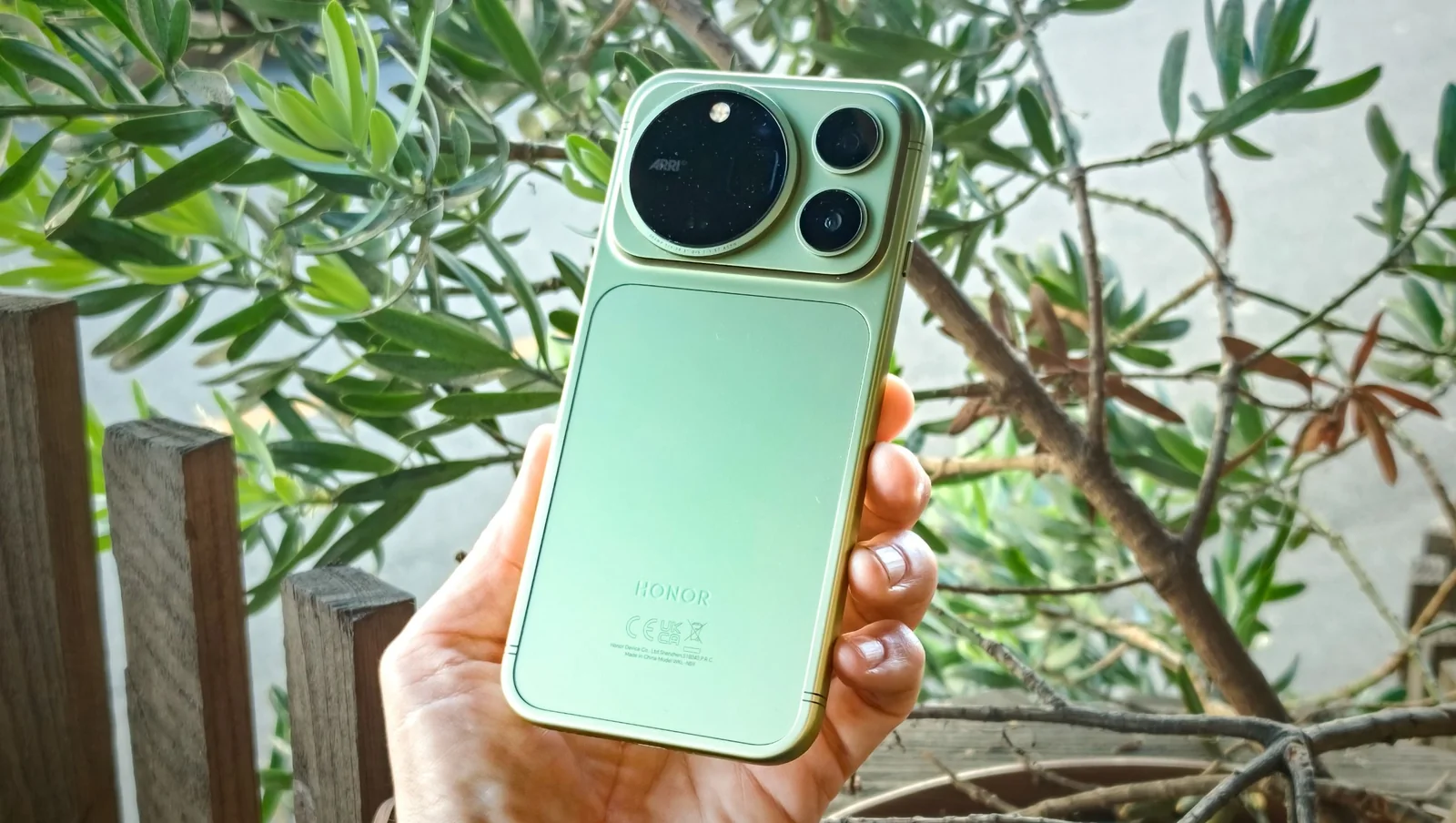
Honor and Arri’s collaboration is definitely one of the more meaningful ones. Following time spent evaluating Honor’s global Magic9 Pro Max alongside Arri’s Alexa Mini LF cinema camera in professional studios, the device is shaping up to be one of the best camera phones around. Here is a detailed look at what this hardware achieves.
The Arri Collaboration
Since 1917, German company Arri has earned a reputation for making intuitive-to-use, individually-calibrated cinema cameras designed to work reliably in demanding conditions. Beginning in 2010, it became a leader in digital cinema with its Alexa camera lineup.
The Arri Collaboration
Alexa cinema cameras are known for the Arri Look, which combines dynamic range, low-light performance, accurate colors, and distinct skin tones found in major cinematic releases.
The Arri Collaboration
To achieve this, Alexa cameras capture footage using Arri’s LogC3 gamma curve. 3D Look-Up Tables are then applied during production to convert footage into target color spaces, preserving dynamic range and color data.
Honor has grown significantly since operating as an independent company, establishing itself as a leader in mobile imaging and silicon-carbon battery technology.
The company produces advanced hardware, and its collaboration with Arri brings professional-grade cinema modes directly to its flagship devices.
While initial specialized hardware launched primarily in China, the Magic9 Pro Max brings these advanced camera features and the Arri Cinema mode to a global audience.
Camera Hardware and Capabilities
The global Magic9 Pro Max flagship packs impressive hardware specifications tailored for professional mobile creators.
Camera Hardware and Capabilities
The phone features three rear cameras: a 200 MP main shooter with gimbal-grade OIS, a 200 MP 3.5x telephoto with OIS, and a 50 MP ultrawide with autofocus. These are complemented by Honor's in-house H1 imaging chip co-developed with Arri.
The AI-powered image signal processor is optimized for cinema-grade video capture, handling real-time RAW-domain parallel processing while natively supporting 10-bit Arri LogC3 capture, custom LUTs, and Arri Looks with up to 14 stops of dynamic range.
The main and telephoto cameras achieve a CIPA 8.0 image stabilization rating, allowing shutter speeds to be set significantly slower while maintaining sharp handheld shots.
Arri Cinema mode supports resolutions up to 4K at 60fps, standard or CinemaScope aspect ratios, and professional codecs like 10-bit 4:2:2, alongside multiple preinstalled Arri Looks and support for downloadable LUT libraries.
Audio capture is handled by a four-microphone array combined with AI digital signal processing to replicate the properties of professional interference-tube shotgun microphones.
The device also introduces a selfie camera with a square aspect ratio to capture landscape or portrait videos without resolution loss regardless of device orientation.
Additionally, expansion kits offer teleconverter lenses and professional rigging cages with cooling fans and quick-release handles for advanced productions.
The results
Studio testing against Arri’s Alexa Mini LF revealed remarkably similar output when capturing identical scenes with matching LogC3 settings.
Aside from differences in depth of field due to sensor size, the dynamic range, low-light performance, and color reproduction between the phone and the professional cinema camera were nearly identical.
Side-by-side 4K footage demonstrates that mobile hardware can now successfully hold its own next to high-end Hollywood production gear under controlled testing conditions.
Real-world testing with LogC3 clips imported into editing software like DaVinci Resolve further confirmed that applying professional LUTs yields authentic cinematic aesthetic results.
Stabilization, exposure, and white balance handling outperform traditional expectations for Android video recording, establishing a new benchmark for the platform.
While competing flagship devices offer strong video performance, the Honor and Arri collaboration directly challenges the historical dominance of Apple's Pro models in professional mobile video.
In photography, the device delivers high-end image quality led by its powerful telephoto sensor, though some limitations remain regarding ultrawide support within the dedicated cinema mode.
Bottom Line
The Honor Magic9 Pro Max proves that manufacturer partnerships can deliver substantive imaging improvements, significantly raising the bar for what creators can achieve with a pocket-sized device.