Design and First Impressions
Apple may have entered the foldable phone race later than competitors, but the iPhone Duo immediately establishes a strong presence in the category.
The source review highlights how intuitive the device feels when hardware and software operate in harmony, delivering a practical and polished foldable form factor that earned high praise.
While first-generation hardware typically carries some shortcomings, the iPhone Duo succeeds through thoughtful details, including a matte inner display surface that minimizes glare, a robust physical build, and cohesive operating system features.
Pricing begins at $1,999 for the 256GB model and scales up to $3,199 for 2TB of storage. This positions the device directly alongside competing foldables such as the Samsung Galaxy Z Fold 8 and Google Pixel 11 Pro Fold.
The high cost and limited availability indicate that foldable devices remain niche, but for users seeking a compact device that unfolds into a tablet experience while retaining the iOS ecosystem, the iPhone Duo proves to be a compelling option.
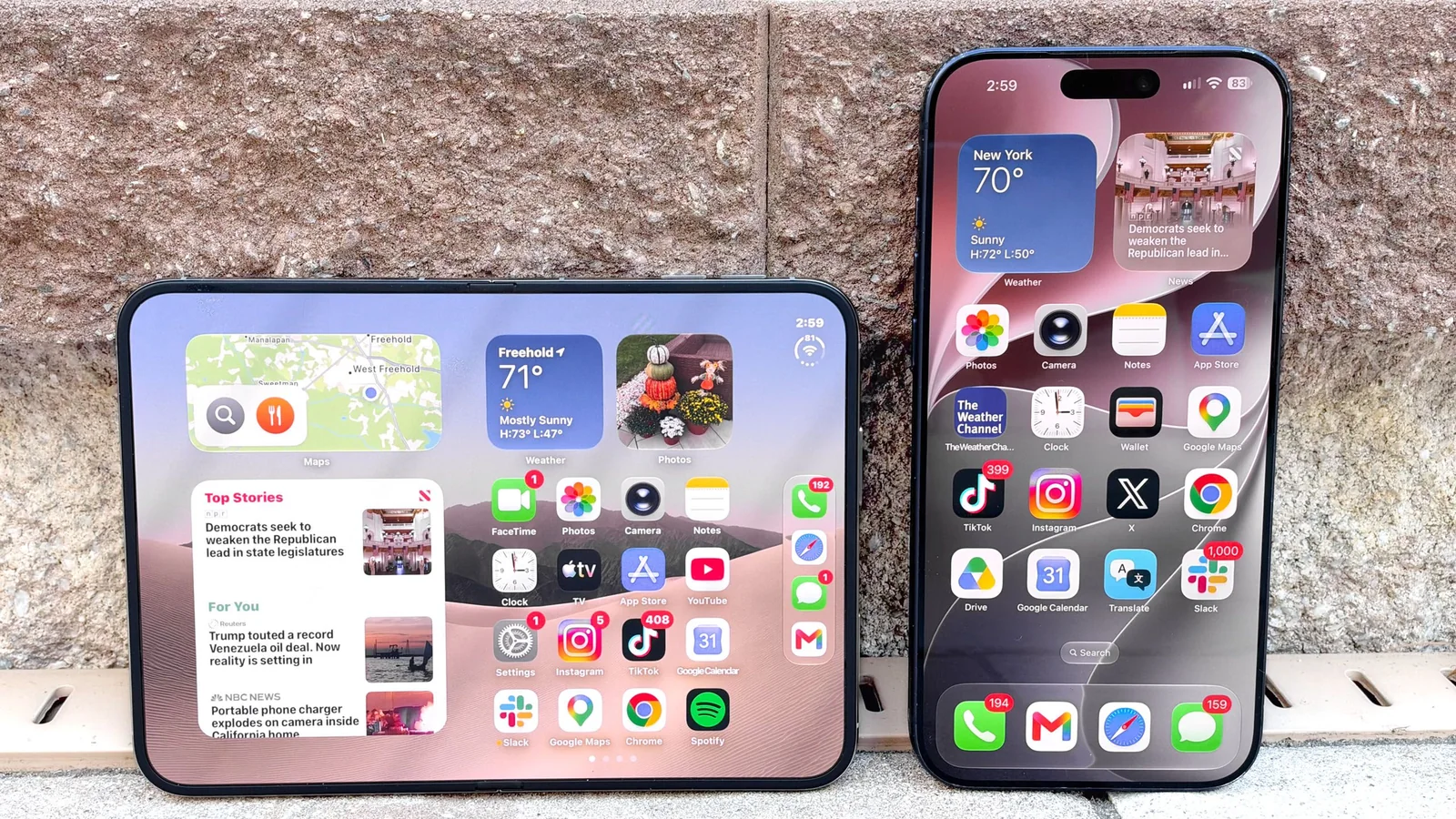
Using a foldable form factor breaks away from conventional bar-style phones. The device features a 5.4-inch cover screen suited for quick messaging and notifications, alongside a 7.6-inch inner display optimized for multimedia consumption and multitasking.
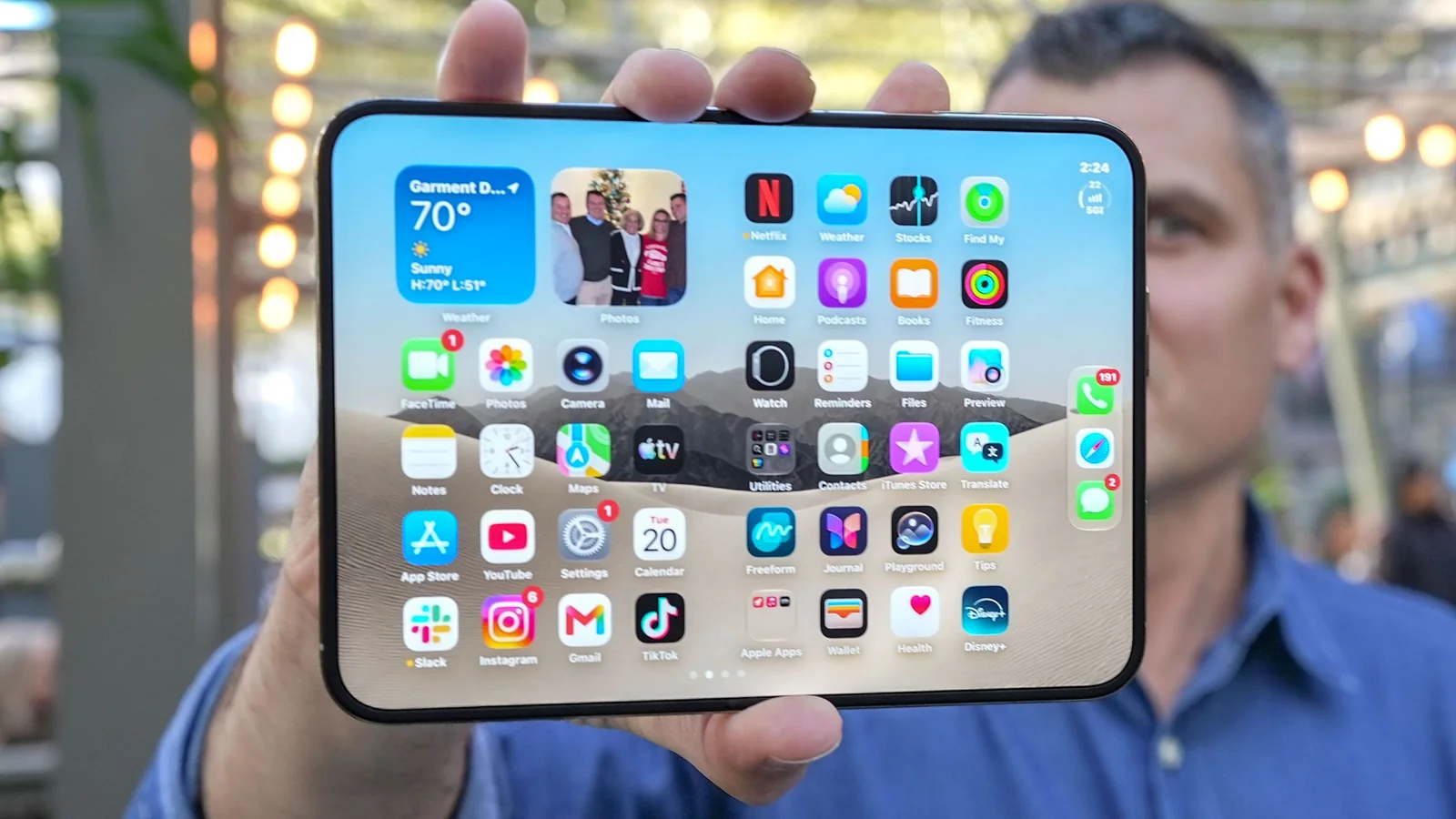
The passport-size footprint fits comfortably in the palm and pocket when closed. Unfurled, the device resembles a smaller iPad Mini, boasting a matte inner display that diffuses reflections and renders the center crease virtually unnoticeable during media playback.
The inner screen uses scratch-resistant materials designed to endure daily usage without accumulating scuffs.
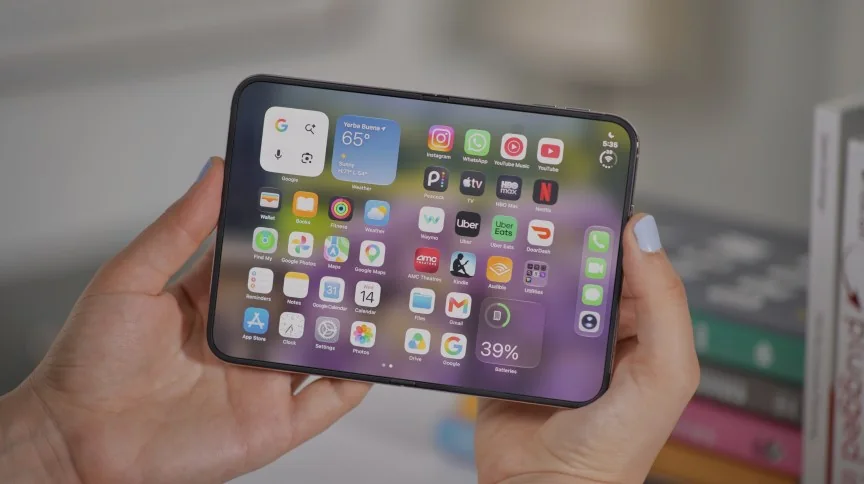
Opening completely flat, the device measures 11.3mm thick when folded and slims down to 5.2mm when unfolded. This slim profile gives it the physical feel of a tablet, making it practical for working on the go.
Physical controls include a dedicated Camera Control button for fast capture and Visual Intelligence access, alongside top-positioned volume keys that are accessible during portrait usage.
A notable hardware omission is the absence of Face ID. Authentication relies instead on a side-mounted Touch ID sensor or manual passcode entry, which the source reviewer noted as a slight step backward in fluidity compared to traditional iPhone models.
Display Versatility and Software Integration
The 5.4-inch cover screen accommodates routine tasks such as email management, texting, and quick photography without feeling overly constrained.
For demanding workflows, opening the 7.6-inch inner display provides ample workspace for document editing, media streaming, and reading. An under-display FaceTime camera recedes when inactive to maintain an uninterrupted viewing area.
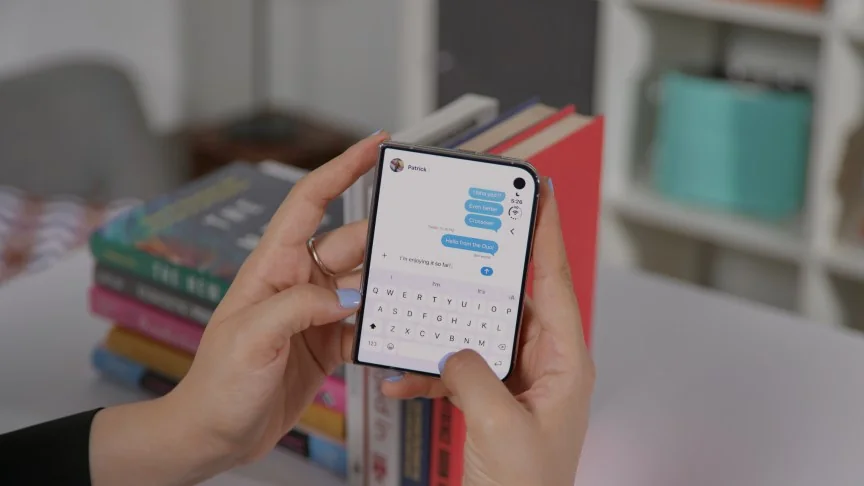
The software supports dual-app multitasking in landscape mode with a fixed 50/50 split, though it lacks the flexible app resizing capabilities found on some competing foldables.
Users can drag and drop files between apps and pair specific applications together in the App Switcher for quick retrieval.
In portrait orientation, multitasking is limited to picture-in-picture video playback over a primary application, though folding the device partially restores a balanced layout.
Typing on the inner screen is more comfortable in portrait orientation, mimicking the feel of a physical document.
Friction hinges allow the device to hold its position at various angles, functioning effectively in a laptop-like posture or propped up for hands-free media viewing.
Stereo speakers positioned on opposite sides deliver balanced audio performance during media playback.
Operating on iOS 27, the device provides smooth synchronization across both screens with specialized foldable adaptations, such as split keyboards when partially folded.
Camera interfaces and active controls dynamically shift away from the center crease when the device is folded.
Primary navigation elements cluster on the right-hand side for thumb accessibility, though left-handed users may find the layout less adaptable.
The Dynamic Island implementation supports up to two active background applications for quick access to tools like navigation and timers.
A persistent StandBy mode activates when the phone is propped up or opened, transforming it into a smart display with clock, weather, and Live Activities widgets without requiring an active charging connection.
While optimized applications scale well, third-party software compatibility varies, with some apps displaying interface gaps or unoptimized text scaling prior to developer updates.
Media streaming apps relocate playback controls to the bottom panel when the device is folded halfway.
A notable software animation gradually shifts content between the cover and inner displays upon opening or closing the device.
This cascading visual transition highlights the hardware-software cohesion engineered into the platform.
Durability and Camera Capabilities
Constructed with a titanium frame, Ceramic Shield 2 display, and Ceramic Shield backing, the chassis maintains a sturdy physical build.
An IP68 water and dust resistance rating provides protection against submersion up to 6 meters for 30 minutes, distinguishing it from many foldable competitors limited to lower ingress protection ratings.
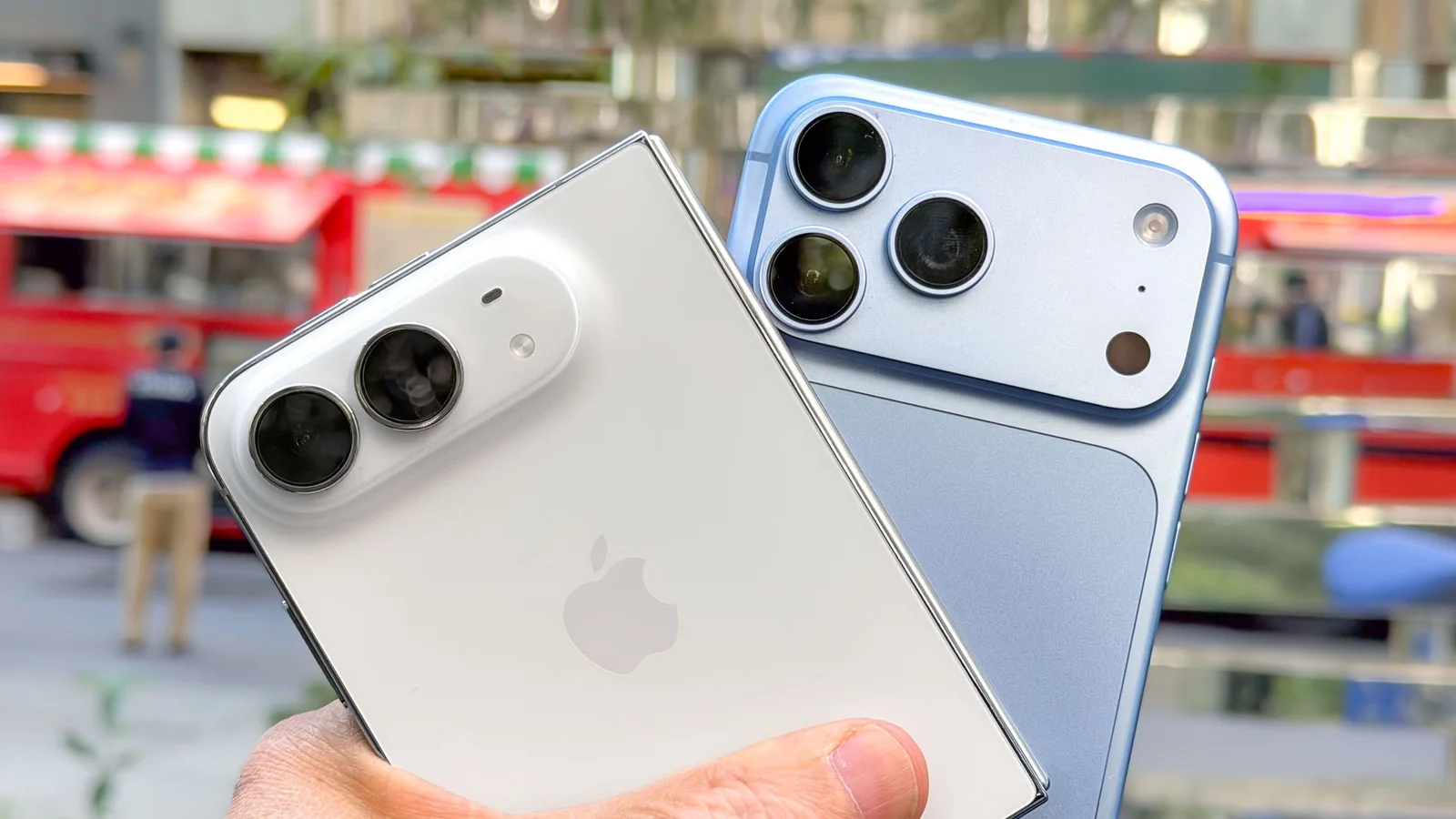
The rear camera array houses a 48-megapixel wide-angle and a 48-megapixel ultrawide-angle lens.
The absence of a telephoto lens restricts optical zoom options compared to standard Pro models, and advanced professional formats like ProRAW and ProRes are omitted.
A 12-megapixel cover selfie camera and an under-display inner FaceTime camera handle video calls, though the inner sensor yields softer image output.
Dual-screen photo modes include Duo Preview for viewfinder sharing on the cover screen and high-resolution rear-camera selfies.
Software utilities like Smart Take automatically capture group photos when pose changes are detected, while Kid Cue uses cover-screen animations to direct children's attention toward the lens.
Duo FaceTime enables simultaneous usage of both rear and front cameras during video calls.
Battery Life and Performance
A dual-battery architecture split across both device halves powers the hardware, supporting extended usage despite the large inner display.
Real-world testing demonstrated consistent endurance through full days of mixed communication, web browsing, and media streaming.
heavy workflows involving video editing and extended cellular usage successfully lasted into late evening hours.
Endurance testing placed the device ahead of several competing foldables in standardized drain assessments.
Extended video streaming tests on the inner display showed competitive energy retention.
Fast-charging capabilities via USB-C and a 60W+ adapter replenish the battery from zero to 65 percent in 30 minutes.
Wireless charging supports MagSafe and Qi2 standards up to 25 watts.
Powered by the A20 Pro chip alongside a vapor chamber thermal management system, the device delivers sustained performance gains for high-demand processing tasks, gaming, and display transitions.
CPU benchmark evaluations in Geekbench place the hardware above competing foldable models.
Graphics testing through 3DMark Wild Life Extreme demonstrated leading performance output relative to category peers.
Conclusion and Verdict
While foldable devices offer a refreshing departure from traditional bar phones, the high price point and form factor mean they remain tailored to specific user preferences.
Engineering details like the matte inner display, robust build quality, and fluid screen transitions help validate the cost for early adopters.
For consumers deeply integrated within the Apple ecosystem, the device eliminates the compromise between owning a foldable and staying within iOS.
Future iterations are expected to refine biometric security and camera capabilities, but Apple's initial foldable entry successfully establishes a strong market foundation.