
Qualcomm has introduced two new Snapdragon chips: the 8 Elite Gen 6 and the 8 Elite Extreme Gen 6. This report focuses on the benchmark results of the Extreme variant.
Key questions addressed include its performance against Apple’s A20 Pro chip in the iPhone 18 Pro and Pro Max, the validation of Qualcomm’s performance claims, and the significance of the upgrade over previous Snapdragon generations for potential buyers.
Testing Setup
The benchmarks were conducted using a Qualcomm Reference Design (QRD), not a final consumer device. The tested unit featured 24GB of LPDDR5X RAM, 1TB of storage, a 4,400 mAh battery, and a 6.73-inch 1440x3200-pixel AMOLED display. This configuration is largely indicative of future devices, though final battery capacities may vary.
CPU Performance Comparison
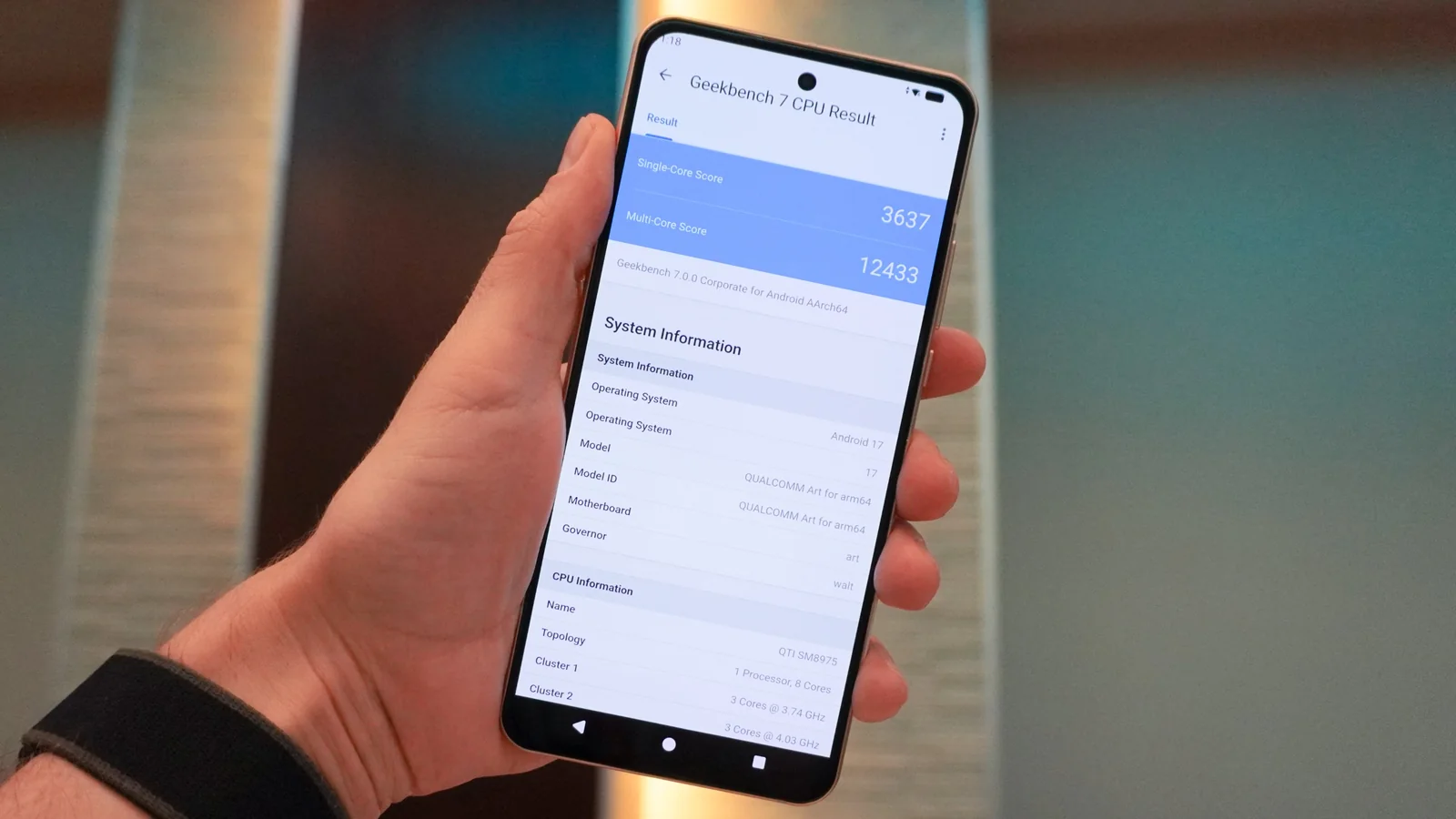
Qualcomm highlighted a 13% faster CPU speed for the 8 Elite Extreme Gen 6 compared to the Gen 5, a claim that initial testing suggests is conservative.
This performance boost is partly attributed to two new Prime Cores capable of reaching 5GHz, a first for smartphones. However, this high clock speed can lead to noticeable heat generation in reference designs.
Despite the improvements, Apple’s A20 Pro CPU maintains a lead in single-core performance, though the gap in multicore results has decreased.

In practical usage, the chip demonstrated smooth performance, with no noticeable impact on app switching or background application loading.
While the benchmark differences may not be perceptible in everyday use, Apple’s chip retains its lead in raw CPU metrics.
AnTuTu and AI benchmarks were also conducted, with results to be discussed further.

Gaming Performance and AI Upscaling
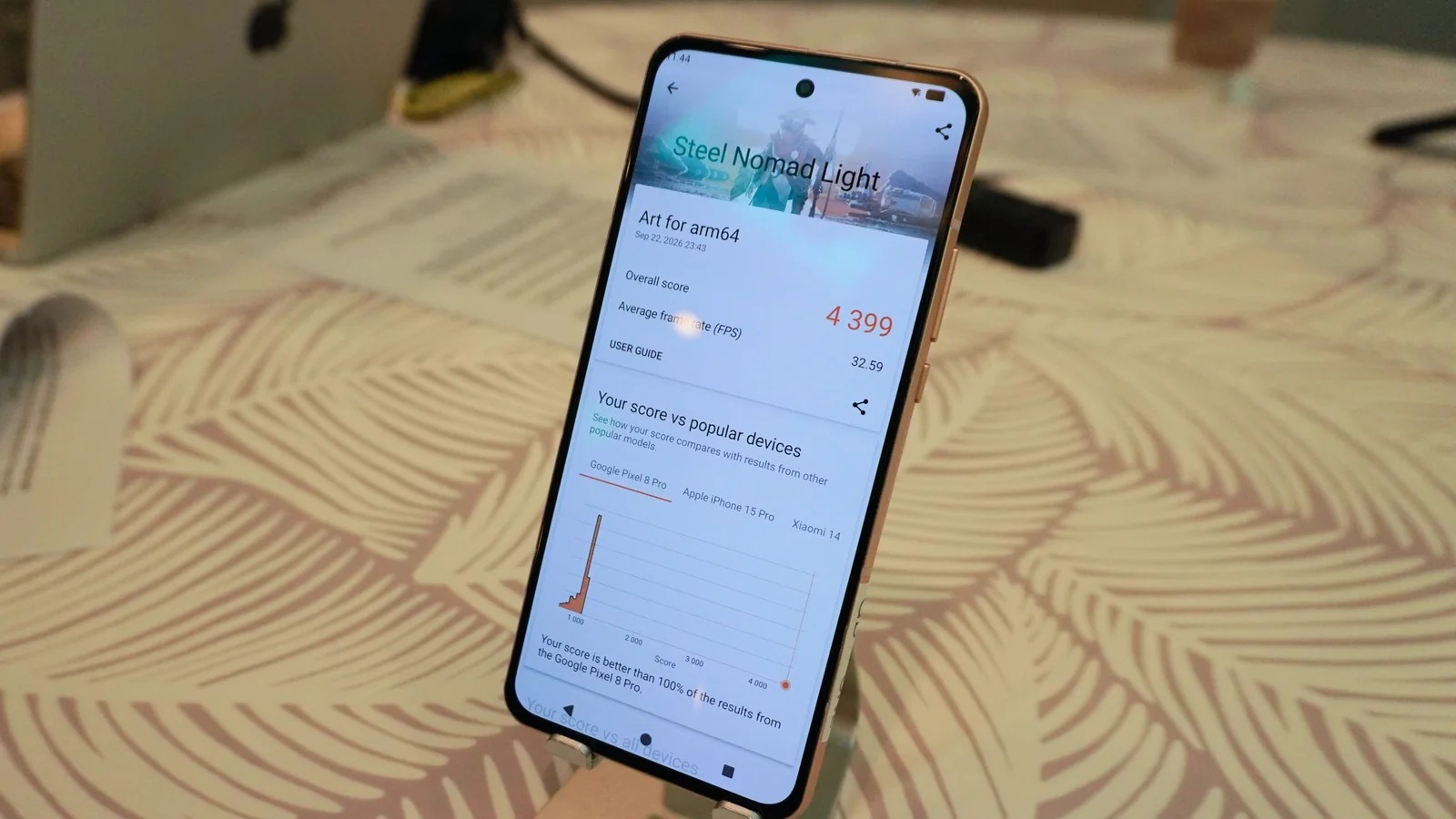
3DMark benchmarks indicate that the A20 Pro’s GPU, featuring neural accelerators, offers comparable performance to the 8 Elite Extreme Gen 6.
AI-Enhanced Gaming
At the silicon level, both chips are closely matched. Qualcomm's key advantage lies in Adreno Neural Fusion (ANF), its AI-powered upscaling and frame generation technology.
Apple's MetalFX utilizes Spatial and Temporal upscaling, which reconstructs missing pixels by tracking motion, contrast, and edges in lower-resolution images. While functional, this method is noted as being less advanced and more power-intensive.
ANF, in contrast, is an AI-based solution integrated within the display coprocessor. It leverages AI-specific Matrix Cores and high-performance memory to upscale frames using shared knowledge and can generate new frames to enhance frame rate smoothness.
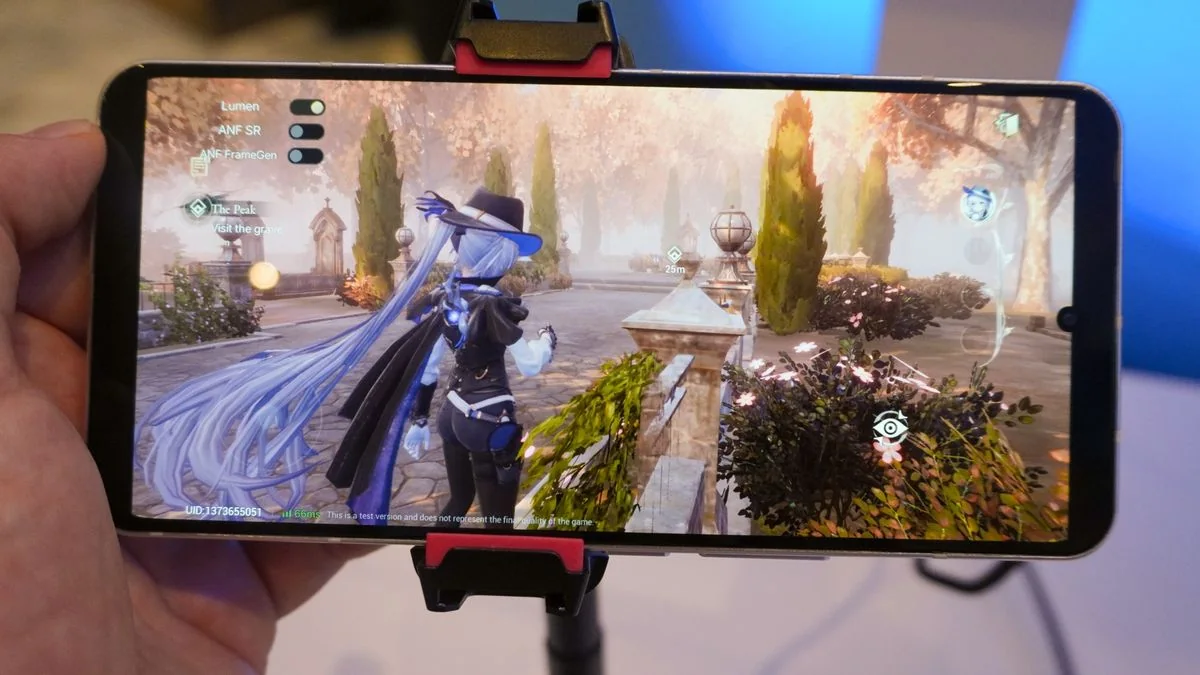
ANF functions similarly to Nvidia's DLSS but with a distinct objective: to optimize power efficiency for extended gaming sessions, rather than solely maximizing frame rates.
Dedicated Traverse benchmarks confirmed a significant reduction in power consumption for demos, alongside improved visual detail in elements like faces and terrain.

Preparing for Agentic AI
A key distinction between the 8 Elite Gen 6 and 8 Elite Extreme Gen 6 is the latter's 50% larger shared memory and enhanced support for a broader range of Mixture of Experts (MoE) AI models on-device. This positions the Extreme variant for what Qualcomm terms the 'agentic age' of smartphones.
This concept envisions smartphones performing tasks autonomously across devices. While an ambitious goal, AI benchmarks demonstrate a substantial performance increase over prior generations.
The chip exhibits a significant increase in Large Language Model (LLM) performance, indicating effective utilization of its dedicated AI cores.
Battery and Thermals
The 4,400mAh battery in the reference design may not reflect final device performance. Ultra-flagship phones featuring this chip are likely to incorporate larger silicon-carbon batteries for extended endurance.
AnTuTu benchmarks revealed battery consumption and temperature increases during operation, highlighting the power demands of the Prime Cores at full capacity.
While larger battery cells could mitigate the percentage drop, operating at 5 GHz will inherently consume significant power.

Upgrade Considerations
Performance improvements over previous generations are evident but remain incremental for users with phones from the last one to two years.
For owners of recent phones, an upgrade is primarily justified by a strong interest in agentic AI features or a desire to leverage Adreno Neural Fusion as it gains broader game support via Unity and Unreal Engine 5.
Qualcomm's new chip signals a strategic shift towards an 'agentic' smartphone paradigm, moving beyond app-centric systems with hardware designed for this future.
The chip is anticipated to appear in upcoming devices, with Motorola's Signature 27 expected to be among the first later this year.