Amazon recently followed Microsoft’s lead and said it will no longer use nondisclosure agreements while negotiating with local governments over data centers.
The secrecy behind data center negotiations
The announcement arrived in the middle of a longer blog post making the case that data centers are beneficial for communities. Industry observers noted that a primary root of the controversy surrounding AI infrastructure is that many of these projects are negotiated in near-secrecy.
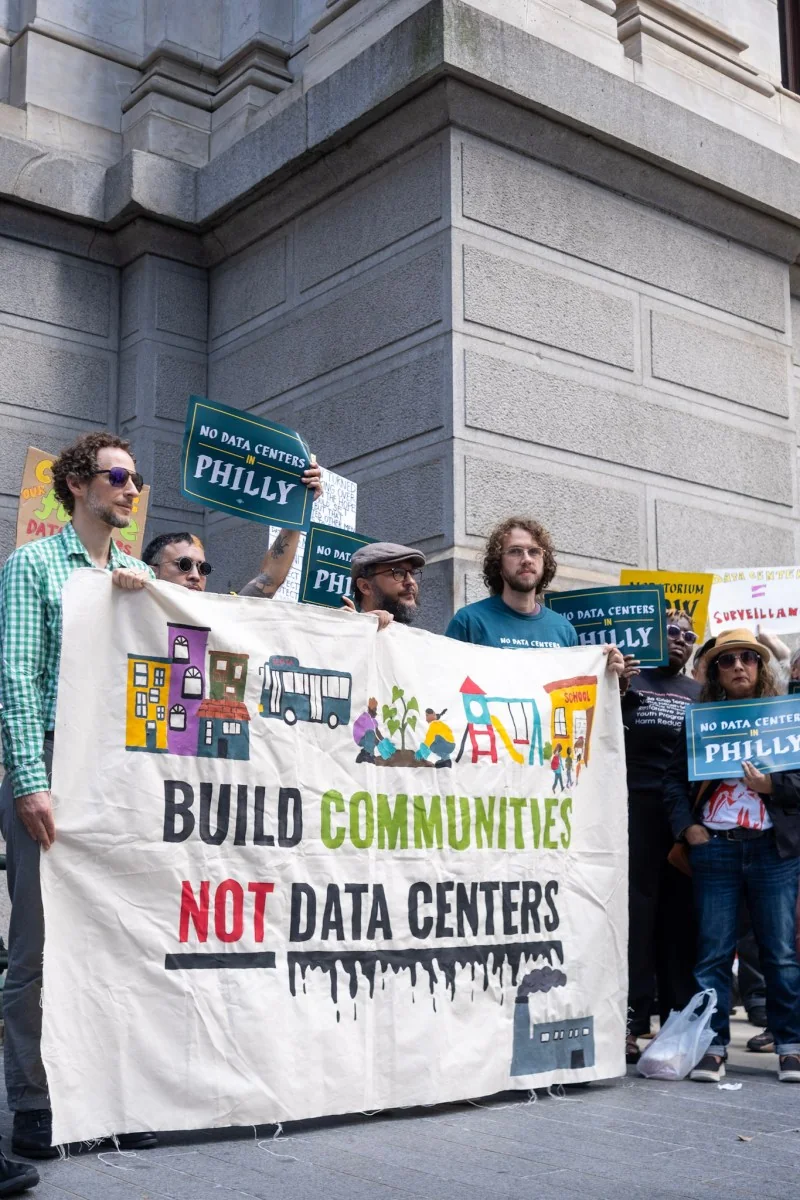
Local concerns often center on property values, electricity bills, and local water usage. Because details are initially hidden, communities frequently push back against developments without knowing who will ultimately occupy or utilize the space.
Industry critics suggest that poor communication is a major driver of the backlash. Tech companies frequently struggle to articulate the tangible local benefits of large-scale infrastructure projects.
Industry representatives have noted that tech firms often express frustration when the public cannot easily envision how massive computing installations will prove useful to their daily lives.
Dropping nondisclosure agreements is viewed as a positive first step toward transparency, though it remains unclear whether it will instantly dissolve deep-seated community opposition.
Moratoriums and infrastructure delays
A growing number of municipalities are implementing temporary moratoriums on large infrastructure permits. While some bans last only a year or two, many massive data center buildouts require years of planning, zoning approvals, and funding before coming online.
In regions like New York, moratoriums are tied to environmental review processes that can take significant time. While these pauses are officially framed as fact-finding periods rather than outright bans, they give communities additional leverage.
The broader communications challenge
The underlying friction points to a wider communication failure across the tech sector. As companies increasingly bypass traditional media channels to communicate directly with the public, explaining complex technical transitions has grown more difficult.
For years, the prevailing narrative surrounding AI expansion relied heavily on an inevitability framework, demanding that communities accept rapid transformation without friction.
However, mounting pushback has forced tech developers to justify their infrastructure footprints rather than relying on mandates that frame massive technological shifts as non-negotiable futures.
Only time will tell how deep and enduring local resistance will be, but industry anxiety over public pushback is visibly reshaping corporate engagement strategies.
Rebecca Bellan: Yeah, I’m curious about what effect this will have and whether it will lead to communities successfully delaying or or killing any infrastructure that the companies need to build. What I’ve heard from some people I’ve spoken to, who deal with data centers every day, a lot of these moratoriums that are getting passed — and there are a significant number of them, including one recently in San Francisco, which is pretty ironic — but they’re only for like a year or two years.
But these data centers aren’t coming online for the next two, three, four, five years. All of the buildouts are going to be massively delayed for a number of reasons from zoning to funding. Of course, if the pushback keeps going, then it might have an effect, but I often wonder just how much of an effect this political pushback is having on this.
Anthony Ha: The moratorium I’m most familiar with is the one in New York. I believe it’s a one year moratorium, and that’s on permits for large projects. [Technically, it’s until the state finalizes an environmental review process, which is expected to take a year.]
So already, there’s some wiggle room within that. And often, they’re framed as: “It’s not like we think [data centers are] bad, let’s not do this. It’s [that] we need to take the time to study this.” Which gives them a lot of room to say later on, “Actually, we’ve decided this is great. We love it.”
But you can tell that the people trying to build these data centers are worried, which is why you have these unhinged tweets from people like Trump or David Sacks. Only time will tell in terms how long and how deep that [community] resistance is, but I do think they are worried.
It’s also noteworthy that Microsoft, earlier this year, made a similar announcement about not using NDAs. I don’t think that getting rid of the NDAs automatically is going to make the people who opposed these data centers be like, “Great, let’s let’s do it. I’m in.” But I think the beginning of that conversation is, “Well, we don’t even know what the heck you’re doing, because you’ve negotiated all this stuff in secret.” So it does seem like a good first step.
Sean: The larger problem here is just a communication problem, right? This is a problem I think that goes across the entire tech industry, but it’s especially acute now, because we’re living in the era of “going direct” and “you don’t need to talk to the media, the media is dead,” etc.
And I’m not trying to beat that horse, because we’re in the media and [we] think we’re still relevant. But we’ve seen, through a lot of the controversy and backlash to AI and data centers, that the industry just does a really poor job explaining itself, and that they are obviously and constantly frustrated with the fact that most people can’t envision a world in which this stuff is useful for them. And that’s because, a lot of time, the [technological] ability’s not there, and in part because they’re just not explaining it well.
I wrote a story last week about how it’s been a year since we’ve really heard Tesla beating its own drum about building towards what it originally was calling “sustainable abundance” and is now “amazing abundance” as its mission statement. It’s just wild to me that we’re a year into that, and the company still doesn’t have a very good definition of it, especially considering that they released this whole multi-page PDF laying it out when they announced this, and even Tesla’s biggest fans criticized Elon Musk and Tesla for how unspecific it was. It read like LLM nonsense.
Anthony: One of the things this has made me think about is just the narrative and this sense that for a while, it really felt like it was being pushed down our throats — this idea of, “This is inevitable, this AI-driven future, and get on board or you’re just going to be left behind.”
Obviously that future is barreling ahead in a lot of ways, but in a few key ways, there have been these obstacles. What I’ve really liked about that is this sense of “No, you actually have to make the case for it.” You can’t just say, “This is the future, shut up.”
And then specifically about Tesla and the abundance thing, what was shocking to me is not so much that they haven’t come up with a definition of abundance, but that that was a promise that they were making in the first place. I think [that] speaks to how strange our relationship to Tesla, and particularly the people who are invested and ride-or-die for Elon, [has become.] It’s not about, is this company going to sell a lot of cars? It’s about this vision for remaking society. Or at least, that’s what they’re being sold.