As artificial intelligence systems increasingly transition into physical machinery, ensuring safety and reliability before deployment remains a critical engineering challenge.
“Imagine if something like that happened in the physical world,” Howie Sun, CEO and co-founder of Laplace Intelligence, noted regarding the unpredictability of complex AI agents. “AI agents are moving from computers into the real world, and we don’t really want physical AI to fail in the real world.”
Ann Arbor-based Laplace is building automated red-teaming — essentially, stress-testing a system by deliberately trying to make it fail — for robotics and physical AI. The company is betting that the only way to make sure physical AI is safe is to have AI test it.
Simulating the Physical World
“Our goal is to help companies discover and fix problems before deployment — and, over time, build a shared foundation of evidence that customers, insurers, and regulators can trust,” Sun said.
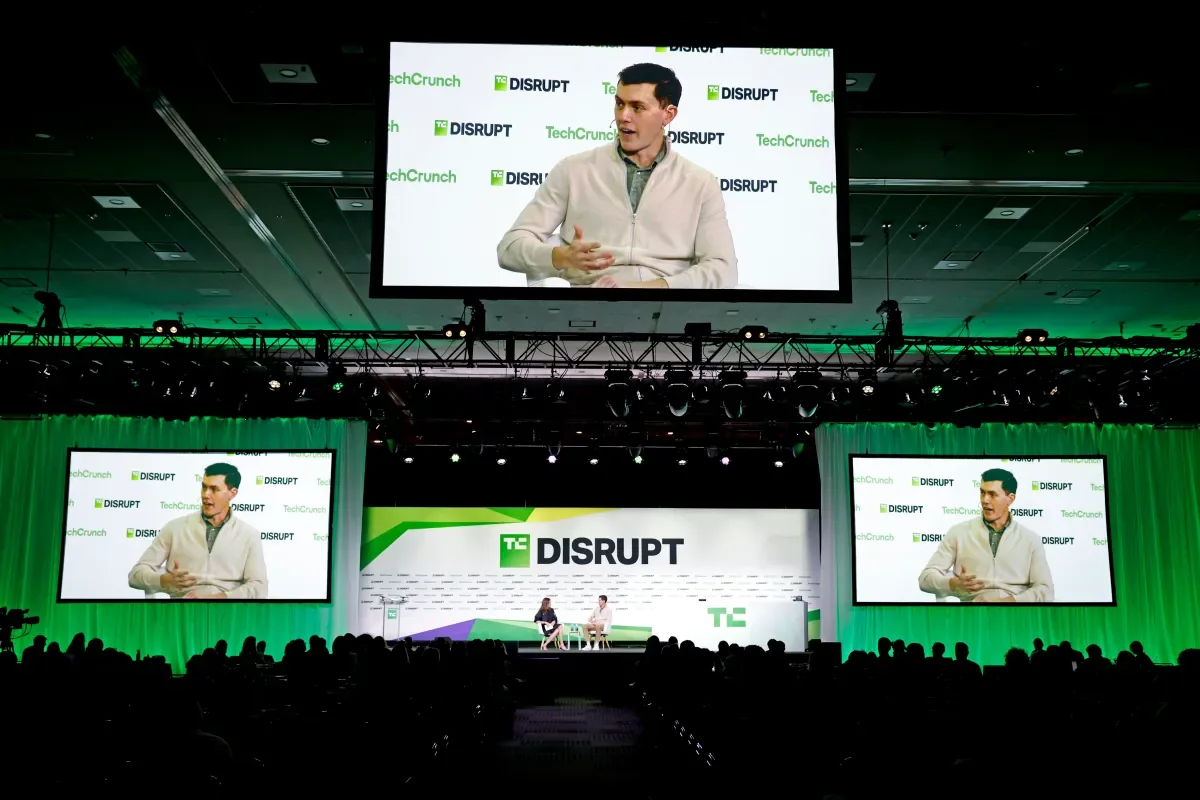
Laplace is one of 20 startups competing in Startup Battlefield 200, the startup pitch competition taking place at TechCrunch Disrupt in San Francisco this week, October 13-15. It will present on the Disrupt Stage Tuesday afternoon, October 13.
Image Credits:Laplace Intelligence
Sun, alongside his co-founder and chief scientist Henry Liu, founded Laplace out of the University of Michigan. Sun spent years in academia researching how to challenge autonomous driving AI in simulation. In 2023, he and Liu published a research paper that was featured on the cover of Nature, prompting inbound interest from autonomous vehicle companies.
“I realized that I wanted to build this and take it from purely academic research into a product that’s useful in the real world,” Sun said.
Using their academic research as a base, Sun and Liu built Laplace, named after “Laplace’s demon,” an 1814 thought experiment by French scholar Pierre-Simon Laplace regarding universal predictability.
“We are essentially using simulation to predict the real world’s future,” Sun said.
At the startup’s core is a high-fidelity simulation reconstructed from the real world, paired with an AI agent that constantly probes for weaknesses and failure points. The goal is to ensure that any physical AI — be it a robot, autonomous vehicle, or smart city solution — is safe in simulation before real-world deployment.
The simulation environment is a post-trained version of Nvidia’s Cosmos, an AI world simulation platform grounded in real-world data, allowing Laplace to reconstruct locations ranging from highways to pedestrian crossings. Simulations are generated by blending a mesh of real-world information and map data to re-create environments true to scale.
Developers can use language prompts to modify settings in real time, such as introducing afternoon traffic. Laplace pulls real-time traffic and congestion data from navigation providers like TomTom.
Within Laplace’s simulations, both the environment and the behavior of other actors are simulated dynamically. During demonstrations, tested vehicles and surrounding simulated agents react interactively to avoid collisions.
Automated Edge Case Generation
“It’s truly an interactive simulation environment,” Sun said. “Everyone is reacting to everything … This is more like a world model with interactive participants.”
While the simulated environment is an important part of Laplace’s product, the primary differentiator is the AI agents the startup is developing to automatically design corner cases — rare, tricky scenarios that could trip up an AI system — removing humans from the generation loop.
“They can design from the news, from police reports on collisions — all kinds of information to actively challenge the autonomous vehicles and other physical AI agents,” Sun said.
Image Credits:Laplace Intelligence
Traditionally, autonomous vehicle developers train AI to handle edge cases using recorded footage converted into simulations or relying on manual human design. However, the need for automated testing becomes even more pronounced when deploying generalized robots into unstructured environments.
“There’s less data on generalized robotics,” Sun said. “No one knows what the edge cases will be in the real world.”
Commercial Traction and Market Position
Despite originating in academia, Laplace has generated early revenue and turned a modest profit. Much of its commercial traction stems from autonomous driving use cases, with customers including Japanese trucking manufacturer Isuzu and Texas-based autonomous trucking firm Bot Auto.
Nvidia is also a customer, according to Sun. The companies, alongside T-Mobile, have collaborated on a smart city pilot for San Jose, California, providing traffic operations. Laplace is also engaging with partners building humanoid robotics for warehouses.
While many customer contracts remain project-based, Laplace is working toward recurring revenue models as it seeks to scale and compete against heavily funded rivals.
Chief among its competitors is Applied Intuition, a late-stage startup that has raised substantial venture backing at a multi-billion-dollar valuation.
Sun remains confident, viewing Laplace’s core methodology of using AI to test AI as a paradigm shift that transforms physical AI validation into a dynamic, interactive testing process.
“That will be the biggest moat,” he said.