The Enterprise AI Security Challenge
The widespread adoption of artificial intelligence tools across companies has introduced unexpected security challenges and new vulnerabilities within corporate systems.
According to Pluto Security CEO and co-founder Shahar Bahat, new AI tools can appear within corporate environments within hours of release. A significant portion of detected risks originate from applications built by non-developers, with finance departments leading the source of such risks, followed by marketing and legal teams.
In one instance, security tools identified an application created by a finance employee at a Fortune 500 company to manage customer information and churn, but the application was left exposed to the internet.
Funding and Rapid Growth
Pluto Security has launched publicly with $42 million in total funding, joining a growing number of startups designed to address enterprise AI security through specialized monitoring rather than traditional security software approaches.
The startup began commercial sales in April and has surpassed $2 million in annual recurring revenue, serving over 30 enterprise customers including Oscar Health, Workato, Sixt, and AlphaSense.
The funding includes an $8.5 million seed round led by TLV Partners alongside Armis founders, followed by a $34 million Series A led by Jump Capital with participation from Skinos, Ansa Capital, and other investors.
The traction highlights how widespread these vulnerabilities are, extending far beyond major technology firms that typically lead in AI adoption.
Real-Time Agent Monitoring
Security assessments across organizations frequently uncover malicious elements, active attacks, or risky extensions during initial proof-of-concept evaluations.
Bahat noted that evaluations consistently reveal malicious components or active attacks within customer environments during preliminary testing phases.
Pluto's security model focuses on real-time tracking of what autonomous AI agents execute, alongside monitoring how employees build and deploy applications.
The company emphasizes a shift in focus from traditional user behavior to dynamic agent behavior.
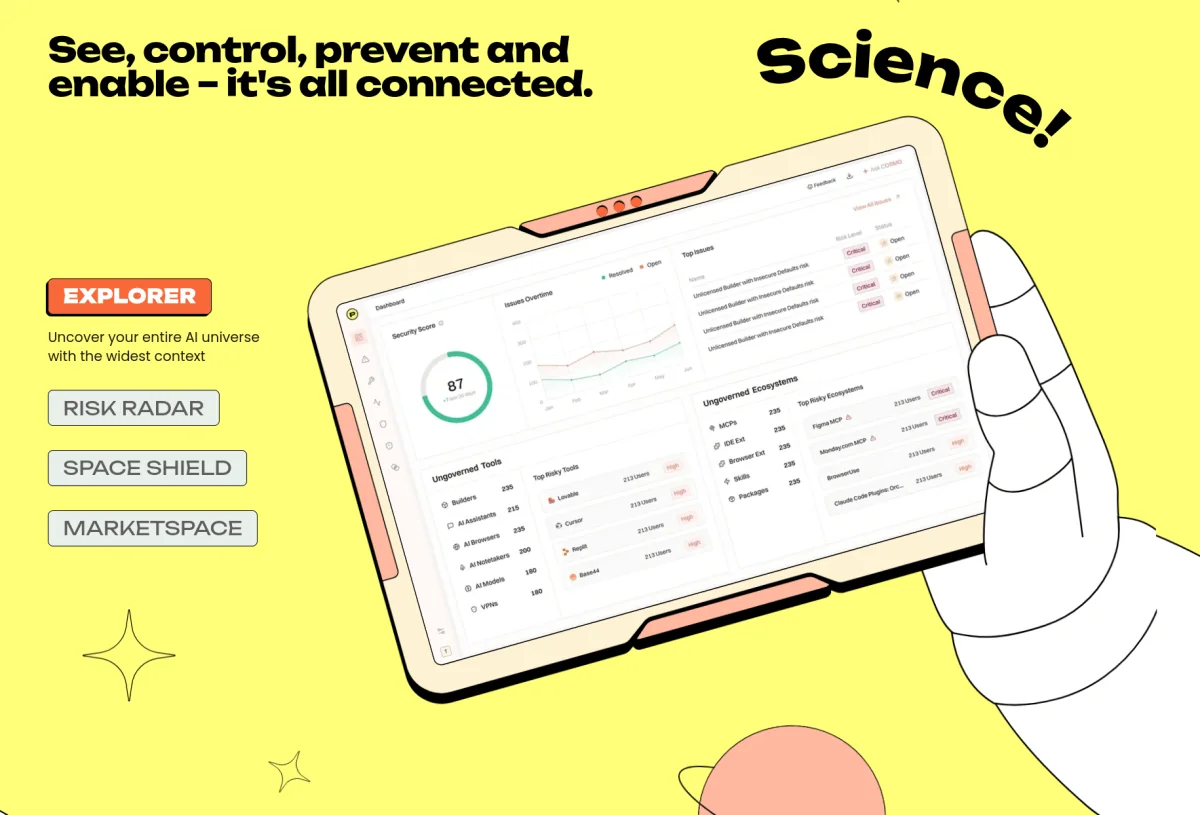
The platform monitors AI tools, extensions, skills, MCP servers, and newly generated agents, identifying risks and enforcing policies without restricting employee productivity.
Operating via endpoint security integrations, the software collects operational context, prompts, commands, and running processes to evaluate agent intent using lightweight endpoint models.
The system can intervene dynamically while an agent operates, halting unauthorized permission requests or prompting the agent to request user confirmation.
By injecting context back into active sessions, the software actively alters how an AI agent executes tasks.
Community-Driven Acquisition
To drive customer acquisition, Pluto launched Plutonium, a free platform enabling users to check risks associated with public AI connectors, skills, and add-ons, alongside an MCP scanner and verified component catalog.
Inbound interest accounts for the majority of Pluto's sales pipeline, bolstered by engagement from security professionals utilizing the free platform.
The newly secured capital will be allocated toward product development, expanded security research, and growing operations across its U.S. and Israeli offices.