Initial Impressions and Assembly
Unlike many contemporary 3D printers, the Flsun T1 arrives in a relatively flat package, which contrasts with the machine's tall final form. Assembly takes approximately an hour, involving careful construction and double-checking of components. Initial print quality issues were resolved by re-tightening screws after the first few runs.
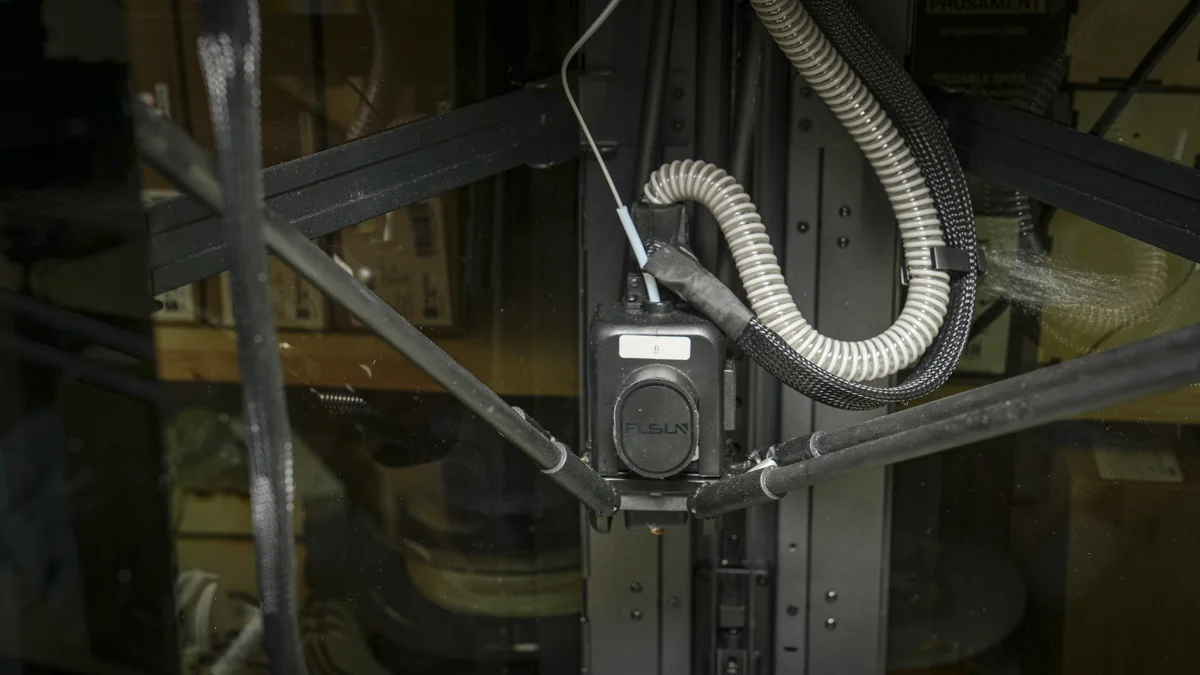
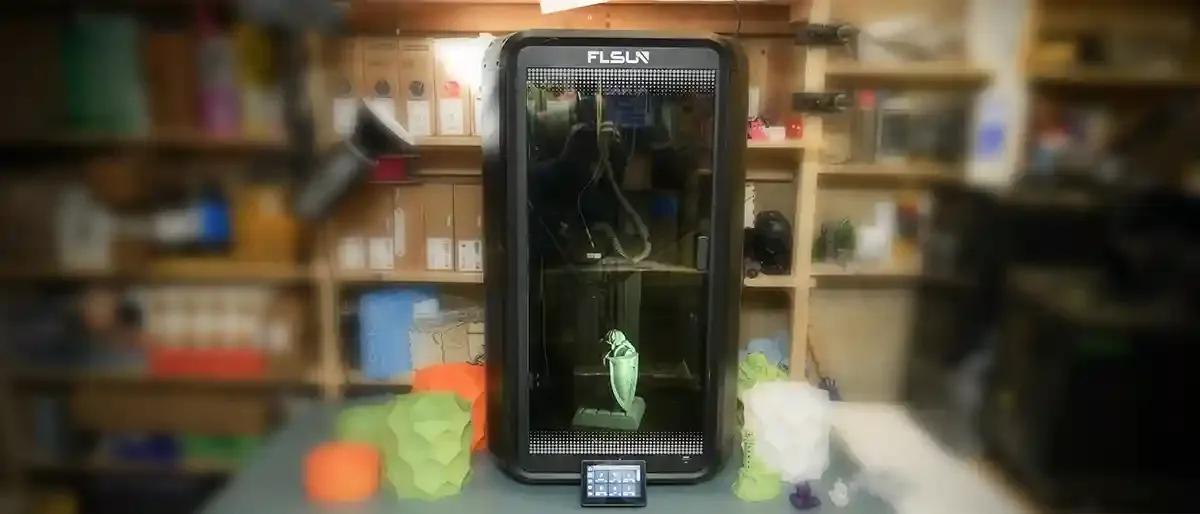
Once assembled, the T1 presents an instantly impressive and distinctive appearance among desktop 3D printers. While Cartesian and CoreXY machines are prevalent, the T1 utilizes a Delta mechanism, suspending its print head between three rapidly moving arms above a circular build platform. This design offers a significant speed advantage.
Flsun quotes a maximum print speed of 1,000mm/s and an acceleration of 30,000mm/s², positioning the T1 among the fastest machines available. Beyond speed, the source reviewer noted that with careful assembly and adjustment, the T1 produced highly dimensionally accurate prints for its price point.
However, the machine comes with compromises, including notable operating noise, single-filament printing, and a more involved setup process. It may not be the ideal choice for all users, but for applications prioritizing speed, such as rapid prototyping and functional printing, it offers considerable appeal.
The Flsun T1 is primarily designed for speed, so any minor movement in the joints or frame can be amplified in the print. The more effort invested in construction and pre-flight checks, the better the machine's performance will be. Initial test prints, though good, did not meet expectations until a grub screw around the Delta mechanism was tightened, which significantly improved both speed and print quality.
Design and Features
The Flsun T1 arrives flat-packed, requiring assembly. Despite initial concerns about the complexity of a Delta printer, the assembly process was straightforward, as most intricate mechanical elements come pre-assembled. It mainly involves fitting panels, securing components, and installing the top section.
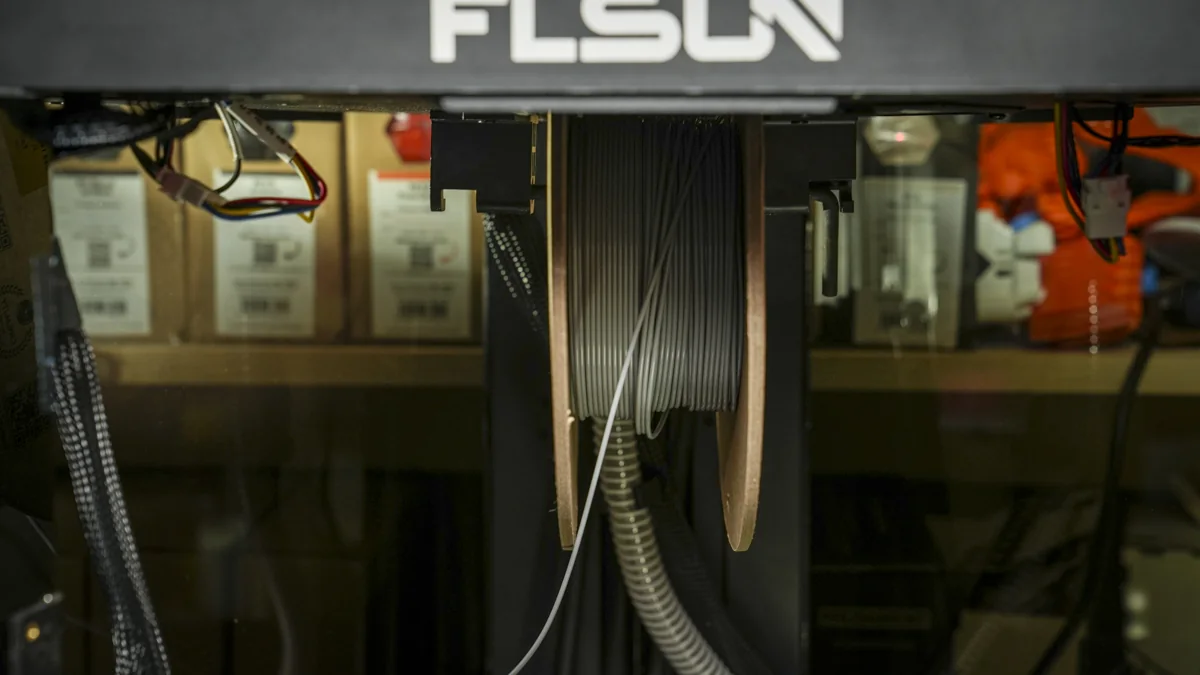
The design of the T1 is visually striking, with the print head suspended between three articulated arms, giving it a futuristic aesthetic. The machine features an enclosed heated chamber and an internal filament spool holder, which helps keep the filament moisture-free. The spool is suspended from a metal rod above the print head, a simple yet effective solution.
With a footprint of 436 x 490mm, the T1 is reasonably compact for its build volume. However, its substantial height of 836mm necessitates ample vertical space.
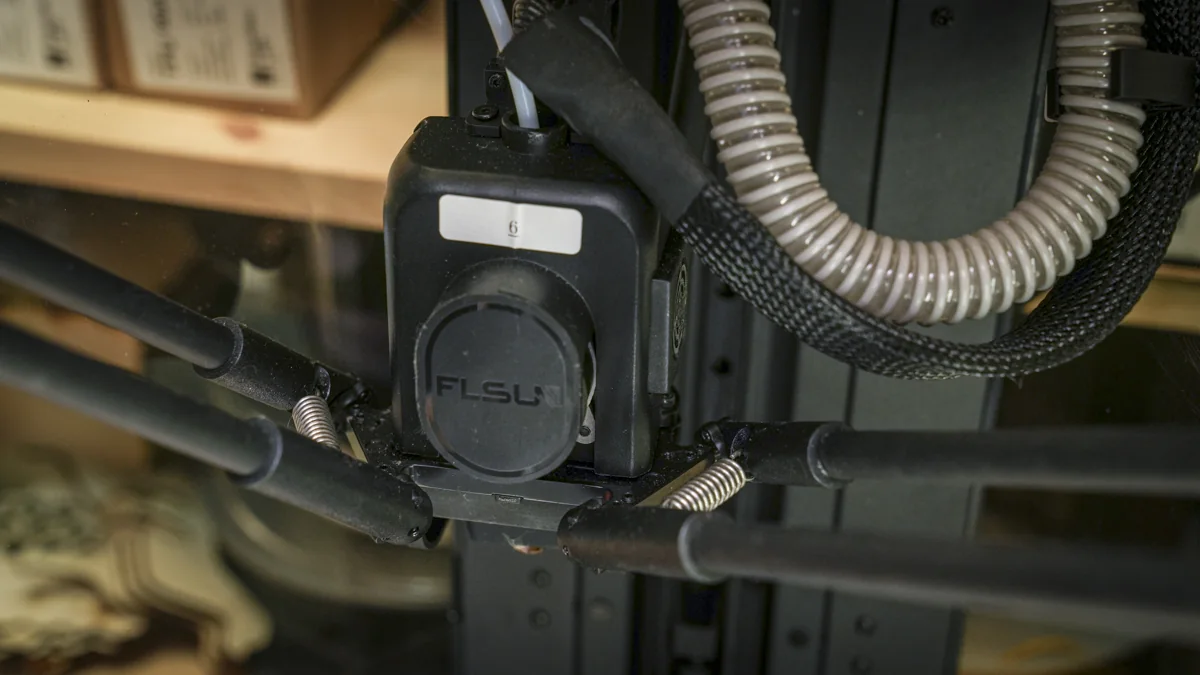
The core feature of the Flsun T1 is its Delta mechanism. Unlike Cartesian or CoreXY printers, a Delta printer uses three vertical towers and articulated arms to precisely control the position of its suspended print head. This inverted tripod design immediately distinguishes it visually from other printer types.
The primary advantage of this design is speed. Flsun's quoted maximum print speed of 1,000mm/s and acceleration of 30,000mm/s² are difficult for even the latest CoreXY machines to match. The T1 is equipped with a powerful, albeit noisy, cooling system and a dual-gear direct-drive extruder with a quoted extrusion force of up to 78N. The 300°C hotend offers a maximum volumetric flow rate of 90mm³/s.
Filament delivery proved remarkably reliable during testing, even with older, more brittle PLA, thanks to the spool's position directly above the tool head, which minimizes bends in the filament path. The cooling system, a CPAP high-pressure turbo fan rated at 30,000rpm, is highly effective but also extremely loud. A silencer kit is available and recommended to reduce noise.
The fully enclosed machine enhances safety and material compatibility, with a specified chamber temperature of up to 50°C and a bed capable of reaching 110°C. Combined with the 300°C hotend, this allows for printing with materials beyond basic PLA, including PETG, ABS, and ASA, which were successfully tested. The standard 0.4mm nozzle is brass, so abrasive materials would require an upgrade.
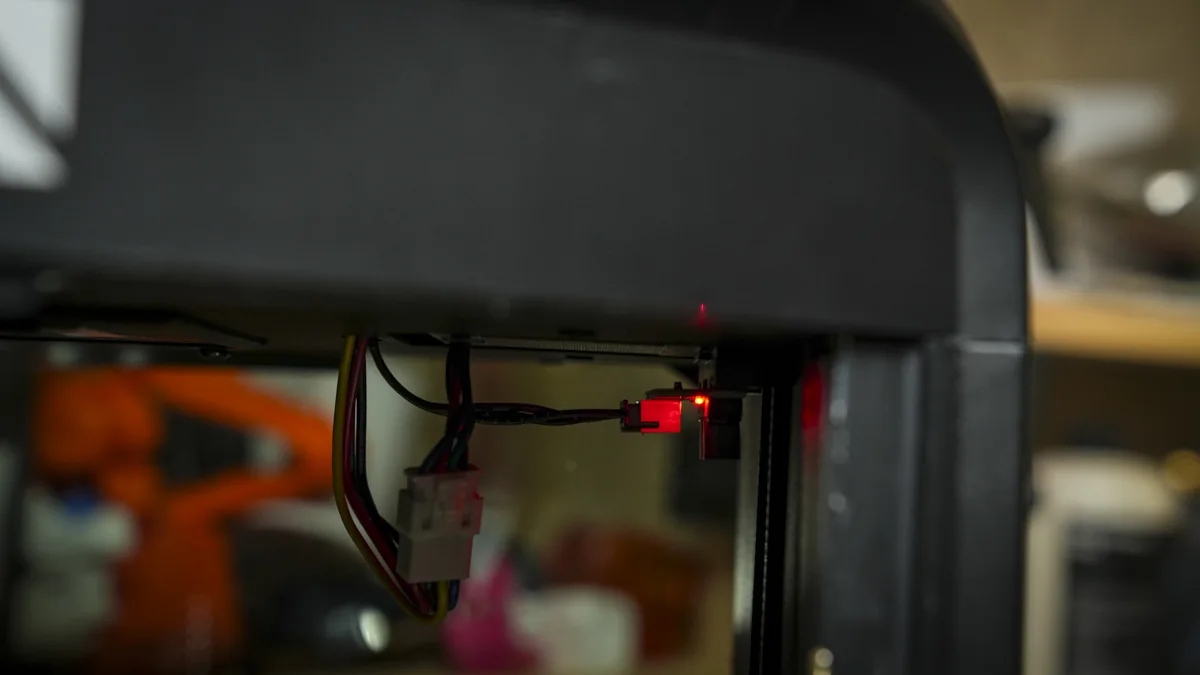
The printer includes automatic bed leveling, vibration compensation, input shaping, filament detection, and power-loss recovery. A 1080p camera provides remote monitoring and time-lapse capabilities, connecting reliably and offering a clear view of prints, though it lacks sophisticated AI print-failure detection found in some premium machines.
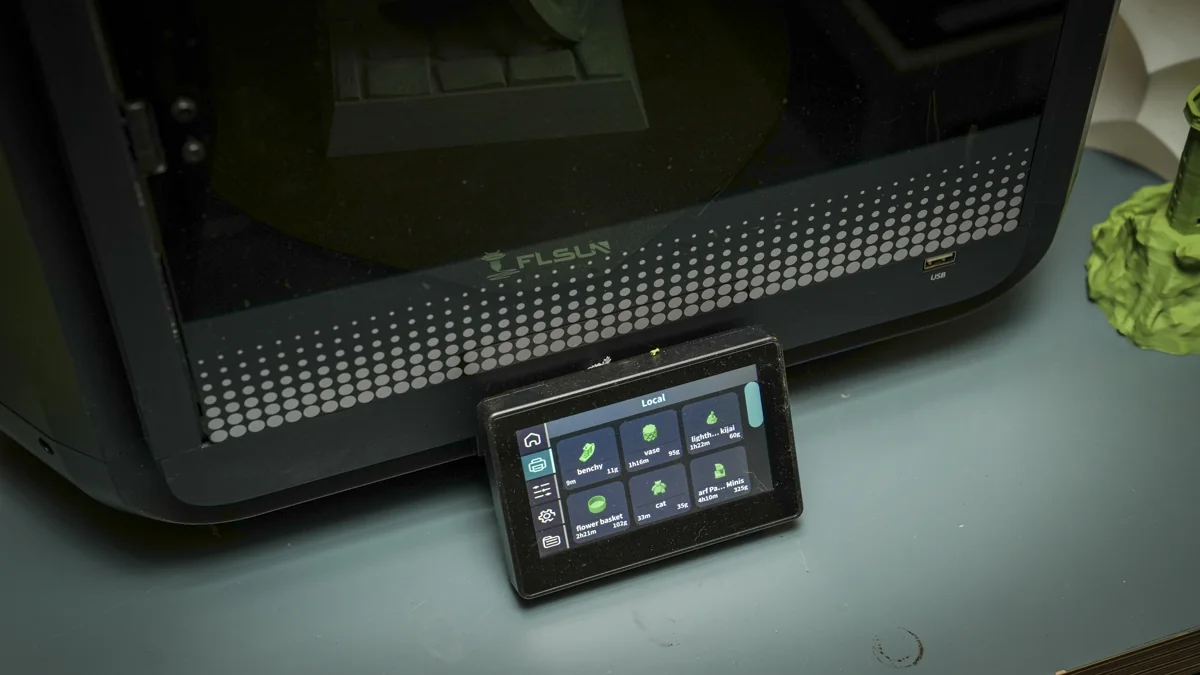
The 4.3-inch color touchscreen is described as simple yet excellent, featuring an interface consistent with Flsun's larger machines. A standout specification is the build volume, offering a Ø260mm circular platform and an impressive 330mm Z height, providing a substantial printable area for a machine with a modest footprint.
The source reviewer found that the T1's speed was immediately apparent during initial tests, such as printing a 3D Benchy, confirming the Delta design's advantage for rapid printing. Beyond speed, the Flsun T1 also impressed with its print quality and dimensional accuracy, which further improved when print speeds were reduced.
Print Quality and Accuracy
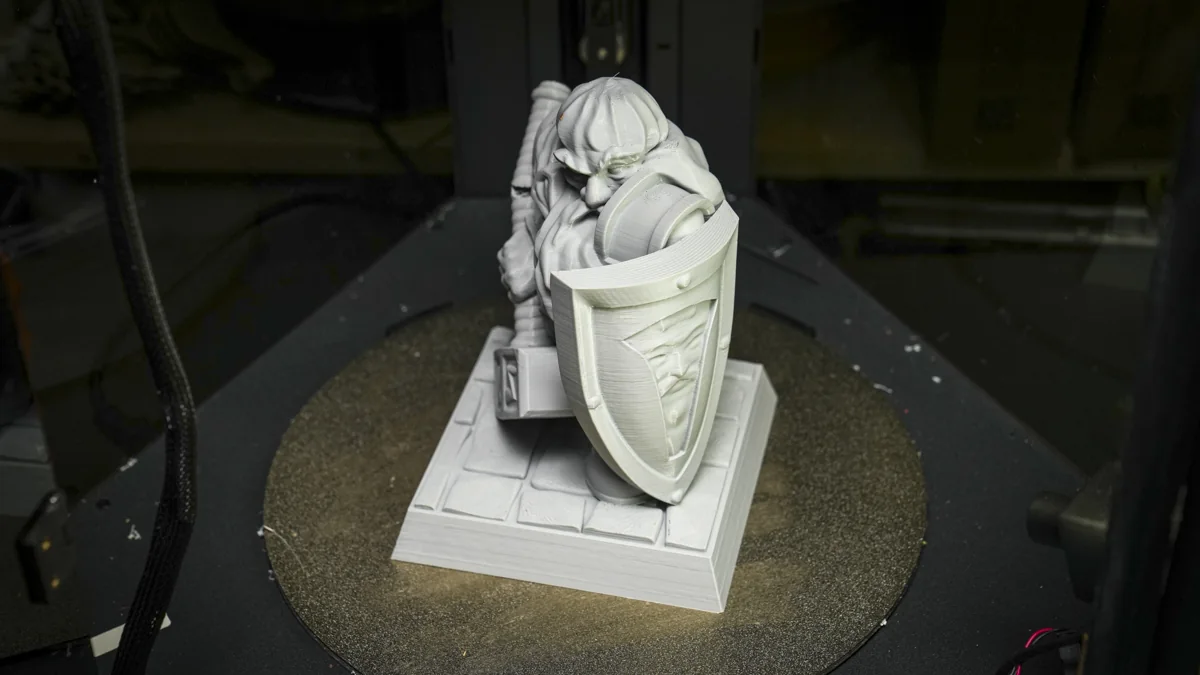
Benchmark results indicated high print quality, with a score of 29 out of 30 in the source review's assessment. This accuracy translated into practical applications, where circular features appeared clean, separately printed components fitted together snugly, and CAD models generally translated directly into usable physical parts without significant dimensional adjustments.
This makes the T1 particularly useful for prototyping and functional printing, as it can produce accurate parts quickly, offering a meaningful advantage for product designers, engineers, and makers.
Final Verdict
The Flsun T1 demonstrates the continued relevance of Delta 3D printers alongside more sophisticated CoreXY machines. It is extraordinarily fast, visually distinctive, and, once properly assembled and configured, capable of exceptional print quality.
The impressive benchmark results and practical accuracy mean that components fit together correctly, and CAD dimensions translate well to printed parts. However, there are compromises: the CPAP cooling system makes the T1 extremely loud, even with a silencer, and assembly requires greater care than many modern CoreXY machines, with proper tightening of all components being crucial for optimal print quality.
Additionally, it is strictly a single-filament printer, lacking the automatic multi-filament systems increasingly common in competitors. These limitations are less significant if the priority is functional printing for product designers, engineers, makers, and workshops producing prototypes or mechanical components, where the combination of speed, accuracy, and substantial build volume is paramount.
While not offering the most polished 3D printing experience, the Flsun T1 is an exceptionally capable machine once correctly configured. It is most suitable for users for whom speed and dimensional accuracy are more important than multi-color printing or complete plug-and-play simplicity.