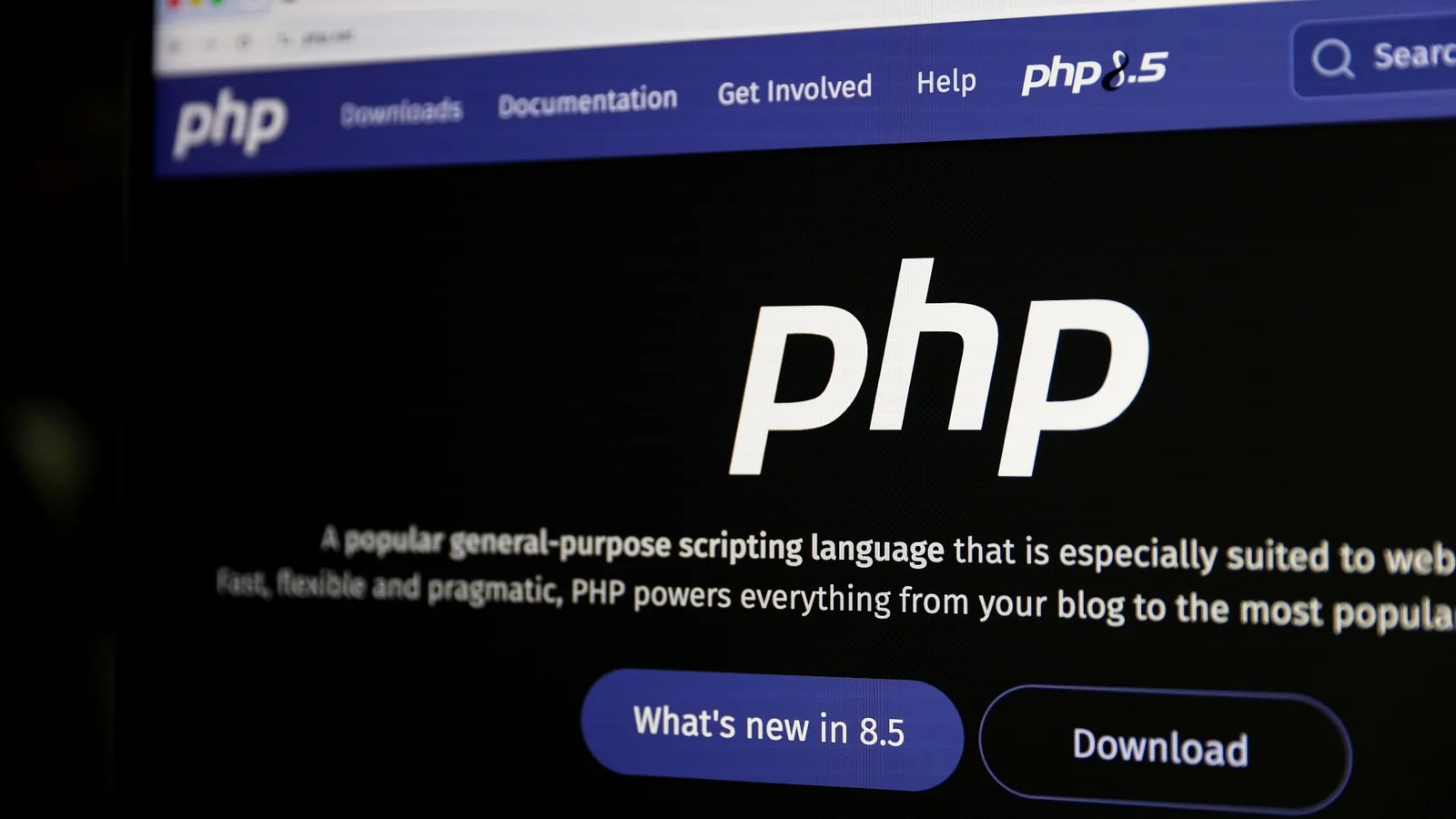
Critical vulnerabilities discovered in the open-source programming language PHP have brought renewed attention to legacy software risks. A post-mortem revealed that a small team of maintainers knew of the issue two years prior. Security experts have warned for decades about mounting technical debt as automated scanning accelerates vulnerability discovery, bringing widespread software packages into the crosshairs of malicious actors.
PHP hosts a significant majority of websites on the internet, and the vulnerability allows for remote code execution given sufficient attacker knowledge. Complicating matters, a large percentage of PHP installations online were running end-of-life versions with no active support, pointing to broader ecosystem complacency regarding software updates.
How the attack came to be
The root cause of the vulnerability traces back to error handling mechanics within the PHP engine. When a PHP process exhausts memory, it calls the longjmp() C function to immediately redirect execution elsewhere. While abrupt execution jumps carry inherent risks, the specific failure mechanism stems from state management during memory allocation.
The core issue occurs if an execution jump happens while a data structure is actively being built, leaving half-baked data in the memory heap. When the PHP engine subsequently moves to its cleanup routine, that code executes expecting complete data but instead processes inconsistent leftover bytes.
With targeted injection of precise content within a web request, this mechanism can be exploited to run arbitrary code with PHP permissions, as demonstrated by ongoing PHP2Shell exploit campaigns.
Gaining a remote shell requires attackers to identify the exact version and build of PHP in use. Nevertheless, the wide blast radius encompassing millions of vulnerable servers creates substantial security exposure. Following public disclosure, many system administrators disabled version number reporting on their installations to hinder reconnaissance.
The PHP Foundation's post-mortem indicates that the team was aware of the issue for two years but delayed immediate remediation while weighing potential compatibility impacts on third-party extensions.
The team acknowledged management missteps, reflecting the strain placed on a small outfit consisting of one full-time employee and a handful of contractors tasked with maintaining critical foundational infrastructure for the web.
The exploit is only half of the problem
Applying standard patches involves straightforward point updates and service restarts across actively maintained branches. However, system administrators frequently rely on Linux distributions or community repositories rather than direct installations.
Websites running older, unsupported PHP iterations face significant hurdles due to breaking changes introduced in later major versions. Relying on downstream distributions to backport security fixes to legacy branches often leaves systems exposed.
Organisations utilizing ancient PHP versions may be forced to overhaul legacy codebases if backports are unavailable. Furthermore, embedded PHP instances within network appliances, network-attached storage units, and enterprise hardware require dedicated updates.
Fortunately, developers and enterprise Linux vendors have produced backported fixes for older branches, easing the patch burden for systems unable to immediately upgrade.
Commercial extended support vendors have also released packages for older versions, though comprehensive code modernization remains the preferred approach for addressing cumulative security debt.
Other options
While updating to a patched PHP release remains the definitive solution, supplementary defenses can mitigate risks during transition periods. Web application firewalls can block malicious requests before they reach backend servers.
Content delivery networks like Cloudflare quickly deployed detection rulesets for PHP2Shell activity. Additionally, server-side security agents can monitor and block suspicious behavior originating directly from PHP binaries.
So where are we?
Active exploitation campaigns have attempted to chain the PHP vulnerability with other exploits to gain deep system access. Security telemetry indicates widespread intrusion attempts across monitoring fleets globally.
Although widespread automated attack toolkits are still emerging, targeted campaigns continue to probe vulnerable infrastructure for weaknesses.
Cybersecurity firms monitoring patching progress note that millions of vulnerable PHP installations remain exposed, though remediation efforts continue to progress daily.
The true scale of unpatched instances remains difficult to quantify accurately, as many server administrators have disabled version reporting headers to deter attackers.
Given historical trends in vulnerability remediation, a significant tail of unpatched legacy servers is expected to persist indefinitely.