Material Composition and Printing
Virginia Tech graduate student Hugh Grennan mixed eutectic gallium-indium (EGaIn) into uncured polydimethylsiloxane (PDMS) silicone to create a versatile composite material. The mixture can be cast into slabs or printed using a syringe-fed system to guide heat rather than electricity.
The metal component is eutectic gallium-indium, consisting of approximately three parts gallium to one part indium, making it liquid at room temperature. According to the research lab, the resulting droplets provide the composite with soft elasticity, extreme toughness, and autonomously self-healing electrical properties.
When mixed into uncured PDMS, the metal breaks into separate droplets, each wrapped in a thin gallium oxide skin. Thermal curing over an hour solidifies the silicone while the droplets remain liquid, measuring between 10 and 100 microns in diameter.
Thermal Guidance and Applications
A custom syringe-fed printer allows the lab to extrude the composite directly. By controlling the ratio of the extrusion speed to the print bed movement, the round droplets stretch into long, thin shapes. This directional stretching allows heat to travel efficiently along the axis of each droplet away from a heat source toward a sink, opening possibilities for custom heat sinks and stretchable wearable devices.
Performance Metrics
Research published in Advanced Functional Materials by mechanical engineering associate professor Michael Bartlett's lab recorded the composite's thermal conductivity along the droplet direction at 9.9 W/mK. This figure represents approximately 40 times the thermal conductivity of unfilled silicone. Additional research highlights the crucial structural role of the gallium oxide skin in maintaining droplet shape.
Self-Healing Electrical Circuits
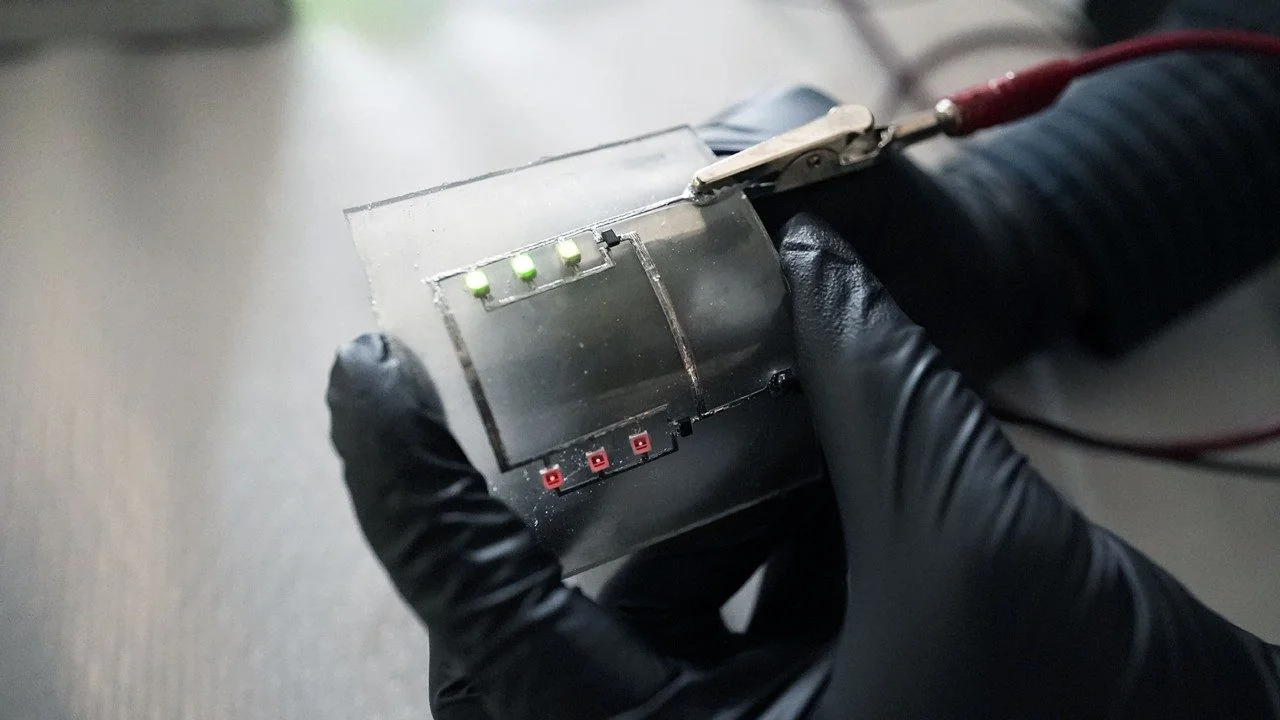
In electrical demonstrations, applying physical pressure to the cast slab forced the isolated droplets to merge into a continuous conductive track capable of illuminating an LED. Even after cutting across the track with a razor blade, applying new pressure near the cut reestablished the conductive pathway.
The mechanical puncturing process reforms conductive pathways as the liquid metal flows around obstructions. While initially insulated by silicone and individual oxide skins, the metal coalesces under pressure to bypass cuts and maintain electrical functionality.
Liquid metal finds existing uses in high-performance computing hardware as a thermal interface material, such as in certain graphics card cooling solutions. The Virginia Tech research expands on these concepts by introducing 3D-printable variants.
With the wearables market continuing to expand, the lab's development of stretchable liquid metal and polymer feedstocks points toward advanced heat spreaders, flexible device wiring, and directed cooling solutions for electric vehicles, robotics, and consumer electronics.