Apple TV 4K (4th Gen) review
The Apple TV 4K arrives as a fascinating yet polarizing entry in the streaming device market. Long-time users of previous generations will find a familiar hardware foundation, though shifting market positioning has elevated the device into a much higher price bracket.
Home theater enthusiasts have historically gravitated toward the platform for good reason. Its picture quality is best-in-class, format support is comprehensive, and it provides superior privacy protection alongside an ad-free home screen compared to mainstream rivals from Roku, Amazon, and Google.
However, pricing has shifted dramatically. While older iterations debuted at much more accessible entry points, the latest hardware commands a significant premium, placing it well above standard streaming sticks on the market.
When evaluated against alternative high-end streaming hardware like the Amazon Fire TV Stick 4K Max, the core format support remains largely comparable, making the value proposition heavily dependent on a buyer's ecosystem preferences.
Alternative premium boxes like the Nvidia Shield Pro occupy a similar price tier despite utilizing much older internal architecture, meaning buyers face a tough choice when spending heavily on dedicated streaming hardware.
For existing owners of previous 4K models, the upgrade incentive is virtually non-existent.
First-time buyers, on the other hand, will find plenty to appreciate if image fidelity and user privacy are primary concerns.
Software and Ecosystem Integration
Running on tvOS, the interface remains remarkably versatile. Beyond mainstream streaming applications, the platform accommodates practical utility tools, though the vast majority of users will focus exclusively on media consumption.
Light gaming is supported via standard Bluetooth controllers such as official PlayStation and Xbox gamepads. While performance is smooth, the continued absence of cloud gaming services due to platform restrictions remains a notable limitation.
With the rising costs of dedicated gaming hardware, cloud streaming integration would have added immense value to a premium media box.
Performance-wise, tvOS remains one of the slickest operating systems available, launching applications rapidly and maintaining fluid navigation throughout the user interface.
A major highlight continues to be the absence of aggressive, system-level advertising on the home screen, distinguishing it favorably from competing platforms.
Ecosystem integrations function seamlessly. Features like instant password sharing from mobile devices and using a phone's virtual keyboard simplify account logins and searches considerably.
Additional conveniences include iCloud photo screensavers, Continuity Camera support for FaceTime calls on the big screen, and AirPlay content sharing.
Remote Control and Siri AI
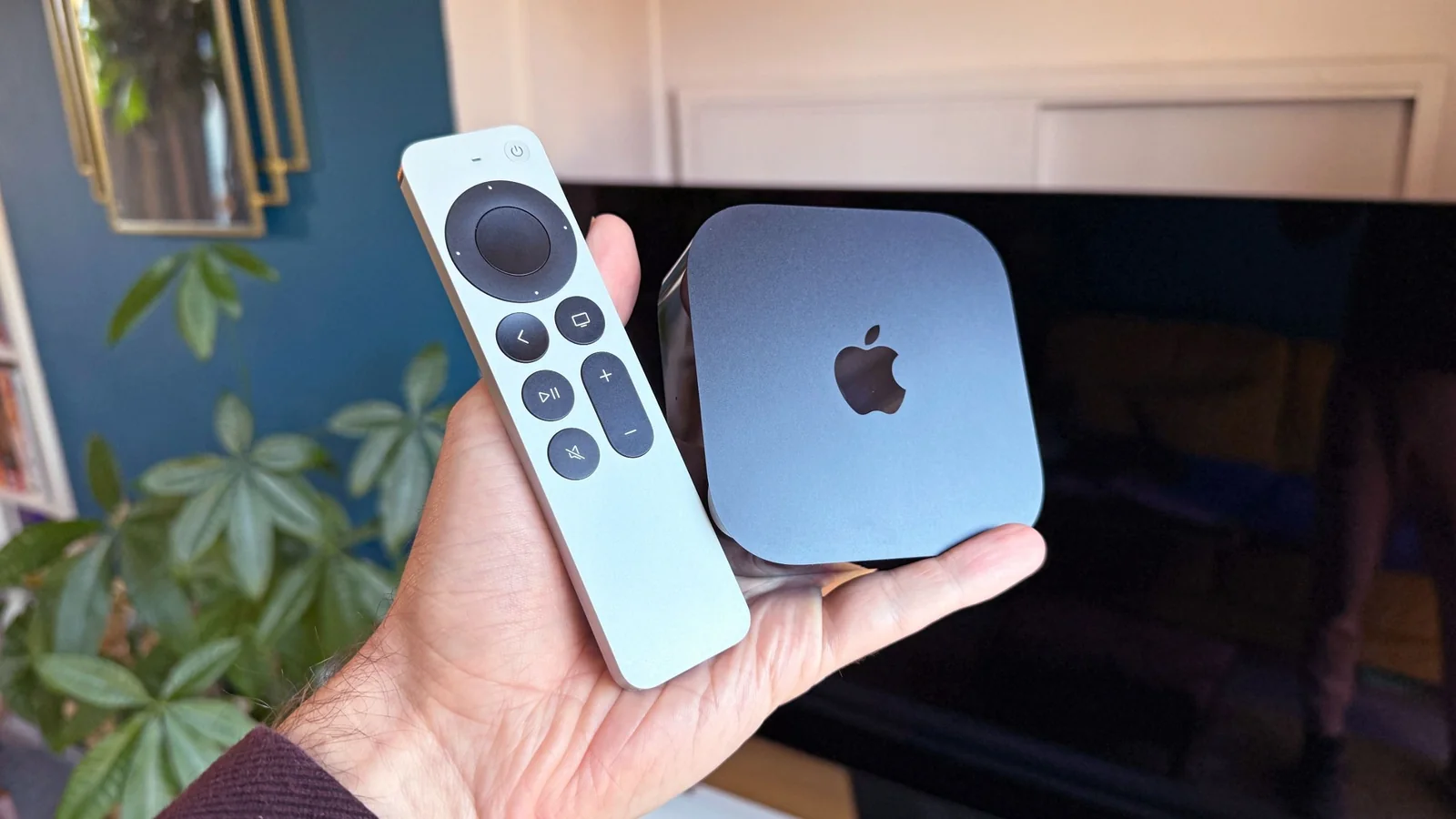
The bundled remote maintains a clean layout free of cluttered, dedicated app-launch buttons. Pressing the dedicated TV button opens a unified hub for tracking watched content across various services.
Universal search integration remains imperfect, however, with major gaps such as Netflix failing to populate results within the platform's native tracking hub.
Hardware updates introduce built-in microphones to the streaming box itself alongside the traditional remote button, theoretically enabling hands-free voice control.
These new microphones accompany an upgraded Siri AI assistant designed to offer smarter contextual awareness.
In practice, the implementation of Siri AI often feels unpolished. Information presentation toggles between overly dense text blocks and awkwardly truncated full-screen displays.
Comprehension of on-screen elements varies wildly depending on whether an application utilizes the default tvOS video player.
Certain streaming apps frequently fail to register active playback content with the assistant unless playback is explicitly paused.
Contextual queries regarding on-screen actors or background media occasionally yield inaccurate or repetitive identifications.
Native applications fare better, recognizing subjects instantly when utilizing standard platform frameworks.
Complex conversational queries concerning movie recommendations, ratings, and streaming availability frequently require multiple follow-up prompts to yield useful results.
Personalized content suggestions fail to factor in existing digital library purchases effectively.
When asked for movie insights, the system often delivers dry text summaries rather than intelligent, preference-based recommendations.
Refining requests based on runtime or genre constraints yields limited options that frequently overlook relevant titles already owned in the user's library.
While source citations accompany generated answers, the inability to click and verify references limits their practical utility.
Direct playback commands also produce mixed results, occasionally launching incorrect episodes or defaulting to recent media instead of specific requested content.
Even when specific episodes are correctly identified, manual interaction is frequently required to initiate playback, hindering hands-free workflows.
Ultimately, Siri AI feels premature. Given the steep hardware cost driven by upgraded internal silicon, users expect a more polished AI experience.
Privacy considerations surrounding always-listening microphones are mitigated only via software toggles rather than physical hardware disconnect switches.
On the positive side, these microphones enable a genuinely practical feature: finding a misplaced remote via voice command.
The tracking feature functions reliably even when the system is powered down into standby mode, causing the lost remote to emit an audible chirp.
Picture And Audio Performance
Image quality remains the primary draw for enthusiasts, anchored by comprehensive support for advanced HDR formats including Dolby Vision and HDR10+ alongside standard formats.
Dynamic frame-rate matching ensures natural motion reproduction for cinematic content, particularly when paired with high-refresh-rate displays.
Upscaling performance for lower-resolution video outperforms the vast majority of built-in television processors, delivering clean, natural sharpness without artificial processing artifacts.
Furthermore, the native Apple TV movie store streams at significantly higher bitrates than standard subscription services, yielding superior clarity and motion handling.
While these high-bitrate streams look fantastic, visual performance remains identical to the previous generation model, which retailed at a fraction of the cost.
Conclusions And Value
For existing hardware owners, picture and sound performance show no meaningful advancements.
Because software upgrades like Siri AI roll out to older generations as well, the primary hardware incentives are limited to hands-free microphones and the acoustic remote finder.
Upgraded wireless networking hardware does enable full surround-sound configurations utilizing HomePod speakers for the first time due to reduced latency.
Multi-speaker wireless arrangements deliver impressive acoustic performance, though they require separate, costly investments in Apple audio hardware.
Consequently, total system costs place these immersive setups in direct competition with dedicated wireless home theater systems from specialized audio brands.
Ultimately, value represents the core hurdle for this model. While industry prices continue to climb, this streaming box surpasses the threshold where it can be easily recommended over more affordable market alternatives.
Buyers with unlimited budgets will appreciate the polished experience, but the premium over standard streaming sticks is difficult to justify for average consumers.
Apple TV 4K (4th Gen) review: Price & release date
Released on November 13th, 2026
Priced at $299 / £299 / AU$449
Score breakdown
Scored out of 10Price & Release Date
Apple TV 4K (4th gen)