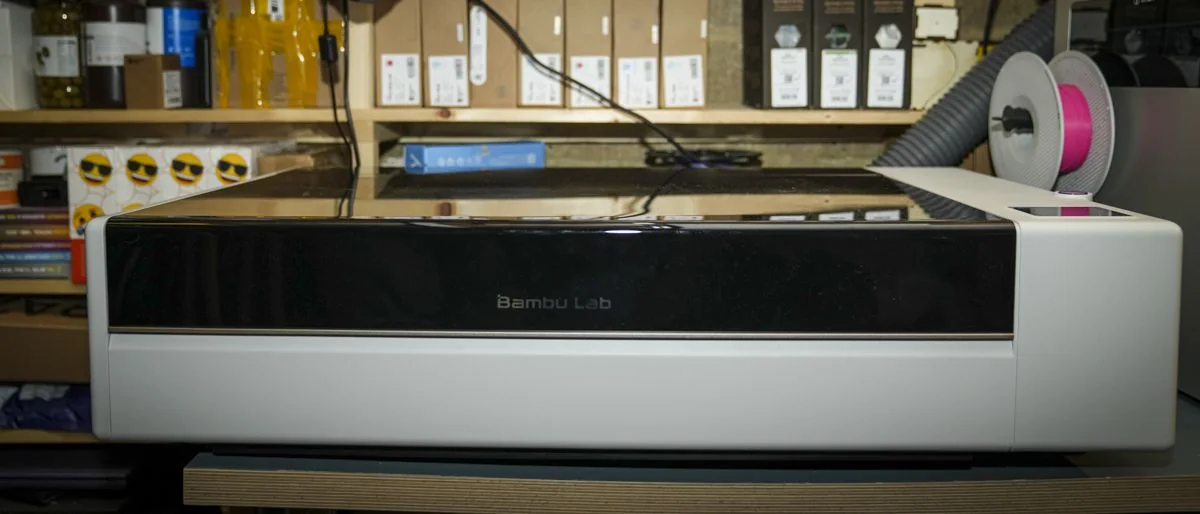
The Bambu Lab R1 marks the company's expansion into dedicated laser engraving, moving beyond its previous integrated H2D system. This new machine is a more serious offering, comparable to professional-grade models like the xTool P2.
As Bambu Lab's first dedicated product outside 3D printing, the R1 utilizes a 55W CO2 laser, a significant upgrade from the diode lasers found in the H2D. This CO2 technology allows the R1 to work with a broader array of materials, including clear acrylic and glass, and provides substantially more cutting power than most diode lasers, which typically peak at 40W.
While the laser cutter market is mature with established players like xTool, LaserPecker, Glowforge, and Creality, Bambu Lab enters with a focus on enclosed desktop machines. The industry has largely shifted away from open-frame models, prioritizing safety and ease of use, with many excellent enclosed options now available at reasonable prices.
Bambu Lab brings its extensive knowledge from the 3D printing market to the R1, along with a distinct approach to automation.
The R1 incorporates cameras, lasers, and encoders to automate focusing, material positioning, and optical alignment. This system helps the machine accurately understand material placement and toolhead movement, significantly streamlining workflows.
Initial Impressions
The source reviewer used the R1 for approximately three weeks, primarily cutting 3mm basswood ply and acrylic, but also testing MDF, leather, paper, ceramic, glass, coated metal, and various irregular wooden objects. The hardware proved exceptionally polished, though the Bambu Suite software, while functional, still requires refinement to fully match the machine's potential.
Bambu Lab R1: Price & availability
The Bambu Lab R1 launched at $2,499 in the US and £2,249 in the UK. Pre-orders began on September 22, 2026, with shipping scheduled for October.
The short-focus lens is included, while accessories such as the Riser Base, Conveyor, Rotary attachment, medium- and long-focus lenses, Vision Encoder, E1 Pro Air Purifier, and Auto Fire Extinguishing System are optional extras.
Design and Setup
Despite its robust specifications, the R1's packaging was surprisingly compact. While it required two people to move the box, the 33.5 kg machine was manageable for one person to lift and position once unpacked.
The R1's weight and size are manageable, with a footprint of 940 x 560mm, allowing it to fit comfortably on a standard 60cm-deep workshop bench. Users must also account for venting and sufficient vertical clearance for the lid.
The R1's design is distinctly Bambu Lab, featuring a superb finish that suggests proper manufacturing rather than assembly from generic components. The machine arrived largely pre-configured, requiring only a few minor setup procedures before operation.
Initial setup involved attaching the exhaust to a filter, with the source reviewer using the optional E1 Pro filtration system. The cooling reservoir also needed to be filled with distilled or de-ionized water.
The instructions recommend adding antifreeze in colder climates; the source reviewer filled the system to the -10°C protection mark due to workshop temperatures. After removing transport restraints and checking the interior, the R1 was ready to power on.
Initial startup takes approximately 30 seconds, followed by an automated self-check and calibration process that lasts about half an hour. Once complete, the laser alignment procedure can be run.
Unlike the more manual alignment required by other CO2 lasers, the R1 automates this process. Users simply lift a small cover on the toolhead, attach the magnetic Laser Alignment Sensor, and select the alignment function from the touchscreen. The machine handles the rest, taking approximately five minutes in total for the source reviewer.
While Bambu Lab claims a one-minute alignment operation, the hands-off nature of the process was a significant advantage. Inside the machine, several removable slats support materials.
These slats are easy to reposition, but the source reviewer noted a desire for more of them. A key issue is that small cut pieces can fall between the gaps, leading to a preference for a proper honeycomb bed, which was used for most of the review.
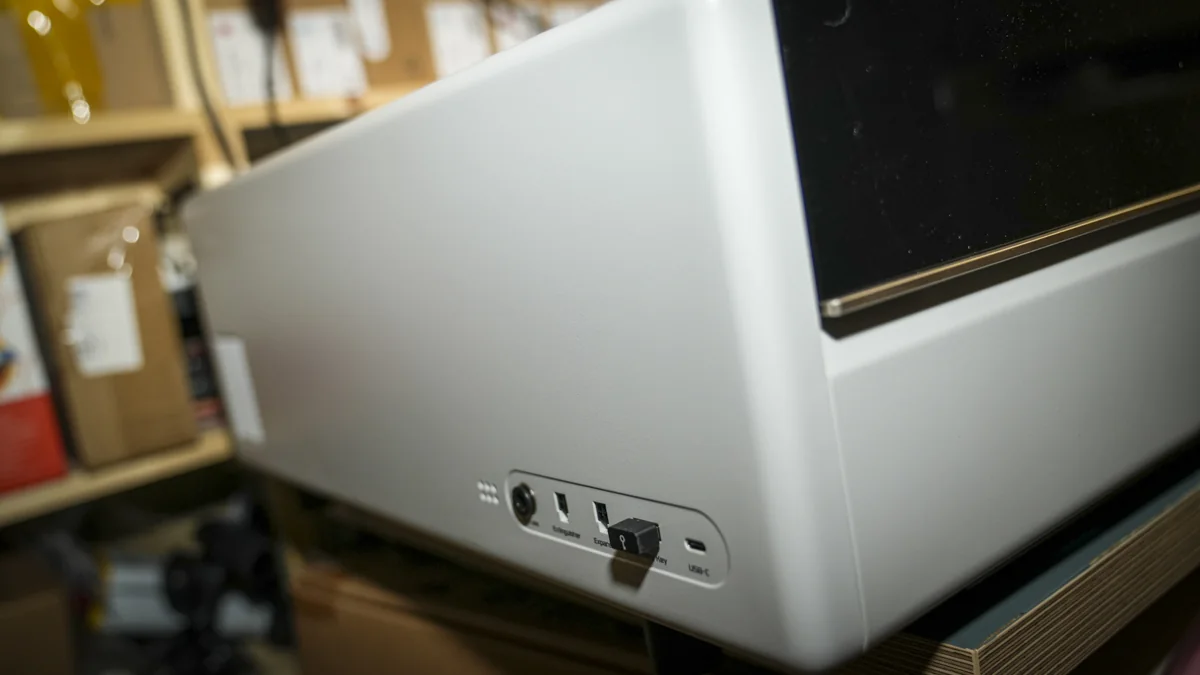
The machine's exterior is equally well-designed, with exhaust and main power connections at the rear, integrated Air Assist, and accessory connections alongside USB on the side. An easily accessible emergency stop is also included. A small, highly useful touchscreen sets the R1 apart from many laser engravers that rely solely on computer control, simplifying direct access to machine functions.
Key Features
A primary feature of the R1 is its 55W CO2 laser. Currently, few CO2 laser engravers at this price point target the enthusiast and small-business sector, with the xTool P2 being its main competitor.
The R1 boasts a generous 600 x 300mm working area, which the source reviewer found sufficient for most projects. For larger tasks, an optional conveyor extends the working length up to 3000mm, while maintaining the 600mm width. The base unit alone allowed for two standard 300 x 300mm basswood sheets to be placed side-by-side.
Bambu Lab emphasizes the Auto Laser Alignment feature, a significant advantage given that CO2 lasers rely on mirrors that occasionally require time-consuming recalibration in other machines.
In the R1, this mirror calibration process is fully automated, utilizing motorized mirror actuators and an alignment sensor.
For precise design placement and accurate measurements, the machine employs a TriSense system. This system integrates a BirdsEye Camera, Toolhead Camera, Pinpoint Laser, distance-measurement laser, and XY encoders to precisely locate materials, measure their surface, and monitor movement.
The source reviewer inadvertently tested this accuracy when an error in importing a cutting design resulted in paths being set as lines instead of cuts. After running the job, the mistake was realized.
Instead of starting over, the sheet was reinserted into the R1, and the camera view was used to align the cutting paths with the existing engraved lines. The operation was changed to 'Cut' and rerun, resulting in accurate cuts that followed the previous lines with no discernible signs of the initial error.
Positioning for small objects was equally impressive. The source reviewer placed pre-cut items like placemats around the work area, positioned artwork through Bambu Suite, and achieved results that closely matched the on-screen preview.
Software Experience
The Bambu Suite software, accompanying the R1 hardware, offers extensive functionality and demonstrated good overall stability on macOS. However, the workflow is not yet as fluid as the hardware deserves.
For instance, importing a DXF file requires selecting 'Open Image' instead of a more logical 'Open File'. Once a design is imported, users can assign Cut, Line, and Fill operations before moving to the 'Prepare' stage for machine and material setup.
This separation of stages can be inconvenient; realizing an incorrect operation assignment later means the change is not as immediate as it could be.
Capturing the work area also necessitates entering the preparation workflow. The source reviewer occasionally found the workspace blank until 'Measure' was selected and the capture procedure rerun. On the Mac version, a ghost of a previously captured image sometimes appeared, though these issues did not prevent work completion.
After a few days, the workflow logic became clearer, and the source reviewer could process jobs quickly after three weeks. Despite this, the workflow was still perceived as less fluid than optimal. Material profiles cover most common materials, and manual control provides flexibility for experimenting with unconventional items.
Cutting and Engraving Performance
The setup process, including attaching vents, routing the filter, filling with distilled water and antifreeze, and running calibrations, took approximately an hour. Initial tests focused on 3mm basswood ply, a common material for crafters and model makers, to establish baseline performance.
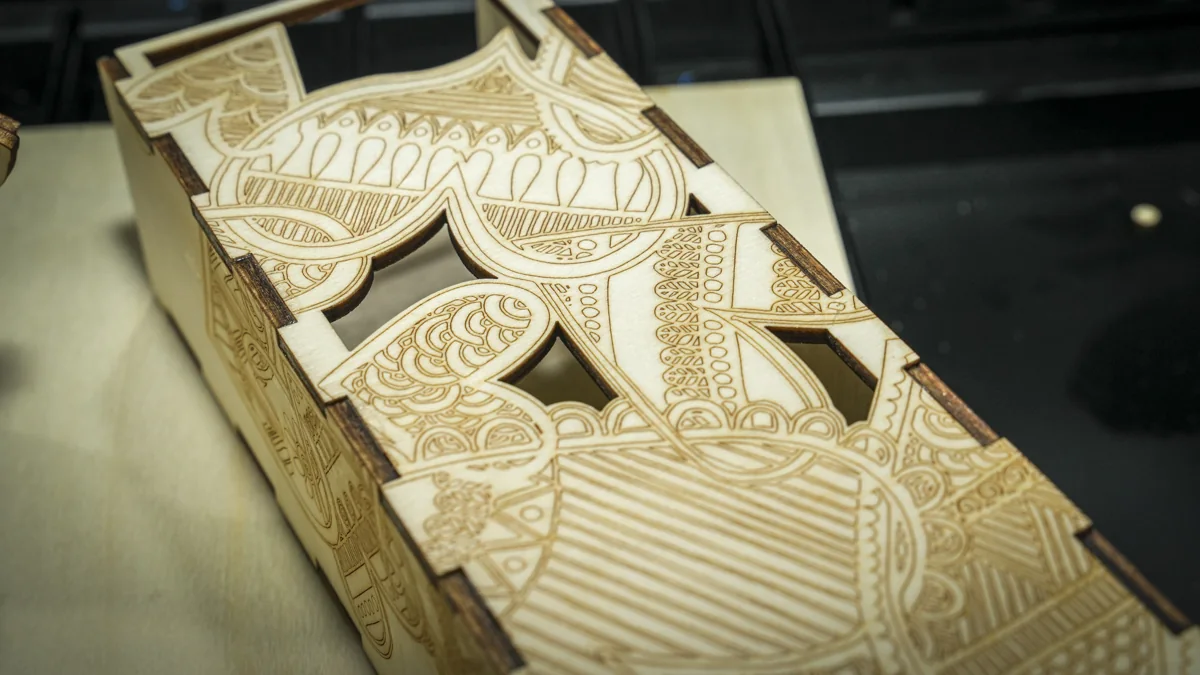
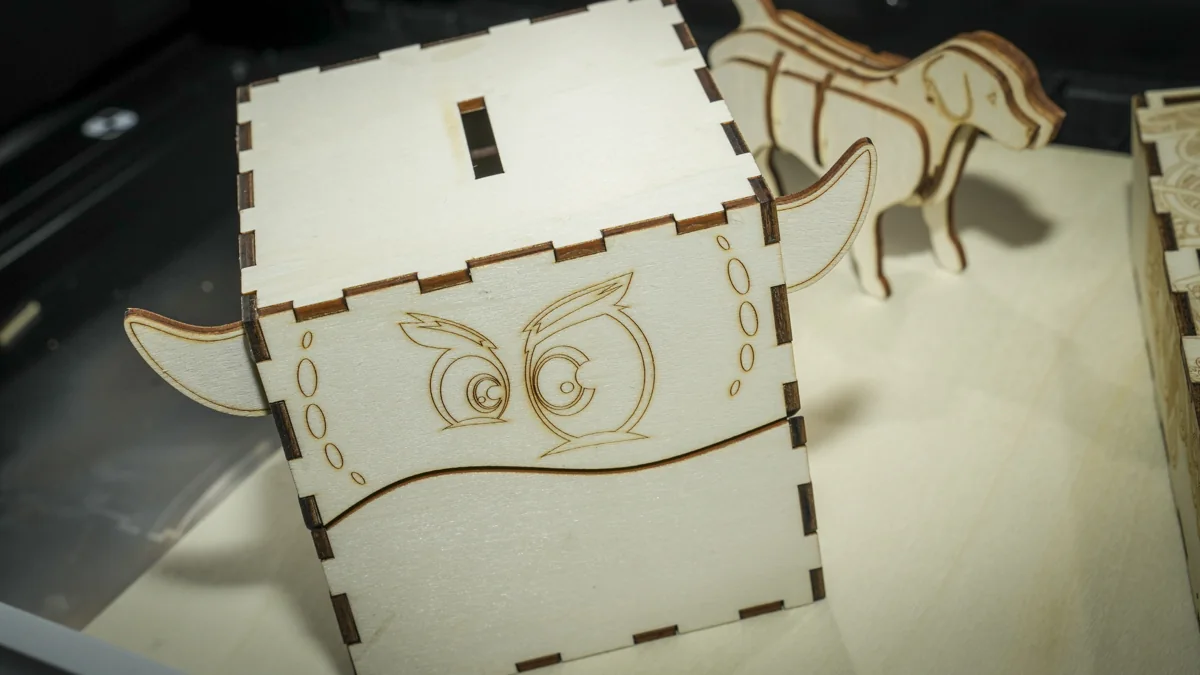
During a flower-box project, the source reviewer imported the design, detached components, and rearranged them across two 300 x 300mm basswood sheets for efficient material use. An attempt at auto layout scattered the design due to ungrouped paths, requiring a reload.
Once the design was correctly laid out, the R1 commenced engraving and cutting with impressive speed, comparable to other CO2 engravers. The complete model was cut across two sheets in about 10 minutes, yielding near-perfect results.
However, a minor issue arose: smaller cut pieces occasionally dropped between the support slats, leading to scorch marks when they fell into the laser's path. While adjusting the slats helped, a honeycomb grid is recommended for detailed work.
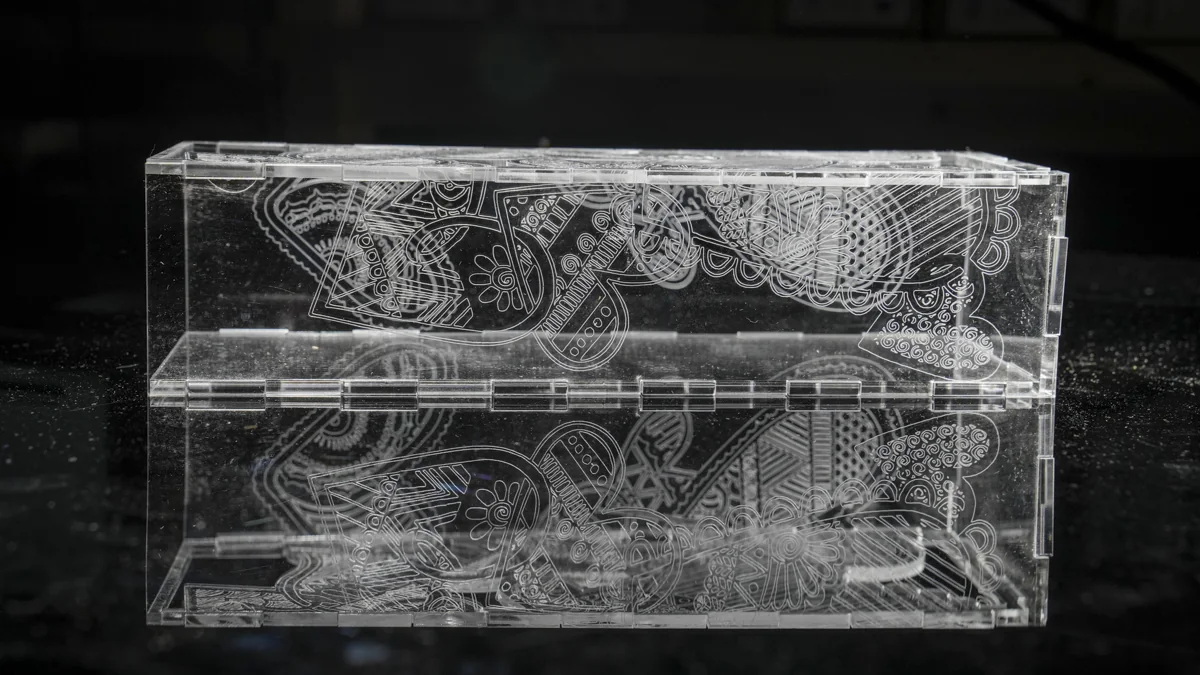
Following successful basswood ply tests, the same flower-box design was produced in acrylic. This took considerably longer, around 29 minutes, but the finish was exceptional, among the best achieved with this design in acrylic. The ability to work with this material is a key advantage of a CO2 laser over a conventional diode laser.
The R1 was also tested with materials beyond thin sheets, ranging from lightweight paper to 16mm MDF. For these materials, manual control was often preferred to achieve optimal cuts, and the ability to save settings as presets was appreciated.
Engraving tests included leather, ceramic, coated metal, and glass. Across these materials, the added power and flexibility of the CO2 source were evident, particularly compared to smaller diode engravers previously used by the source reviewer.
The raw cutting power proved impressive; by slowing the engraver and maximizing power, the R1 could cut through an 18mm sheet of ply. However, the positioning accuracy was particularly noteworthy.
For small objects, the position displayed in Bambu Suite closely matched the finished engraving. Once individual design elements were correctly grouped, the automatic positioning tools greatly simplified batch processing of pre-cut objects.
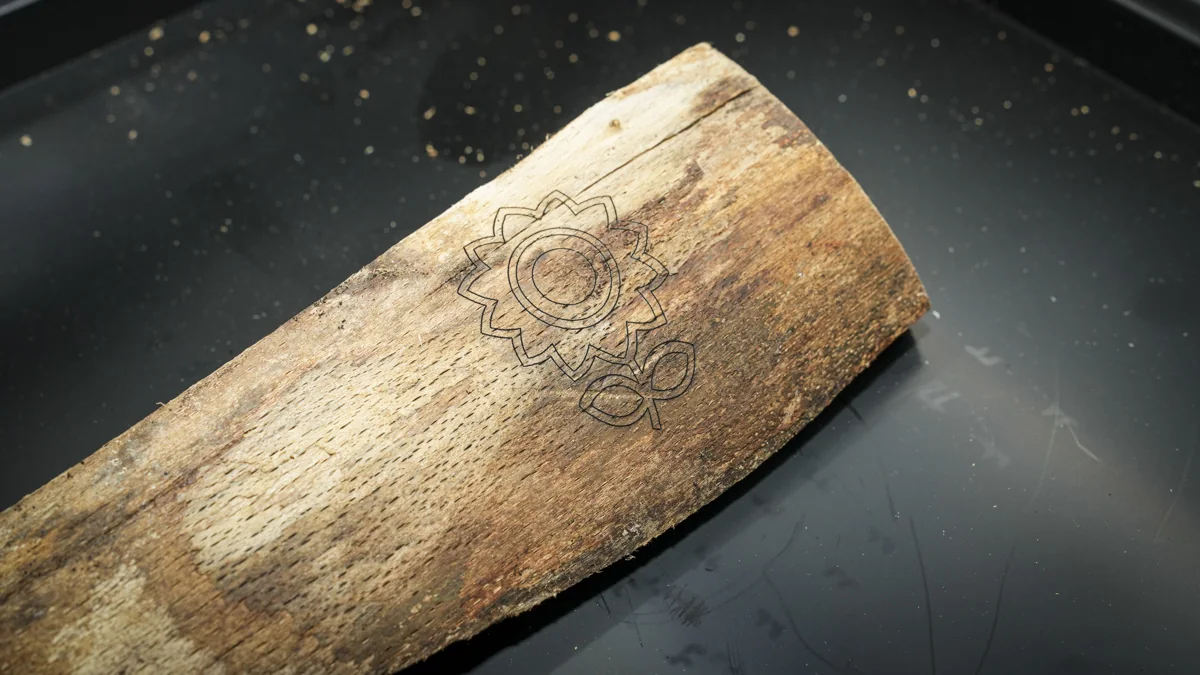
Curved-surface engraving offered a superior experience compared to previous encounters, being easy to set up and use. The process involves placing an object, such as a bowl or timber, into the R1, selecting curved-surface machining, and manually checking for toolhead clearance.
The machine then measures multiple points across the object to generate a height map, allowing artwork to be positioned and the job run as if on a flat sheet.
Tests with curved wooden objects, including a log, resulted in clear and focused lines despite changing surface heights. Some physical interaction, such as raising and lowering the lid during measurement, is required; an automated lid would further enhance the experience.
Bambu Lab R1: Final verdict
Despite entering the dedicated desktop laser market relatively late, the Bambu Lab R1 does not feel like a first attempt. After three weeks of use, its most striking features are not just the 55W CO2 laser, but also the application of Bambu Lab's signature formula: excellent aesthetics, ease of use, and high-quality cuts and engravings.
The automatic optical alignment effectively handles complex CO2 laser maintenance tasks. The TriSense system simplifies object and design positioning, and the curved-surface measurement procedure performs exceptionally well.
The material presets were found to be highly accurate, enabling excellent results without the need for extensive power-and-speed test grids, a common initial hurdle with new machines.
The physical design is excellent, with its manageable weight and size allowing it to fit perfectly in a workshop. The 600 x 300mm work area provides ample space for most typical jobs on this type of machine.
However, the Bambu Suite software requires further development. Improvements are needed for quicker camera capture, a more fluid transition between design and preparation, clearer terminology, and resolution of interface bugs. Additionally, more support slats or, ideally, a honeycomb bed should be included as standard.
A little more interior headroom would be beneficial, though a riser can be used. It's important to note that using a riser or the conveyor system changes the machine's safety classification from Class 1 to Class 4.
The R1 is designed to integrate into the Bambu Lab ecosystem, appealing to makers already invested in the brand. Combining laser engraving with 3D printing at scale offers a robust foundation for personal manufacturing.
For small businesses, workshops, model makers, and serious crafters, this machine offers a fast, accurate, and unusually easy-to-use CO2 laser solution.