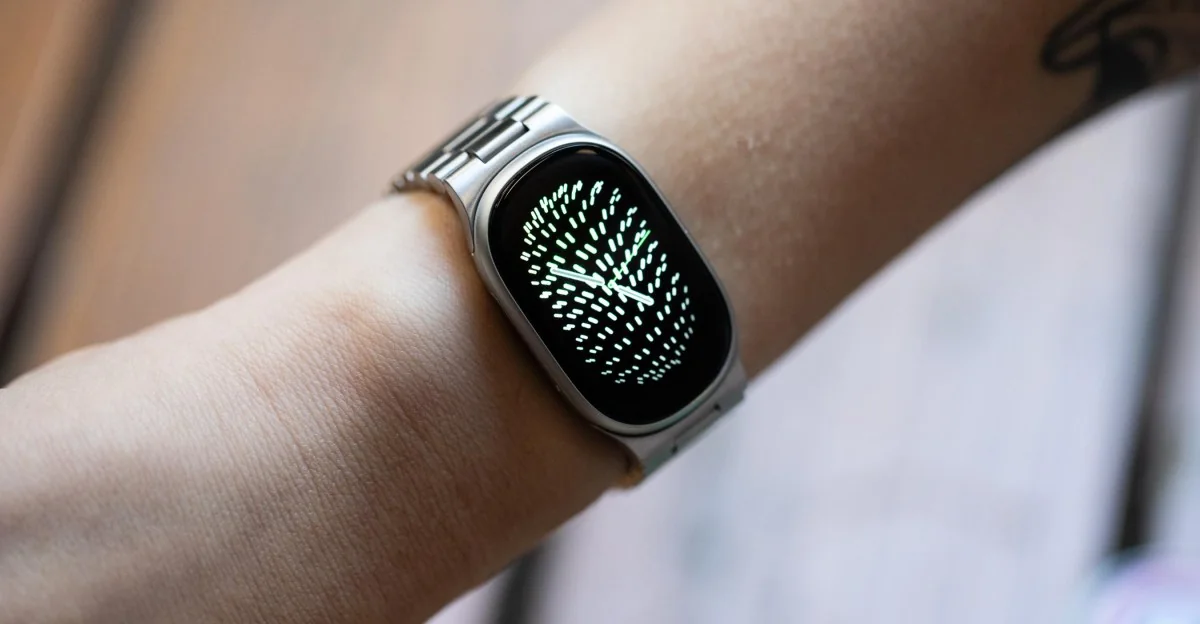
The simple $180 tracker represents a sleek return to Fitbit’s core identity, enhanced with a touch of AI flair.
While some watchfaces minimize their appearance, the bezels remain a noticeable design element.
Design and Core Functionality
The $179.99 Edge is a modernized iteration of Fitbit’s earlier fitness bands, such as the Charge, Alta, and Inspire series. It maintains a lightweight profile and features a small display for basic health and fitness metrics. The device typically offers about a week of battery life, which reduces to approximately a day and a half with the always-on display enabled. It is designed to be a straightforward fitness tracker, focusing on essential functions rather than attempting to emulate a smartwatch.
Refined Aesthetics and Strap Options
The Edge presents a more refined feel on the wrist compared to its predecessors. Unlike the boxy display of the Fitbit Charge 6, the Edge features a fully rounded screen, contributing to a softer aesthetic. Its straps are easily interchangeable via a button-release system. A metal link bracelet is available for $150, offering a jewelry-like appearance, while a $60 magnetic silicone strap mimics leather. The device's widgets are influenced by the Pixel Watch’s Material 3 Expressive redesign, running on a proprietary Fitbit OS. Some new watchfaces are elegant, though others tend to emphasize the device’s prominent black bezels.
Functionally, the Edge surpasses the Fitbit Air, incorporating built-in GPS for phone-free activity tracking. It supports alarms, notifications, and music control, but lacks microphones and speakers, meaning calls cannot be taken on the wrist. Contactless payments are also absent, a decision Google Health's head of product attributed to low usage rates in previous models, prioritizing sleek design, an altimeter, and a week-long battery instead. This focus narrows the Edge's purpose to a dedicated fitness tracker, avoiding smartwatch functionalities.
The rounded face provides a sleeker look and feel on the wrist compared to the Fitbit Charge 6.
Software Experience and AI Coaching
A significant software change involves the transition from the traditional Fitbit app to Google Health, which includes an AI coach available through a yearly subscription (three months free with purchase, then $10 monthly). The source reviewer noted that Google has refined the app over several months, particularly enhancing automatic activity tracking.
In tests, the Edge demonstrated accurate identification of activity transitions during runs, such as distinguishing between warm-up walks and actual running. The estimated distance was also reasonably accurate, though the device was less precise in gauging running speed compared to an Apple Watch Ultra 4 and a phone's running app. This feature is primarily useful for receiving credit for activities when manual tracking is forgotten.
The AI coach, while conversational, requires consistent weekly interaction to maximize its benefits. The Google Health app can feel cluttered, making it challenging to locate information like past workouts. However, for individuals new to fitness seeking guidance in creating and adhering to custom AI-generated routines, the experience is considered effective, despite some initial setup complexities.
Overall Value and Target Audience
The Fitbit Edge is appreciated as a subtle tracker, appealing to users who desire essential fitness tracking without committing to a screenless device or a full smartwatch. The source reviewer found the $179.99 price point somewhat high for its feature set, especially when considering the $99 Fitbit Air or the Apple Watch SE 3, which starts at $249 for iPhone users. Cheaper trackers with displays are also available from brands like Xiaomi and Amazfit, though they may not match the Edge's sleek design.
Score breakdown
Scored out of 10Price & Release Date
Fitbit Edge