Introduction
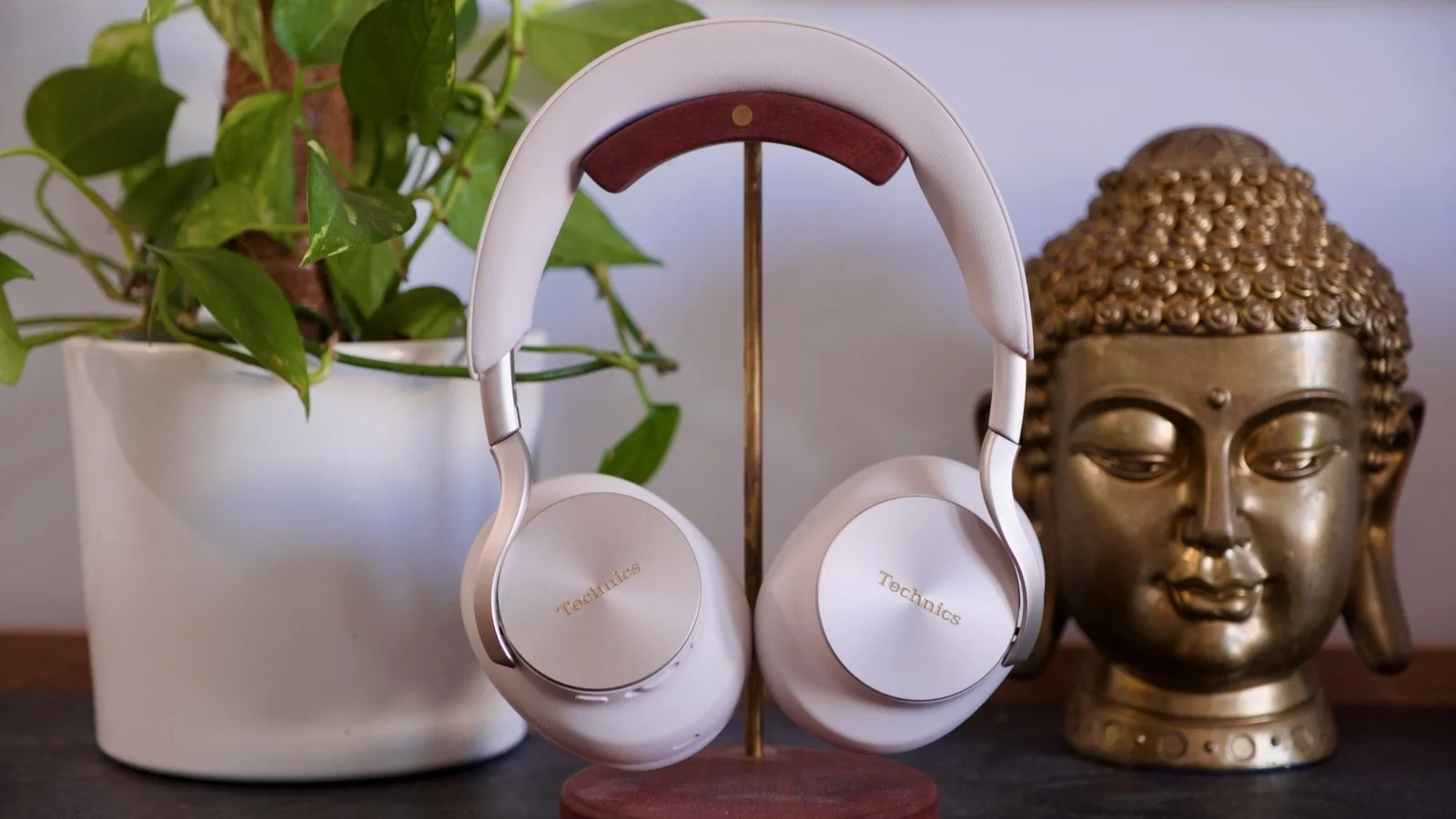
When Technics announced the EAH-A1000 over-ear Bluetooth headphones, everything seemed fairly ordinary. Another set of premium cans entering an already crowded category. Sure, they have a few standout features on the spec sheet — magnetic fluid drivers and three-device multipoint Bluetooth, for example. At $450, they are directly taking on Sony's popular WH-1000XM6, and almost enter the same territory as Sennheiser's audiophile-friendly HDB 630.
It's a confident move from Technics, to place its flag in the lucrative, but risky, territory between high-end consumer and "affordable" specialist headphones. I've had the A1000 on the testing bench for a couple of weeks and my initial assessment of how "ordinary" they are might have been a little hasty.
What's new on the Technics EAH-A1000?
James Trew for Engadget
The feature Technics is making the most noise about is the "Magnetic Fluid" technology, but it's not new to the A1000. The AZ100 true wireless earbuds also use it, but these are the first over-ears from Technics to include it. The idea is that it reduces unwanted vibrations in the driver, in turn reducing distortion.
One other feature that stands out is the three-device multipoint Bluetooth. Seamless connection with your phone and PC can now include one more device, like a gaming console or TV. There is a slight limitation here: If you listen via LDAC, that will limit you to two devices maximum.
Of course there's adaptive active noise cancellation coupled with a beamforming microphone for clearer phone calls. Other features you'd expect at this price point, such as Dolby Atmos with headtracking, wear detection, EQ/app control, a healthy 45-hour battery life and lossless playback via USB-C and 3.5mm cables are all present and correct. Cosmetically, the A1000 offers smooth lines and a stylish, but understated, design.
Audio and ANC Performance
Audio and ANC performance
James Trew for Engadget
Headphone marketing materials are like gourmet menus: There are a lot of decorative adjectives to describe beef. Or, in the case of headphones, 40mm drivers. I can't put my hand on my heart and say that the magnetic fluid technology Technics mentions is making a difference, but I was immediately impressed when I first put the A1000 on and pressed play.
My music tastes skew electronic, so bass really matters. On the A1000, the low frequencies are some of the tightest I've heard. That's the best word I can find for it. The bass is present, I can feel it, but it's not vibrating in my eardrums at all. It sounds like it's firmly attached to the song with glue, in a good way. Kick drums in dance music offer a gentle thwack, in turn providing a good sense of space and dynamic range in the mix.
Pop and rock genres do a good job at exposing the mid and high frequencies. Listening to rock tracks, the guitars sound authentic, but my ears wanted a teeny-tiny bit more sizzle out of them.
I regularly use alternative high-end models and the Technics A1000 surprised me with a slightly bigger sense of space and soundstage. The tight balance and well-rounded bass make them one of the strongest pairs I've tried for a long time.
The stellar sound wasn't the first thing I noticed when I put them on, the adaptive ANC is also extremely good. I'm a little fussy with noise cancellation; it's a feature I appreciate but I prefer good audio chops over superior ANC if I have to choose. With the A1000, that's not really an issue. The noise cancellation is effective for both steady sounds like fans, yet it's adaptive enough that I can't hear people talking when my spouse has guests and I'm working.
App and Controls
App and controls
James Trew for Engadget
I have a folder on my phone that's a graveyard of unused headphone apps. Technics Connect hasn't made it there, yet. As control apps go, it's easy to navigate and you'll find extra settings like choosing between LDAC compatible multipoint Bluetooth or even turning it off. There's the EQ section, the option to choose how long before the headphones auto-turn off and a toggle to disable wear detection, among other helpful tools.
A note on the multipoint feature: I've never really had a good experience with it on any headphones, with my computer usually connecting via the hands-free profile. Even switching between my phone and my laptop was unreliable. I can't confidently blame these headphones, but I didn't have much luck with two devices, let alone three.
There are no touch controls on the A1000, instead you get two buttons and a clickable volume rocker. Despite everything being on the right earcup, it doesn't feel cramped. The volume rocker is easy to find, but you click "back" for volume up, which feels counterintuitive to me. Media controls are navigated by multiple clicks on the same rocker. It's practical and works, but sometimes the button lightly sticks.
Competition and Verdict
The competition
The $449 price tag pits the A1000 directly against top competitors, and I do think it competes well on sound quality and ANC. The choice will come down to secondary details like design, battery life and app features. For ANC, comfort and build quality, Technics takes a strong win.
Wrap-up
James Trew for Engadget
For a legacy hi-fi brand, Technics has taken the long road when it comes to consumer headphones. The true wireless AZ100 made a big impression, thanks in part to those Magnetic Fluid drivers, and the A1000 builds on that success with equally impressive sound. Truly, they're a joy to wear and to listen to. There are also enough extra details, like a beam-forming microphone that handles background noise nicely.
The sticking point for some will be the price. Competitors can ask more thanks to their long, unbroken record with consumer headphones. Technics doesn't have the exact same recent pedigree in this specific sector yet, but the A1000 does a really good job at changing that narrative.