Topping DX1 II: Two-Minute Review
The market is flooded with compact desktop DAC and headphone amplifiers designed to bring high-resolution audio to everyday computer setups, and the Topping DX1 II arrives as a thorough update to a previous favorite in the manufacturer's lineup, making a compelling case for itself right out of the box.
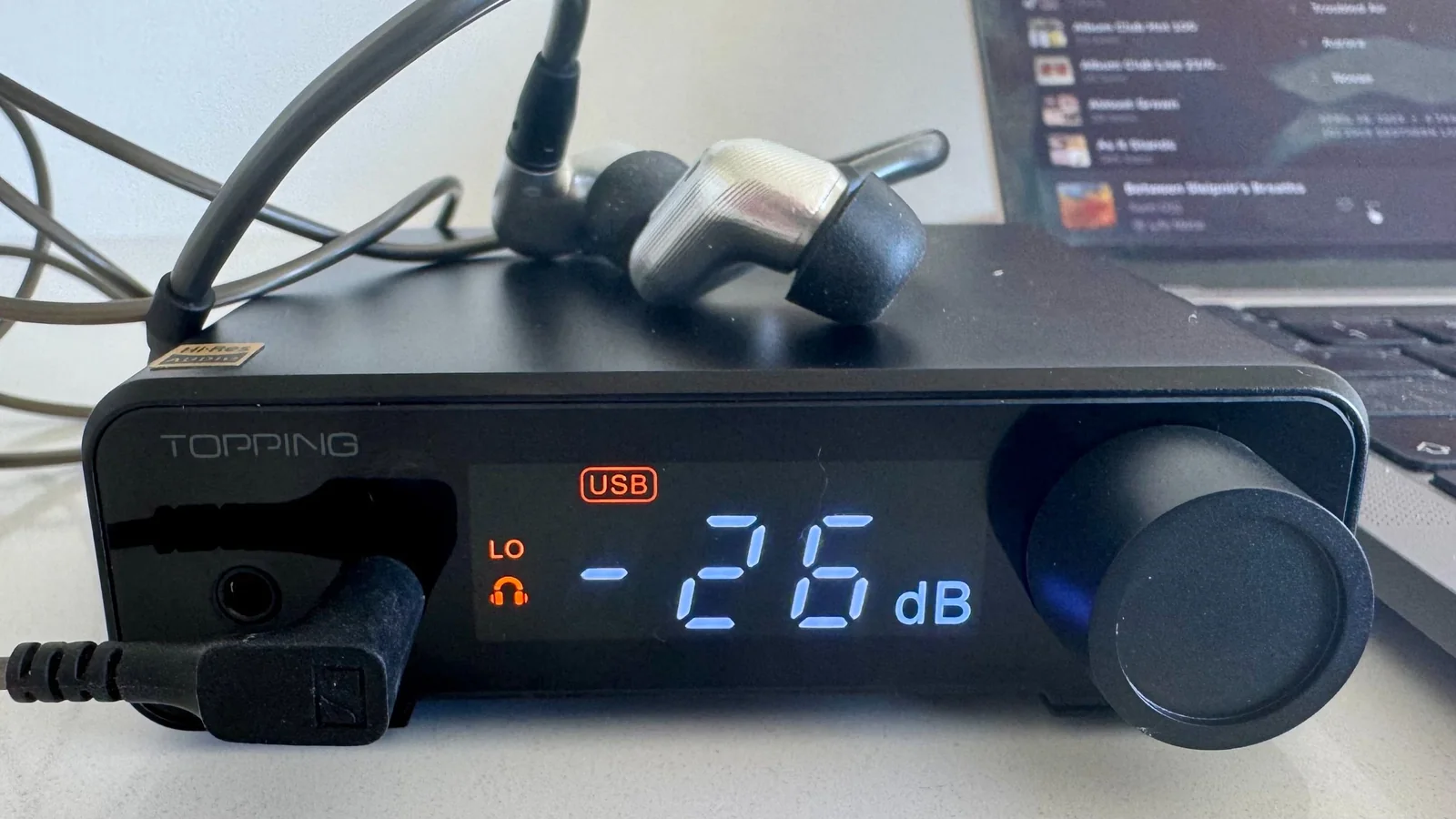
Featuring solid aluminum casework, the device boasts an impressive on-paper specification. It incorporates a high-resolution ESS DAC, carefully engineered digital and analog architecture, USB-C connectivity for power and data, ample power to drive most headphones, and multiple input and output options—including balanced analog connectivity. A handy remote control also helps offset the limitations of an overworked physical control dial.
Inserting the DX1 II between a computer and a pair of headphones yields a profound improvement in audio fidelity. While not entirely flawless—exhibiting a slightly reserved top end and modest dynamic range limits—it offers a much more engaging and well-realized listening experience than a standard computer sound card or laptop alone. Soundstaging, rhythmic expression, and detail levels all see significant upgrades.
While strong competition exists in the desktop amplifier space, the Topping DX1 II firmly establishes itself as a top-tier contender in its price class.
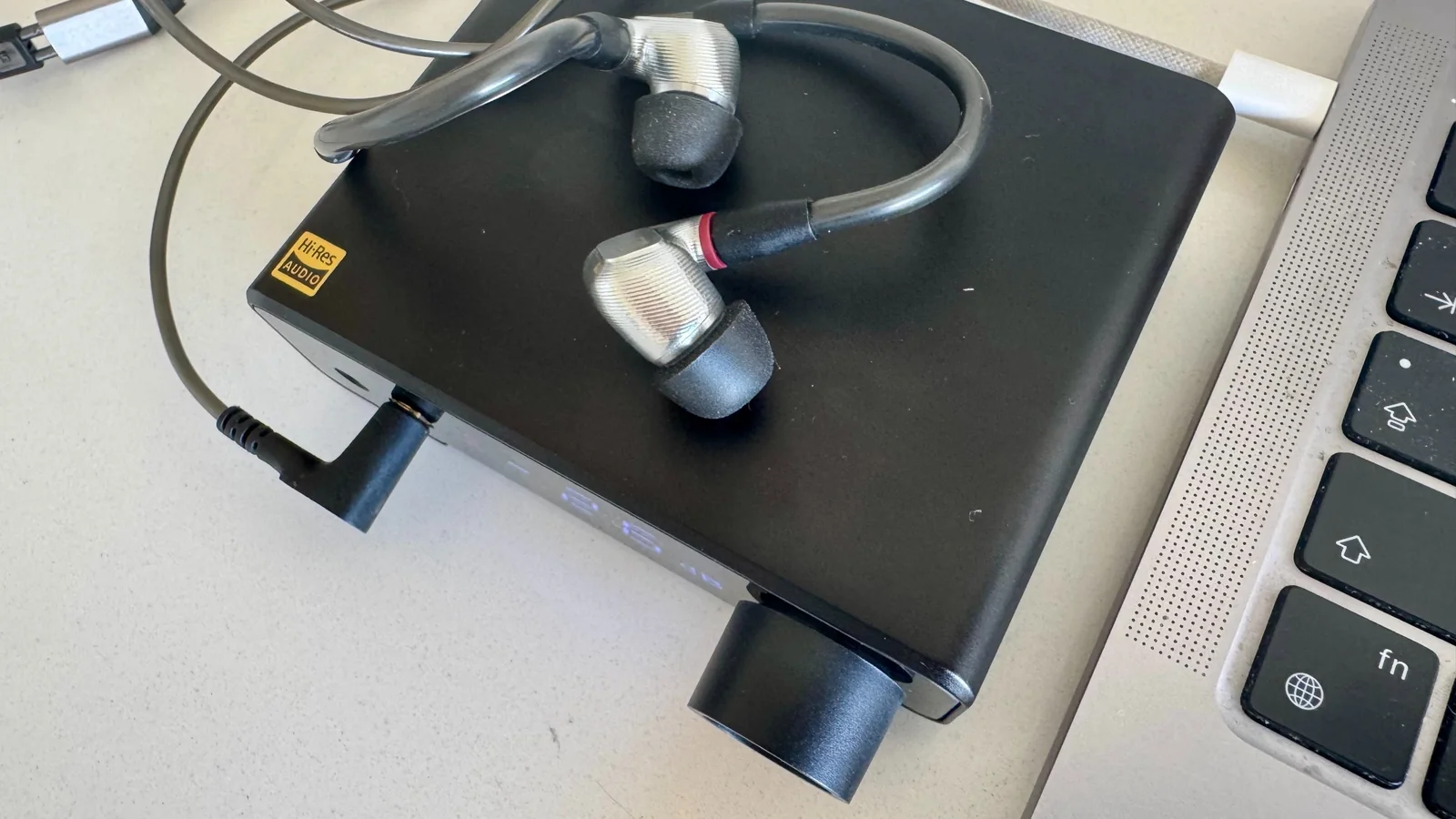
Topping DX1 II Review: Price & Release Date
Announced in mid-2026, the Topping DX1 II is available at a retail price of $119 / £119 (approximately AU$169).
Topping DX1 II Review: Features
Equipped with an ESS ES90392QM DAC chipset, the unit utilizes a dual-DAC architecture providing a dedicated converter and fully independent processing for each channel. It supports digital audio up to 32bit/384kHz and DSD256.
A 16-core XMOS XU-316 processor handles signal routing to minimize noise and distortion across both balanced and unbalanced output paths.
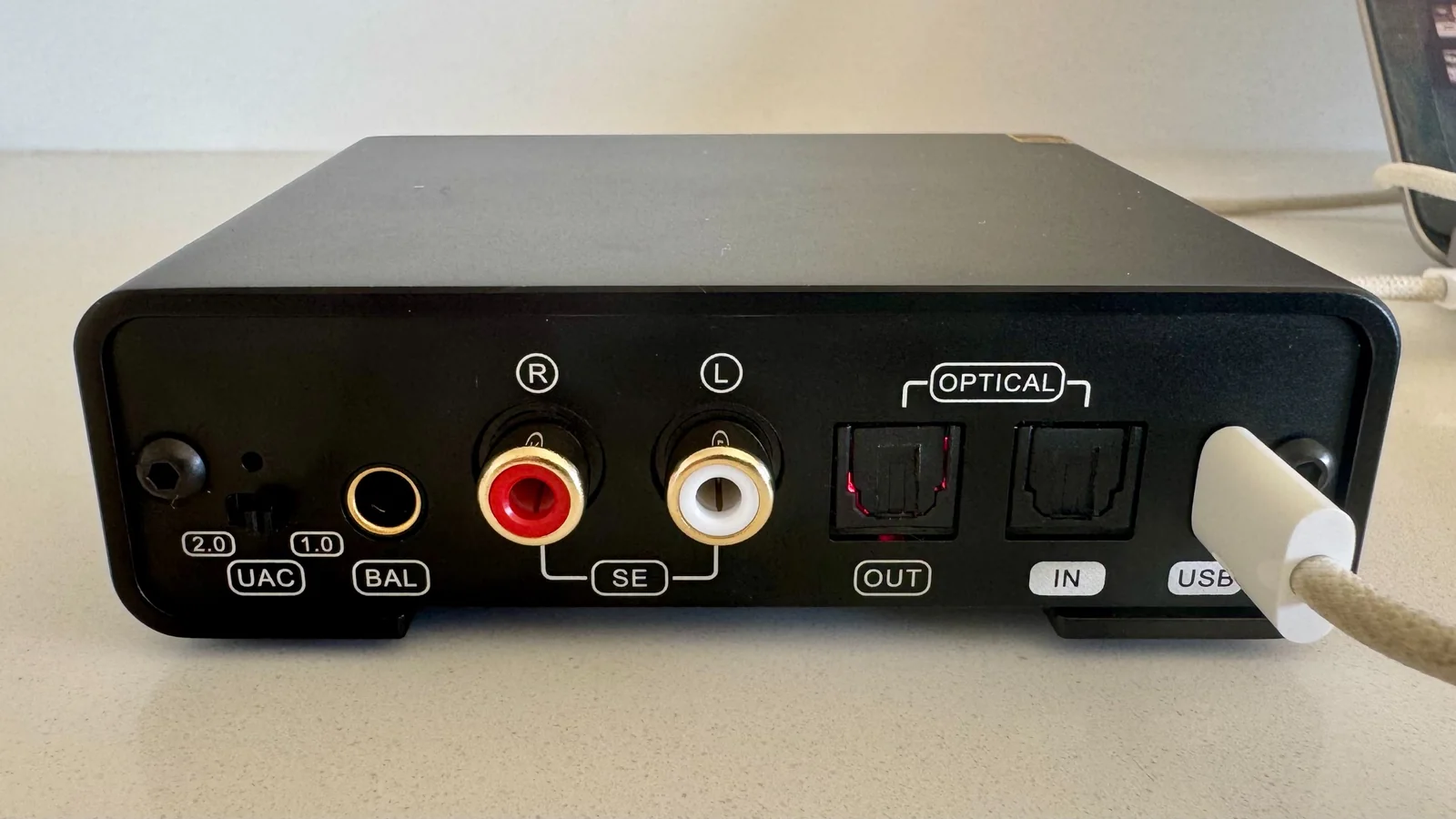
Signal delivery is managed via optical digital input or USB-C, which also supplies operating power. Outputs include a 3.5mm headphone jack, 4.4mm balanced headphone and line outputs, and stereo RCA line-level connections.
A hardware toggle allows switching between UAC 1.0 and UAC 2.0 protocols, granting compatibility with gaming consoles such as the Nintendo Switch and Sony PlayStation 5.
Users can access advanced configuration platforms via computer, including web-based gain adjustments, digital filters, and Topping Tune software for 10-band parametric EQ customization.
Topping DX1 II Review: Sound Quality
The source review indicates that the DX1 II excels in detail retrieval, capturing subtle nuances, low-level dynamics, and transient responses with impressive clarity and weighting.
The overall tonal balance is natural and laid-back, avoiding listening fatigue during long sessions. While it can handle energetic tracks, its default demeanor is polite and controlled rather than aggressive.
Limitations include a minor compression of extreme dynamic contrasts and a slight roll-off at the highest frequencies, which softens treble bite.
Rhythm, tempo control, and soundstage imaging remain robust, providing complex recordings with ample space and consistency regardless of playback volume.
Topping DX1 II Review: Design
Weighing 275g and measuring 32 x 100 x 100mm, the device maintains a compact footprint that spares desktop space.
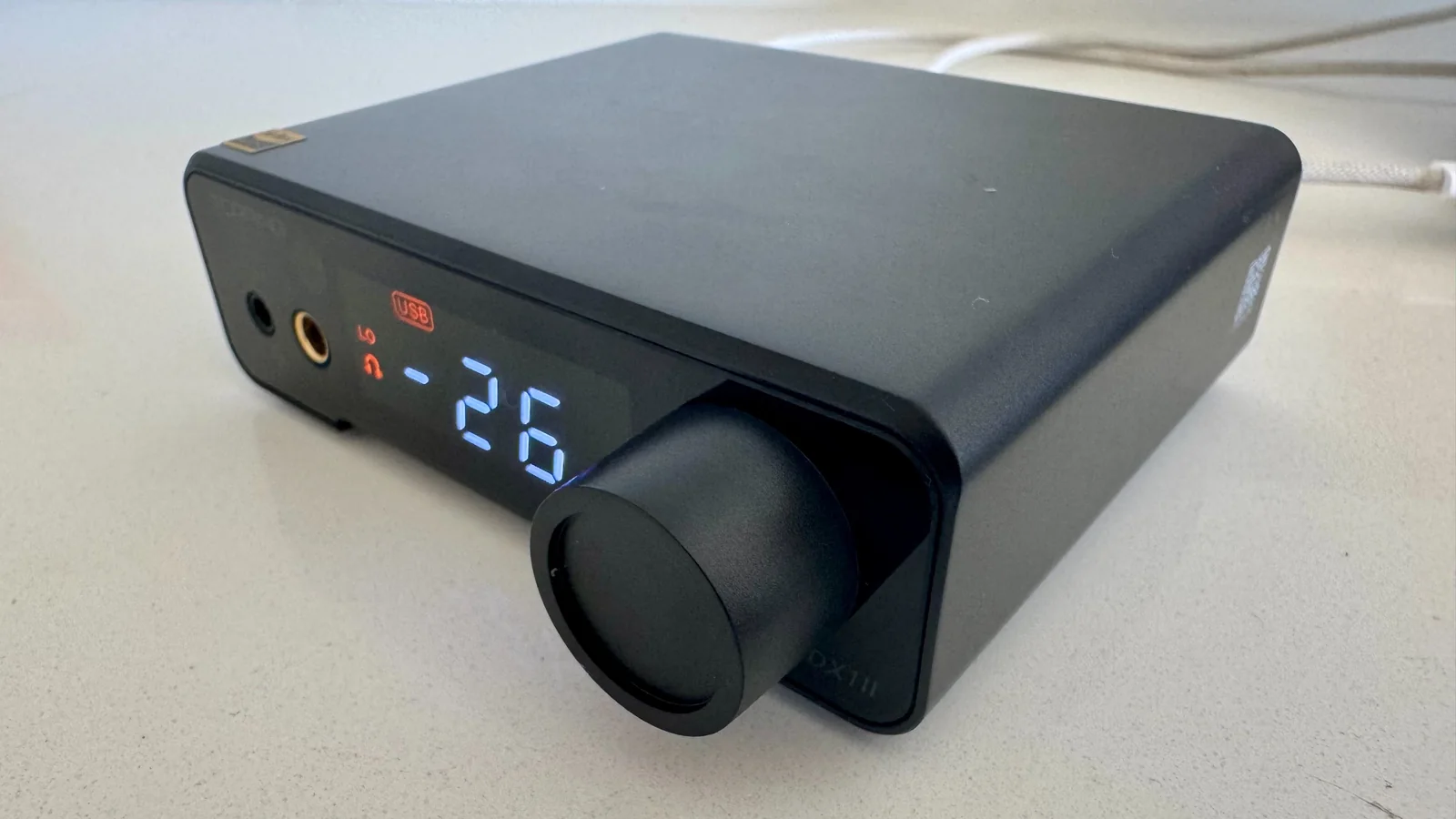
The machined aluminum chassis features rounded corners and a premium finish.
Rear panel connections are tightly spaced due to the compact housing, which may require careful cable selection for thicker audiophile interconnects.
Topping DX1 II Review: Usability & Setup
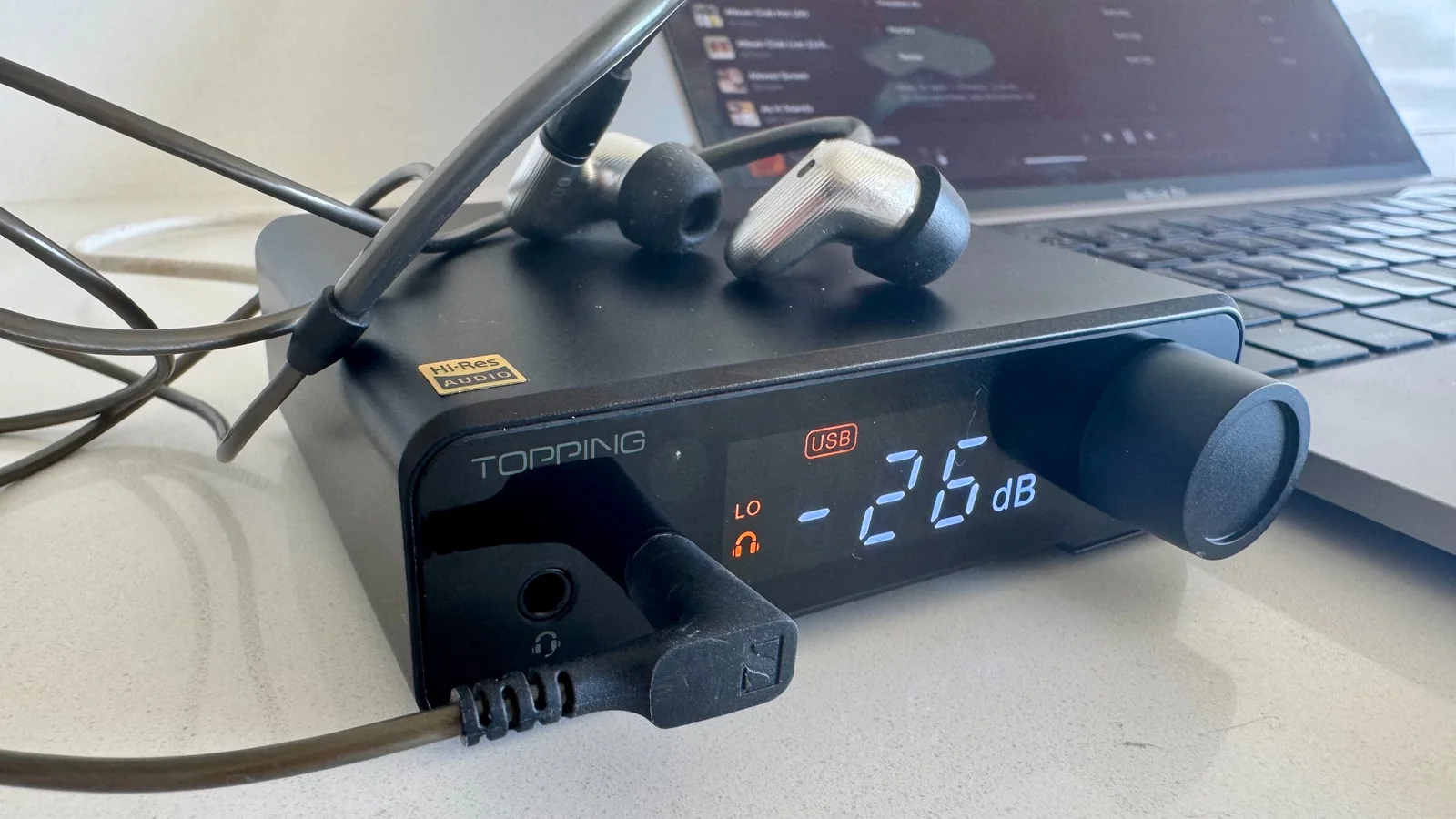
A clear LED display dominates the front panel, indicating volume levels and active inputs.
While the central physical control dial handles basic adjustments, navigating advanced menus directly on the unit can feel cumbersome, making the included infrared remote control an essential tool for accessing EQ and filters.
Initial setup is straightforward, requiring only power via USB-C or an optical source, along with connections to headphones or external amplifiers.
Topping DX1 II Review: Value
The DX1 II successfully bridges the gap between entry-level affordability and premium multi-feature desktop gear.
Build standards and technical capabilities ensure buyers receive strong value relative to its cost.
Buy it if…
You want to upgrade a basic laptop-and-headphone desktop configuration with a notable jump in acoustic clarity and resolution.
You need enhanced console audio performance via UAC 1.0 mode paired with compatible gaming headphones.
You require robust output power capable of driving demanding, high-impedance headphones through balanced connections.
Don't buy it if…
You prefer straightforward onboard menu navigation without relying on a remote control.
You prioritize explosive macro-dynamics and wide swings between quiet passages and loud peaks.
You are particularly sensitive to treble energy and require pristine, unrolled high-frequency extension.
Topping DX1 II Review: Also Consider
Alternative options like the more affordable compact models offer contrasting form factors and sound profiles for budget-conscious listeners.
Score breakdown
Scored out of 10Price & Release Date
Topping DX1 II