The Rise of Custom Firmware
If you spend any time on r/synthesizers or watch a lot of synth videos on YouTube, you’ve probably noticed the explosion of custom firmware for hardware synthesizers, samplers, and grooveboxes. What unites almost all of them is that they were made possible by increasingly sophisticated vibe-coding tools.
Vibe coding is turning the music gear world upside down
LLMs have led to an explosion of custom firmware and hacks for synths, samplers, and grooveboxes.
These sorts of custom firmware were exceedingly rare in the pre-LLM days and required both deep expertise and an incredible investment of time. It could take weeks or months to add a simple feature like velocity sensitivity to a Korg Volca. Now, hobbyist hackers are able to turn budget synths into full-fledged grooveboxes in a matter of days.
Revitalizing Classic and Budget Hardware
Elektron’s budget-friendly Model:Cycles, Digitone, Octatrack, and Digitakt have all gained new capabilities with Claude’s help. Roland’s SP-404 MKII, Ableton’s Push 3 and Move, Akai’s MPC Live and MPC One, as well as the vintage MPC 2000, Novation’s Circuit, Arturia’s MicroFreak, and even Zoom’s 14-year-old MultiStomp pedal line have all seen new custom firmware released recently.
Leading the charge is a tiny $70 Yamaha DX7 clone: the M-Vave FM-1. It was already on its way to being a popular gear choice. The dirt-cheap price and faithful re-creation of classic FM tones made it incredibly popular with first-time synth buyers, hobbyists, and creators alike. Inevitably, someone wondered how far they could push the hardware and, with the help of AI, kickstarted an arms race.
The FM-1 now has dozens of custom firmwares available. Many of the most popular — Felucca, Sloop, and x0x — list Claude as a contributor on their GitHub page or include explicit disclosures about their use of AI.
What started as a surprisingly good but basic DX7 clone now supports a variety of synth engines, including virtual analog, sample playback, multitrack sequencing, and a variety of UI designs.
It’s not terribly shocking that someone was willing to risk bricking budget hardware. Generally, the gear that has benefited from this surge of vibe-coded custom firmware is older or more affordable.
Community-Driven Mods
Roman Rusinov set his sights on the Zoom MS-70CDR, a budget multieffects pedal from 2012 that has a reputation for punching above its weight. He started by learning about ZDL, a project that reverse-engineered the MultiStomp format. He eventually coaxed the pedal into running NAM A2 Lite captures and custom impulse responses, turning it into a full-fledged modeler capable of emulating vintage amps.
“I was already using AI for some work stuff and figured this would be a great case to try learning some vibe-coding fundamentals and get a project going,” Rusinov said. “There was a lot of trial and error of finding the limitations of the hardware and software.” He says he’s thrilled to be part of a broader movement breathing new life into older hardware.
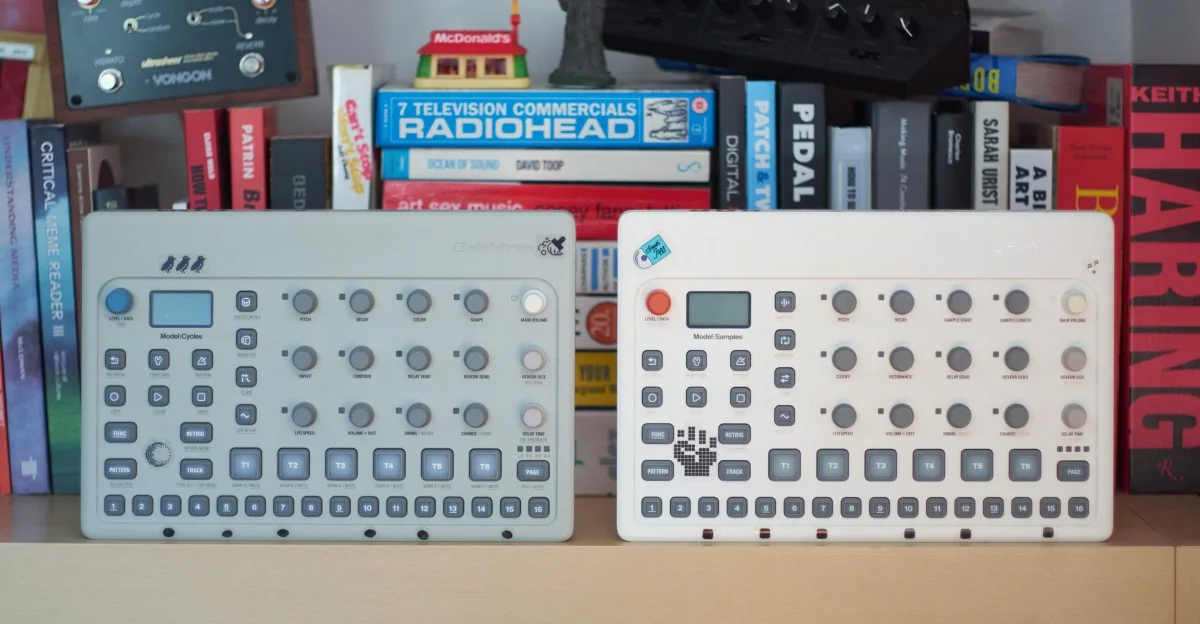
Developer 18nelli was similarly motivated by a desire to revitalize some forgotten gear. Working with an Elektron Model:Cycles that hasn't had an official update since May 2021, recent AI advances made him believe he could add new features himself.
So he opened up his Cycles, documented all the parts, and started working with Claude Code to implement his first hack — six-track audio over USB. That has since exploded into a community project with multiple mods, standalone custom firmwares, and the ability to turn the groovebox into a Model:Samples.
Modded Cycles has certainly been one of the more frantic projects out there, with multiple firmware updates hitting community channels rapidly before developers pause to polish existing code and squash bugs.
New mods and firmwares hit the web almost every day now. If there’s a favorite piece of gear in your arsenal that you wish had one killer feature, there’s a chance it might end up on a GitHub page sooner than later.
Risks and Industry Reactions
Of course, there is some risk here. These firmwares are often less thoroughly tested than official manufacturer software. The response to the modding scene has varied from company to company. Elektron banned links to custom firmware from its forums, warning against modifications that could brick machines or confuse users regarding official features.
Others, like M-Vave, seem to be embracing the movement. The company recently announced FM1 Open, an open-source firmware with additional features, plus a development kit and a firmware-flashing tool for the community.
While devices like the Polyend Endless have sparked debate, the community has generally been welcoming to vibe-coded firmware as a way to breathe new life into older instruments and explore new creative potentials.