When the X300 Ultra debuted with the best cameras in any phone, it stood out due to an excellent main camera with a narrow 35mm focal length and a highly capable ultrawide lens.
Design and Specifications
The X500 Pro Max is great, but it represents a step back from previous favorite phone cameras while introducing the first Vivo flagship to sit between the Pro and Ultra tiers.
The X500 Pro Max is the first Vivo flagship to sit between its Pro and Ultra tiers.
It has an impressive camera system with world-leading dynamic range and the same great telephoto lens found in the Ultra, but it has lost a little of what made its predecessor special.
The Good
Fantastic telephoto camera
17 stops of dynamic range on the main camera
Big 7,800mAh battery
1440p, 144Hz display
The Bad
Ultrawide camera is a weak link
Drops the X300 Ultra’s 35mm main camera
Expensive
The X500 Pro Max is part of a broader industry trend among major Android players rolling out Pro Max models to close the gap between previous Pro flagships and camera-centric Ultra models.
The Pro Max adopts plenty of flagship features found in the older Ultra, matching its size and 1440p, 144Hz OLED display. It packs a massive 7,800mAh battery that easily breezes through two days of use with 90W wired and 40W wireless charging. While it uses a MediaTek Dimensity 9600 Pro instead of the latest Snapdragon chipset, performance remains comparable, and it features the exact same periscope telephoto camera. Pricing is set at €1,799, placing it squarely in the ultra-premium bracket.
Despite these high-end specifications, this is not a true successor to the X300 Ultra. The device sits half a step down in Vivo’s lineup, making it less unique than its predecessor.
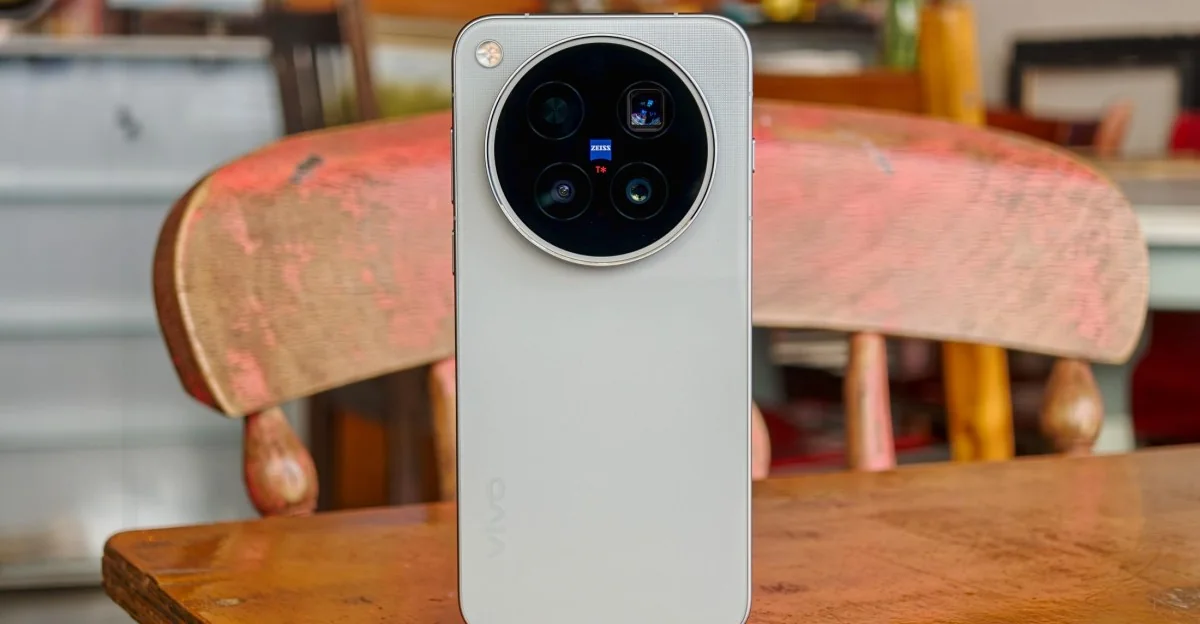
Vivo’s familiar circular camera island returns, complete with Zeiss branding.
There is an odd speckled, almost glittery finish to the phone’s body behind the camera housing.
Camera Performance and Trade-Offs
The 50-megapixel, 1/1.28-inch-type main camera sensor is smaller and lower resolution than the Ultra’s. However, it offsets this by utilizing Sony’s Lytia L910 image sensor with LOFIC technology, delivering a wider 17-stop dynamic range with enhanced highlight handling.
Unlike the X300 Ultra, which featured a distinctive 35mm focal length, the Pro Max reverts to the standard 24mm focal length found on most modern smartphones.
This 24mm choice acts as a wide-angle lens designed to capture expansive scenes, pushing users toward the telephoto lens for tighter framing despite potential low-light compromises.
Shooting with native focal lengths allows for better optical fidelity without relying purely on digital zoom tricks.
A 35mm main camera feels closer to traditional prime lenses, offering a natural framing midpoint between a 14mm ultrawide and an 85mm telephoto.
The design incorporates a clever sloping body to help mask the depth of the prominent camera island.
The decision to use a wider main camera helps compensate for the phone's smaller ultrawide sensor.
While the X300 Ultra treated its ultrawide lens like a secondary main camera with a large sensor and optical image stabilization, the X500 Pro Max features a smaller 1/2.75-inch-type ultrawide sensor.
Real-world testing reveals a clear performance gap when switching between the ultrawide and the other two lenses in challenging lighting environments.
1/19
The main camera is highly capable, though its default angle remains quite wide.
Verdict and Competition
The X500 Pro Max delivers an exceptional mobile camera system featuring naturalistic Zeiss color-tuning, Log video recording, and 4K at 240fps slow motion, alongside support for external teleconverter lenses. While it misses some of the Ultra's unique traits, it remains an impressive ultra-premium release.
Rival devices like Oppo’s Find X10 Pro Max adopt a similar high-end strategy by pairing wide-angle main sensors with substantially improved ultrawide cameras for a more cohesive lens experience.
Future flagship iterations will need to build upon these foundations to justify their rising costs in the ultra-premium market segment.
Photography by Dominic Preston