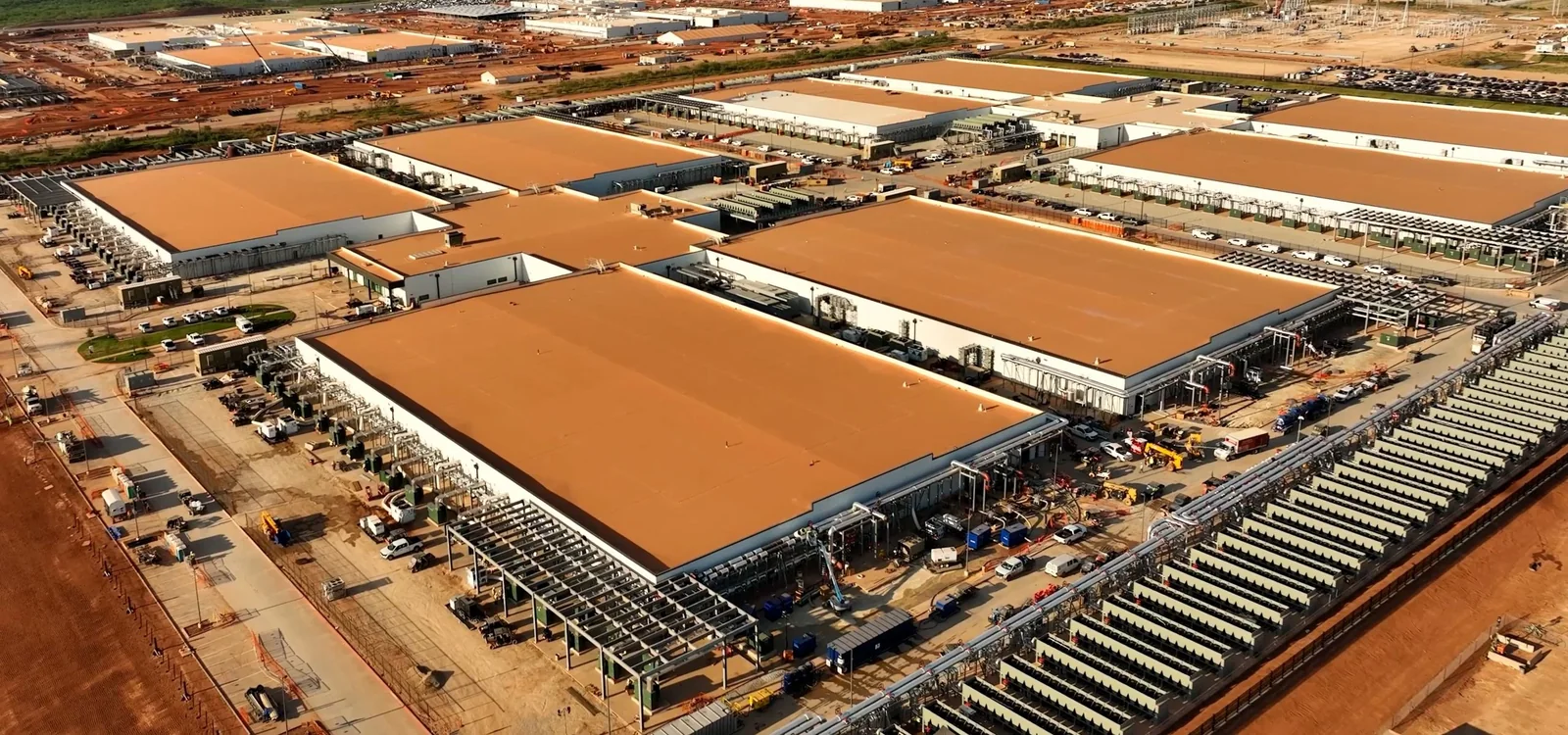
The Feasibility of Rapid Hyperscale Growth
Elon Musk recently expressed high confidence that SpaceX could build 10 GW of data center capacity in 2027 alone. Analysts suggest it is achievable if current conditions hold. Reaching this target would mean the company builds as much capacity in 1.5 years as Google achieved throughout its entire history, potentially making SpaceX the fastest-building hyperscaler in the industry.
Progress at the Colossus 1 and Colossus 2 sites serves as a primary indicator of this speed. Estimates suggest Colossus 2's power capacity grew from 0.4 GW in January to a projected 2.4 GW by year-end. Analysts track approximately 9 GW of potential capacity across various facilities, including Starbase locations.
Power Generation and Infrastructure Challenges
The Colossus facility utilizes 89 turbines capable of delivering 2.5 GW, supported by 1,377 Tesla battery Megapacks. Due to regulatory constraints, the site is limited to operating 1.24 GW of its own turbine capacity. A 300 MW shortfall is expected to be managed through load variation and grid integration, with temporary turbine usage permitted under specific state agreements until mid-2027.
SpaceX's construction strategy often precedes final power supply decisions, a departure from traditional data center planning. The company reportedly manufactures mechanical and electrical equipment in modular units, allowing for rapid installation. Some power generation hardware, such as mobile turbines mounted on flatbeds, is deployed to bypass traditional lead times and regulatory hurdles.
Hardware Deployment and Operational Hurdles
As of late September, Colossus 2 reportedly housed 550,000 GPUs. While construction at sites like the Gun Range and Project SPAM appears rapid, the physical presence of a building does not guarantee immediate operational status. Challenges such as zoning, permitting, water supply, and grid connectivity remain significant obstacles that are independent of hardware availability.
Industry leaders have noted that the availability of chips does not always translate to immediate compute power. Microsoft's leadership has previously highlighted that significant quantities of AI accelerators often remain in inventory, waiting for server rack space and power infrastructure to be finalized. Even if SpaceX maintains its construction velocity, replicating this success across multiple sites requires navigating complex legal and environmental variables that remain difficult to predict.
Ultimately, the ability to internalize infrastructure and power generation through Tesla's manufacturing capabilities may provide SpaceX with a unique advantage. If the company successfully bypasses standard supplier lead times, it could maintain a pace that exceeds other hyperscalers in the current AI-driven market.
In the hyperscaler world, speed is the name of the game, particularly in these trying times when there are mounting suspicions that not all players will even make it to the finish line. Compute capacity being built and eventually becoming available is enticing for AI players, yes, but they're willing to pay through the nose for anything they can get their hands on right now, as current demand far outstrips supply.
Having facilities built doesn't mean that they're actually working, however, or that they're functioning at their expected rate. Zoning, permits, grid connections, power generation constraints, water supply, and public opposition are some of the few problems that have plagued builds most everywhere, none of which relate to the existence and installation of computing hardware.
Microsoft's Satya Nadella put it clearly: "You may actually have a bunch of chips sitting in inventory that I can’t plug in. In fact, that is my problem today." That's far from the only report that a significant percentage of AI accelerators are still stuck in warehouses, on hold until they can go fulfill their duties in a server rack somewhere.
Since building a datacenter involves many moving parts, even assuming that Colossus 2 wraps up as quickly as it appears to be, that doesn't necessarily mean that SpaceX will be able to replicate its success across its other sites. There is no luck involved in engineering, yes, but some factors like availability of hardware and materials, changes in legal winds, and public opposition are hard to predict, even for someone with resources as extensive as Elon Musk.
And yet, the folks at Semianalysis note that two data centers at Starbase are undergoing rapid construction, suggesting that SpaceX can indeed replicate Colossus' success. They attribute the speed to SpaceX having most of the infrastructure and power generation hardware effectively in-house, via Tesla's manufacturing ability. If that assessment holds, the firm could be bypassing supplier lead times that other hyperscalers have to contend with.
Even if SpaceX doesn't reach its "10 GW in a year" target, if the Colossus buildouts are anything to go by, the company may well be moving faster than anyone else in this space. Metrics aside, in the AI gold rush, coming first is all that's needed to win.