A Major Consolidation in AI Connectivity
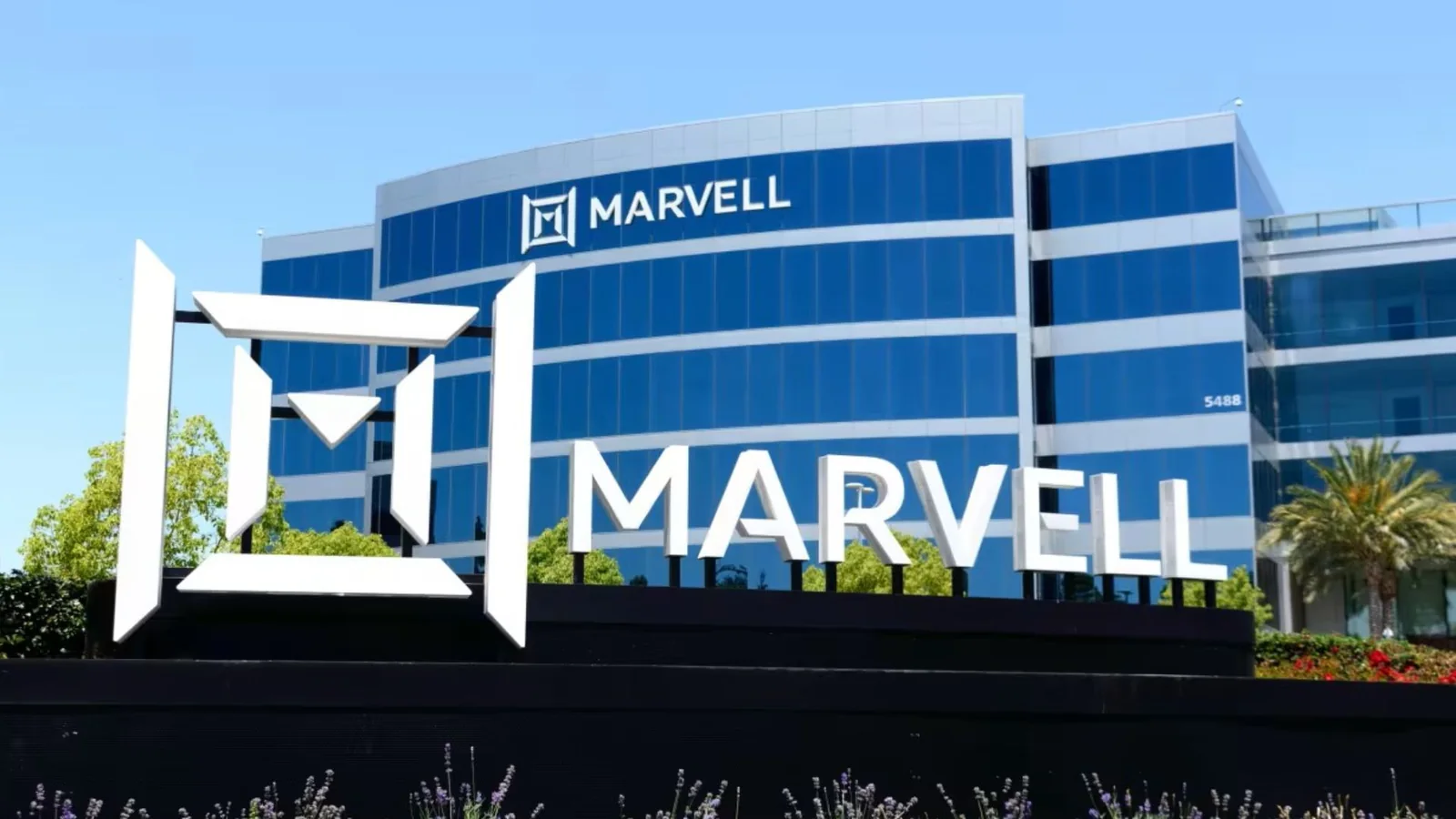
Marvell Technology Inc. has signed a definitive merger agreement to acquire Lumentum for an enterprise value of $115 billion, combining two of the biggest players in the data center optics market into one company. According to a joint press release on November 2nd, Lumentum shareholders will receive 4.5 Marvell shares for each share they own, which the companies put at about $1,132 per share. This figure represents a 23.9% premium over the company's unaffected closing price on October 28.
The agreement, which leaves Marvell's current shareholders with about 67% of the combined company and Lumentum's with about 33%, is expected to close in the first half of 2028, pending regulatory and shareholder approval.
The acquisition represents another significant expansion of Marvell's optical infrastructure portfolio, following its $10 billion acquisition of Inphi in 2021 and its $3.5 billion upfront purchase of optical interconnect startup Celestial AI, completed in February 2026.
As AI infrastructure continues to scale, optical connectivity is becoming increasingly important for moving vast amounts of data between processors, racks, data centers, and even on the accelerator board itself. With the acquisition of Lumentum, Marvell is positioning itself as one of the industry's major suppliers of optical interconnect technologies.
Why AI infrastructure is moving towards optical connectivity
Modern AI data centers house thousands of interconnected accelerators exchanging enormous volumes of data. As data volume, speed, and travel distance scale, copper interconnects hit physical limits, becoming impractical at around one to two meters. The industry's solution has been a transition to optics, moving data as light instead of electrical signals.
Optical transceivers and fiber optics have replaced copper for inter-rack connections. Pluggable transceivers containing a laser chip, digital signal processor (DSP) chips, and several optical components convert the accelerator's electrical signals into light for transmission over fiber, then convert them back into electrical signals at the receiving end.
The industry is also looking to bring optics into the accelerator package itself with co-packaged optics and near-packaged optics. Co-packaged optics takes the optical engine out of the pluggable module and places it as a photonic integrated circuit (PIC) chip directly on the switch or accelerator package, shrinking the electrical path.
These shifts to optics have made optical interconnects one of the most critical AI infrastructure markets, driving several multi-billion-dollar deals and major partnerships among industry players.
From silicon to lasers: What Marvell and Lumentum bring to the table
The optical interconnects market encompasses several critical technologies. On the electronics side, semiconductor chips such as high-speed SerDes and optical DSPs prepare and process electrical data signals. Photonic integrated circuits (PICs) use microscopic optical components such as waveguides, modulators, and photodetectors to manipulate light.
Whether an optical engine sits inside a pluggable transceiver or directly on the board, it still needs a laser. Fiber optic cables and associated passive optical components transmit and distribute light while optical circuit switches redirect optical connections through a network.
Marvell covers most of the electrical and electronics side, with a portfolio that includes custom AI accelerators, Ethernet switches, high-speed SerDes, DSPs, and silicon photonics. Lumentum supplies many optical components, including high-performance lasers, modulators, photodetectors, optical transceivers, and optical circuit switches.
A strategically important part of Lumentum's business is its expertise in compound semiconductors, particularly indium phosphide (InP), which is critical for laser and other optical chips. InP-based semiconductor structures can efficiently emit and detect light, making the material well suited for high-speed communication systems.
Lumentum directly controls its front-end semiconductor fabrication processes, owning and operating specialized InP fabrication facilities. If the deal closes in 2028, Marvell will transition into a hybrid model, inheriting Lumentum's internal factories while keeping its chip side outsourced.
A $115 billion bet and a long road to 2028
Marvell is a major player in the optical interconnects market, supplying the largest optical transceiver manufacturers. In March 2026, Nvidia invested $2 billion directly in Marvell in a partnership that brings Marvell’s custom XPUs and scale-up networking into Nvidia’s NVLink Fusion ecosystem.
Marvell's biggest optics competitor, Broadcom, also supplies custom AI accelerators, networking silicon, and optical connectivity components. Acquiring Lumentum would give Marvell a more comprehensive portfolio similar to Broadcom's.
A key question is how vertical integration affects existing customers, as Marvell supplies optical module manufacturers, while Lumentum sells optical components to companies that also compete with its transceiver business. Marvell CEO Matt Murphy stated that the company intends to maintain its existing component supply model.
Financially, Marvell expects the combined company’s total addressable market to reach about $550 billion by 2030. The companies also expect more than $1 billion in annual run-rate cost synergies.
Lumentum's recent performance shows the growing demand behind these projections. The company reported $1.26 billion in revenue for its first fiscal quarter of 2027, a 136.5% year-over-year increase.
The merger is subject to a lengthy review, with an outside date of November 1, 2027, and options to extend to August 1, 2028. If the deal fails on regulatory grounds, Marvell owes Lumentum $3.2 billion.